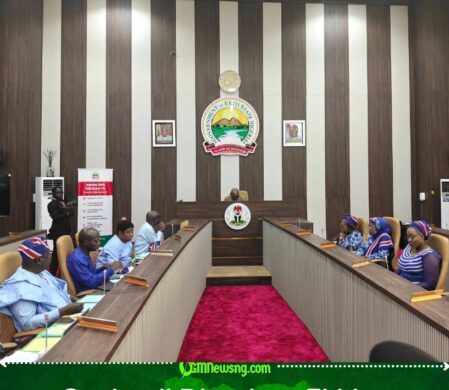









The Food Bank initiative has taken another significant step forward after First Lady Oluremi Tinubu unveiled the North-West regional programme and commissioned several landmark projects during her official visit to Jigawa State. The visit combined humanitarian intervention with infrastructure development, immediately drawing attention not only for its ambitious scope but also for the growing public expectation that government-backed welfare programmes must produce tangible improvements in the daily lives of ordinary Nigerians. While supporters hailed the initiative as timely, many citizens remain eager to see whether food relief can translate into long-term food security rather than temporary assistance.
Food Security To Be Implemented
The Food Bank programme formed the centrepiece of the visit, alongside the commissioning of the Bola Ahmed Tinubu Future Academy, the Senator Oluremi Tinubu Clinic, rehabilitation of major infrastructure and other community-focused projects. According to officials, the programme is designed to combat child malnutrition and improve access to nutritious food, particularly for children under six, pregnant women, nursing mothers and other vulnerable groups. The initiative forms part of the broader Renewed Hope agenda aimed at strengthening healthcare and social welfare.
In characteristic Nigerian fashion, the ceremony also inspired light-hearted public commentary. Some joked that ribbon-cutting ceremonies now arrive almost as regularly as market price increases, while others quipped that hunger may finally have met an official competitor. Behind the humour, however, lies a serious national concern: many families continue to struggle with rising food costs, making effective implementation more important than ceremonial launches.
Implementation Of Food Security In Jigawa State
The Food Bank initiative did not emerge in isolation. Earlier in the year, the programme was introduced in other geopolitical zones as part of a nationwide strategy linking community food banks with primary healthcare centres. The approach seeks to combine nutritional support with healthcare services so that vulnerable beneficiaries receive both food assistance and medical attention where necessary. Government officials have also indicated that partnerships with development organisations and private sector contributors will support the programme’s expansion.
The broader context remains challenging. Nigeria continues to confront inflationary pressures, food insecurity, agricultural disruptions and declining household purchasing power. Analysts generally agree that while targeted food interventions can provide immediate relief, lasting Food Security will also depend on higher agricultural productivity, improved logistics, stable rural security, lower post-harvest losses and economic policies that make nutritious food more affordable. Consequently, public attention is likely to remain focused not on the number of projects commissioned but on measurable improvements in nutrition, child welfare and household food access over time.
As implementation begins across the North-West, expectations will be high. OGM News Nigeria will continue monitoring how the Food Bank programme performs beyond inauguration ceremonies, whether promised partnerships deliver sustained support, and how effectively the initiative contributes to Nigeria’s wider quest for lasting Food Security.
Table of Contents
Discover more from OGM News NG
Subscribe to get the latest posts sent to your email.