








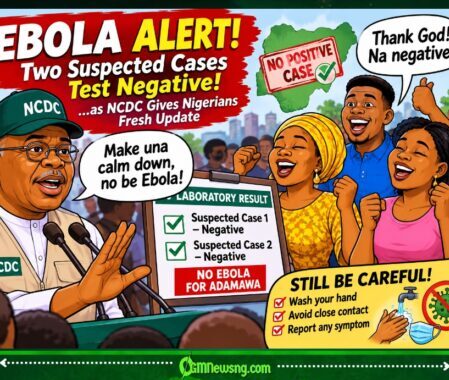
Nigerians don receive one encouraging update after fresh Ebola concern emerge for North-East Nigeria, following the identification and isolation of two suspected cases by the Nigeria Centre for Disease Control and Prevention (NCDC). The announcement initially raise concern because e come shortly after Nigeria recorded one confirmed case of Bundibugyo Ebola disease for Abuja. But before fear go turn another national emergency for social media, NCDC don release a fresh laboratory update wey change the direction of the story. Both suspected cases don test negative after two rounds of testing, although the country still get important public health work to do.
EBOLA ALERT: NCDC INVESTIGATION AND THE TWO SUSPECTED CASES
The matter begin on Saturday, October 31, 2026, when NCDC announce through its official communication channel say two suspected Ebola cases don dey identified for Nigeria’s North-East region. The agency explain say both individuals don dey isolated, while contact identification and listing dey continue. Laboratory investigations also begin to establish whether the individuals actually contract the virus. NCDC, however, quickly warn Nigerians say classification as suspected cases no mean say anybody don test positive for Ebola, because na laboratory results fit confirm the infection. The announcement form part of the agency’s efforts to identify possible infections early and prevent any opportunity for further transmission.
However, the investigation produce better news on Sunday, November 1, when NCDC Director-General, Dr Jide Idris, disclose say the two individuals, wey dem identify for Yola, Adamawa State, test negative after two rounds of laboratory testing. According to the update, the samples no show evidence of Ebola virus disease, and Adamawa State no get any laboratory-confirmed Ebola case. The Director-General commend the Adamawa State Government for the proactive response and encourage Nigerians to remain calm, practise proper hand hygiene and avoid spreading unverified information. So, for those wey don already begin imagine say Ebola don establish another headquarters for North-East, this particular investigation bring some relief. But make we no confuse negative results for these two individuals with the end of Nigeria’s wider Ebola surveillance responsibility.
EBOLA ALERT: NIGERIA’S EARLIER CONFIRMED CASE AND THE PUBLIC HEALTH CHALLENGE
To understand why the latest announcement attract serious attention, Nigerians need understand the background of the current regional outbreak. On October 20, 2026, Nigeria confirmed an imported case of Ebola disease caused by the Bundibugyo virus for the Federal Capital Territory. The infected woman reportedly travelled from Uganda to Nigeria and developed symptoms before seeking medical attention at a private hospital in Abuja. Following laboratory confirmation, health authorities activated emergency response measures, including isolation, medical management, contact tracing and surveillance. The patient was subsequently evacuated to Switzerland on October 26 alongside her husband, who had remained without symptoms. Health authorities initially identified 44 contacts linked to the case, with the number later increasing to 53 as investigations continued. The earlier confirmed FCT case remain separate from the two suspected cases for Adamawa.
Another important detail be say the Bundibugyo strain get some differences from other Ebola virus strains wey people may don hear about before. According to NCDC’s public health advisory, there are currently no approved vaccines or specific targeted treatments for this particular strain. The agency also clarify say Ebola no dey spread through air like ordinary respiratory infections. Transmission mainly happens through direct contact with the blood or body fluids of an infected symptomatic person, someone wey don die from the infection, contaminated materials or infected animals.
The incubation period fit range from two to 21 days, meaning say exposed individuals need proper monitoring during that period. NCDC also identify early symptoms such as fever, tiredness, headache, muscle pain, vomiting, diarrhoea and abdominal pain. The agency has therefore emphasised early detection, isolation, contact tracing, infection prevention and protection of healthcare workers as important parts of the national response.
The latest negative results from Adamawa na encouraging development, but e no mean say Nigerians should abandon caution or begin spread unverified information. Public health authorities still need cooperation from citizens, especially anybody wey health officials contact during an investigation. People wey experience concerning symptoms alongside relevant travel or exposure history should seek medical attention and inform health workers rather than attempt self-diagnosis.
Nigeria successfully contained its 2014 Ebola outbreak through early detection, effective contact tracing, healthcare-worker commitment and public cooperation. Those lessons remain important today. At least, the two suspected North-East cases don test negative, but the bigger Ebola alert still remind the country say disease surveillance no be something wey government should take casually. Nigerians deserve accurate information, prepared hospitals and a health system wey fit respond before a suspected infection becomes a bigger problem. We go bring una further verified updates as the situation develops.
Table of Contents
Discover more from OGM News NG
Subscribe to get the latest posts sent to your email.