








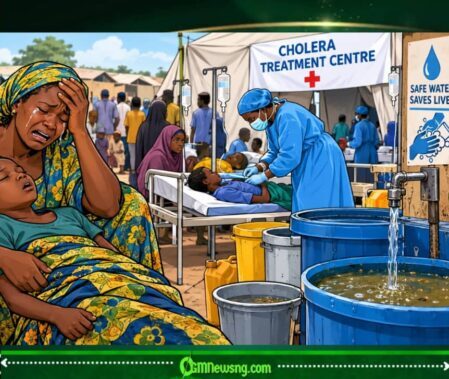
Families across parts of Borno State are lamenting the loss of loved ones as a severe cholera outbreak continues to put communities and health facilities under serious pressure. What should be ordinary matters like getting drinking water and maintaining household hygiene have become matters of life and death, with the outbreak exposing how dangerous poor sanitation and unsafe water can become when they meet overcrowding and displacement.
Recent figures show just how serious the situation has become. WHO reported that Nigeria recorded 26,960 cholera cases and 167 deaths in July alone, with Borno accounting for more than 97 per cent of the country’s reported cases as of July 26. UNICEF has similarly described the Borno outbreak as one of the state’s worst in recent years.
Cholera Refuses to Take Hint as Families Count Their Losses
For affected families, the statistics are not merely numbers on a situation report. Each figure can represent a parent, child, relative or neighbour whose absence leaves another empty space at home. Earlier UNICEF reporting recorded 8,457 cases and 85 deaths in Borno between May 1 and June 7, showing how quickly the outbreak escalated.
And cholera has been particularly unforgiving where clean water and sanitation are difficult to guarantee. Conflict, displacement, crowded settlements, inadequate sanitation and rainfall have all helped create conditions in which contamination can spread quickly. In other words, the disease appears to have discovered that bad infrastructure makes a very convenient travelling companion.
When Safe Water Becomes a Luxury, Cholera Finds Its Opportunity in Borno
Medical workers and humanitarian organisations are fighting back with treatment centres, oral rehydration points, hygiene campaigns, disinfection and vaccination activities. UNICEF says community-based oral rehydration points have been established to bring treatment closer to vulnerable families, while vaccination campaigns have also been conducted in affected communities.
The bigger lesson, however, is that treating patients after they fall sick cannot be the only plan. Safe drinking water, functioning sanitation systems, proper waste disposal, rapid treatment and sustained public-health surveillance are essential to stopping the cycle. The NCDC has long advised Nigerians to use safe water, maintain hand hygiene, cook food properly and seek medical care promptly when symptoms of cholera appear.
For families already grieving, there is nothing funny about the outbreak; the satire is reserved for the systems and circumstances that can allow a preventable waterborne disease to become this dangerous. Borno’s cholera crisis remains a story to watch closely, and OGM News Pidgin will continue to follow developments, response efforts and the human stories behind the figures.
Table of Contents
Discover more from OGM News NG
Subscribe to get the latest posts sent to your email.