









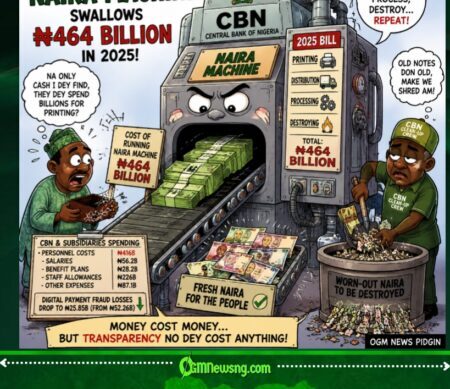
One fresh financial revelation don make Nigerians look at their naira with another kind eye, as new report from Central Bank of Nigeria (CBN) show say the country spend ₦464 billion in 2025 to print, move, process and destroy old naira notes. The big question wey dey fly around now be: how come money itself don need so much money before e fit survive? The Naira Machine matter don turn hot discussion as citizens and financial observers dey examine the cost behind keeping cash alive.
The report no just show ordinary spending; e reveal say managing physical currency remain one of the biggest operational expenses for the apex bank during the year. While some people dey joke say naira notes now get “luxury lifestyle” because dem require billions before dem fit enter people hand, experts say the process involve serious logistics, security arrangements and specialised systems.
Naira Machine: How CBN’s Currency Factory Carry Heavy Financial Load
According to the disclosed figures, the CBN spent ₦464 billion on activities connected with currency management in 2025, representing a sharp increase compared with the previous year’s ₦238.6 billion. The spending covered printing fresh notes, distributing currency across the country, processing returned notes and destroying worn-out ones.
The rise in the Naira Machine cost has generated debate because many Nigerians still remember periods when cash availability became a major challenge. Some citizens are asking why maintaining physical money requires such huge resources, especially as digital payments continue becoming more popular.
The CBN, however, maintains that currency management is not only about producing paper notes. The bank has responsibilities that include ensuring quality currency circulation, removing damaged notes and protecting the integrity of Nigeria’s payment system. The reality is that every country spends money to manage money, although the size of the expense often determines the level of public attention.
Naira Machine and Digital Money Future: Between Cash Cost and Cybersecurity Fight
Beyond currency operations, the report also highlighted other major financial issues inside Nigeria’s banking environment. The CBN and its subsidiaries recorded ₦416 billion in personnel-related expenses, covering salaries, allowances, benefit plans and other staff costs.
The report also brought some positive news from the digital payment sector, showing that losses linked to electronic payment fraud reduced from ₦52.26 billion in 2024 to ₦25.85 billion in 2025. However, the CBN warned that cyber threats, concentration of major payment providers and activities of unlicensed operators remain risks that require stronger protection.
The changing financial landscape means Nigeria is gradually moving between two worlds: the traditional Naira Machine that keeps physical cash running and the digital system that promises faster transactions but demands stronger cybersecurity. The challenge for regulators is finding the right balance without allowing either side to create bigger problems.
As the conversation continues, Nigerians will likely keep watching how the CBN manages the cost of currency operations, improves transparency and prepares for a future where cash and digital money must work together. The next chapter of the Naira Machine story may depend not only on how much money is spent, but on how effectively every naira used can serve the public.
Table of Contents
Discover more from OGM News NG
Subscribe to get the latest posts sent to your email.