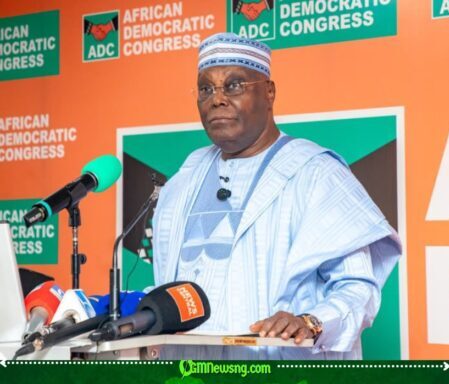






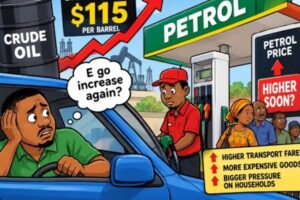


Nigeria’s political temperature has risen after former Vice President Atiku Abubakar accused President Bola Tinubu of displaying what he described as “delusion” by blaming the opposition for hunger and poverty. Atiku insists that Nigerians deserve answers from the All Progressives Congress (APC)-led government over rising living costs, insecurity and questions surrounding public expenditure. In a political atmosphere where everybody seems eager to identify the culprit, Nigerians are still waiting for someone to explain when the cost of living will stop behaving like a rocket.
THE POLITICAL BLAME GAME: WHO CREATED THE HUNGER?
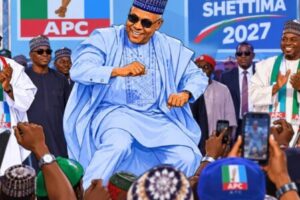
President Tinubu reportedly blamed his political opponents for hunger and poverty while addressing supporters at the APC presidential campaign flag-off in Kaduna on Saturday. The President argued that the opposition created the problems his administration was attempting to eradicate. It was a bold political counterattack, although struggling households may be more interested in knowing who will make food affordable than in determining which political party deserves the blame.
Atiku, the presidential candidate of the African Democratic Congress (ADC), rejected the President’s argument, describing it as an attempt to evade responsibility for the administration’s policies. In a statement issued by Phrank Shaibu, Director of Strategic Communication of the ADC Presidential Campaign Council, Atiku argued that the APC had governed Nigeria for approximately 11 years by the time of the reported exchange, including the years before Tinubu assumed office. His central message was that a government cannot remain in power for years and expect the opposition to carry the entire burden of public anger. In Nigeria’s political theatre, however, the blame microphone appears to be working perfectly, even when the economic relief microphone remains difficult to hear.
PETROL, THE NAIRA AND BILLIONS OF NAIRA: ATIKU DEMANDS ANSWERS
Atiku also challenged the administration to account for the effects of petrol subsidy removal and the depreciation of the naira. He questioned the currency’s movement from approximately ₦471 to ₦1,329 per dollar, arguing that the government should explain the consequences of its economic decisions rather than dismiss complaints about hardship. For millions of households and businesses, the debate is not an abstract contest between political parties: it is about transport fares, food prices, rent, electricity and the shrinking purchasing power of their income.
The former Vice President also raised questions about federal budgeting, expenditure recorded under energy security, pipeline-related spending by the Nigerian National Petroleum Company Limited, external-account figures and charges associated with an Abu Dhabi financing facility. He cited figures of ₦7.13 trillion for energy security in 2024, ₦11.2 trillion in pipeline-related spending, a purported $12.4 billion external-account gap in the first half of 2026 and $22.5 million in “other charges.” These are claims and figures requiring examination against official financial records, and their mention does not by itself establish wrongdoing.
Atiku further questioned the progress of the Abuja–Kaduna Expressway, security failures involving killings and kidnappings, and a World Bank estimate he cited concerning poverty in 2026. His argument was that public spending must produce measurable results, not merely impressive figures in documents or celebratory speeches at political gatherings.
The confrontation is already shaping the political argument ahead of the 2027 presidential election. Tinubu’s administration faces the challenge of defending its policies and demonstrating tangible improvements, while Atiku and the ADC are seeking to turn public frustration into a case against the ruling party. Ultimately, Nigerians will judge the competing claims against their everyday experiences: the prices they pay, the security of their communities, the reliability of public infrastructure and the transparency of government spending. Whether the exchange produces convincing answers or simply another round of political finger-pointing remains to be seen. Stay with OGM News NG for further updates as the controversy develops.
Table of Contents
Discover more from OGM News NG
Subscribe to get the latest posts sent to your email.