





Nigeria’s electricity crisis has once again become a political battleground, with the African Democratic Congress (ADC) Presidential Campaign Council challenging President Bola Tinubu and the All Progressives Congress (APC) to explain why the President’s 2023 campaign promise of reliable electricity has yet to translate into the expected relief for millions of Nigerians.
The opposition party is reminding the ruling party of a statement made by Tinubu during the 2023 presidential campaign, when he reportedly told Nigerians not to vote for him for a second term if he failed to deliver electricity during his first four-year tenure. Now, with public complaints about electricity tariffs, estimated billing and persistent power interruptions continuing, the ADC believes the President’s words deserve more than political interpretation.
In a statement issued on Sunday, November 1, 2026, the ADC-PCC Director of Media and Publicity, Kola Ologbondiyan, accused the APC of attempting to reinterpret the President’s campaign remarks through selective quotations. According to the opposition council, Nigerians should not need a dictionary, political translator or electricity expert to understand a promise made during an election campaign.
ADC Says Campaign Promises Cannot Be Edited Away as Electricity Crisis Continues
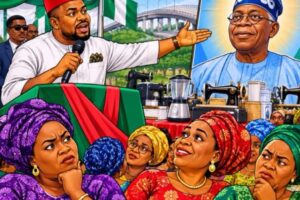
The ADC recalled Tinubu’s declaration during the 2023 presidential campaign: “Don’t vote for me for a second term if I fail to deliver electricity.” Ologbondiyan maintained that the statement was a clear political commitment made by a candidate seeking the confidence of Nigerians, insisting that the administration should be assessed against the standard it established for itself.
The opposition council argued that no amount of selective editing, additional explanations or grammatical gymnastics could erase the commitment from public memory. In its view, Nigerians are more interested in the electricity coming through their sockets than the explanations coming from political spokespersons. The ADC’s message was essentially that campaign promises should not become complicated documents requiring legal interpretation when citizens are simply asking whether their lights will stay on.
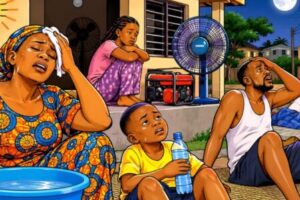
The party also criticised the administration over rising electricity costs, persistent outages and the continued use of estimated billing. It questioned the fairness of tariff classifications, particularly Bands A, B and C, arguing that consumers should receive reliable electricity corresponding to the amount they are charged. For ordinary households, the situation has become frustrating: electricity bills can arrive with impressive confidence, even when the supply itself appears less committed.
The council further alleged that some hospitality businesses have resorted to rationing electricity for guests during daytime hours to reduce operating costs. It said households, manufacturers and small businesses were struggling under the combined pressure of expensive electricity and unreliable supply. The argument raises a serious economic question: how can businesses expand production, create employment and remain competitive when dependable electricity continues to be an expensive uncertainty?
APC Defends Tinubu’s Record as Electricity Act and Metering Initiative Face Public Scrutiny
The APC Presidential Campaign Council has also responded to the controversy. Its spokesperson, Dele Alake, argued that Tinubu’s original campaign statement should be considered in its entirety. According to Alake, the President had promised stable electricity and an end to estimated billing but added that voters should not support him for a second term if he failed to deliver unless he provided adequate reasons for the shortcomings.
The APC pointed to the Electricity Act 2023, signed by Tinubu on June 9, 2023, as an important part of the administration’s reforms. The legislation opened the way for states to establish and regulate electricity markets within their jurisdictions, creating opportunities for additional investment and competition. By May 2026, the Nigerian Electricity Regulatory Commission had announced that 15 states had transitioned to regulating their own electricity markets. Channels Television +2
The administration has also promoted the Presidential Metering Initiative as part of its efforts to address estimated billing and the electricity sector’s metering gap. The Federal Government launched its Power Force Programme in July 2026 to support meter deployment and train young Nigerians. Meanwhile, a NERC metering factsheet published in October outlined a further phase of the Presidential Metering Initiative, targeting 750,000 meters from 2027. However, the existence of these programmes does not automatically establish how many consumers have received meters or how much their billing experience has improved. Federal Ministry of Power, Nigeria +1
For the ADC, however, the central question remains whether these reforms have translated into dependable electricity for ordinary Nigerians. Its position is that an electricity law cannot illuminate a living room, a government bond cannot operate a factory and a policy announcement cannot replace actual power supply. The disagreement therefore goes beyond political statements: it concerns measurable improvements in electricity generation, distribution, affordability, metering and consumer protection.
The coming 2027 presidential election is likely to give this argument even greater political importance, as Nigerians assess the performance of the current administration against its campaign commitments. While the APC insists that the President’s promise must be understood in its full context, the ADC believes the public deserves tangible results rather than another round of political explanations.
Ultimately, Nigeria’s electricity challenge is becoming more than a technical problem; it is also a test of political credibility and public accountability. Whether the administration can demonstrate meaningful improvements before the next election remains a major question. For now, Nigerians appear to be asking a straightforward question that neither political speeches nor legislative documents can answer on their behalf: when will reliable and affordable electricity become a normal part of everyday life? Stay with OGM News NG for further developments as the political battle over Tinubu’s electricity promise continues.
Table of Contents
Discover more from OGM News NG
Subscribe to get the latest posts sent to your email.