










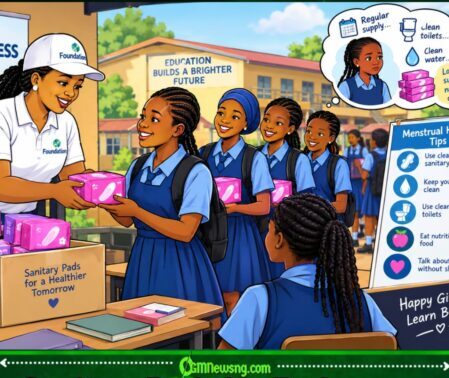
One foundation don take menstrual health awareness go meet students and donate sanitary pads, but the matter wey dey behind this good gesture pass ordinary distribution of hygiene materials. Na about girls’ confidence, education, health and the right to attend school without fear say their monthly period go turn classroom into place of embarrassment. The question now be whether this kind intervention go become regular support or na another good programme wey go disappear after camera don finish work.
Menstrual Health: Foundation Carry Awareness and Sanitary Pads Go Meet Students
According to the supplied report, one foundation don sensitise students on menstrual health and donate sanitary pads to support proper menstrual hygiene. The intervention focus on helping young people understand menstruation, know how to manage am properly and reduce the shame wey society sometimes attach to one natural biological process.
The donation matter important because some families dey struggle to afford basic hygiene products, while some students still dey grow up without enough reliable information about puberty and menstruation. When correct education join practical support, e fit help girls manage their periods with more confidence and reduce the risk of missing lessons because dem no get sanitary materials. But make we no deceive ourselves: one pack of pads fit solve today’s problem, while the next monthly cycle fit bring the same challenge back if support no continue.
Period Dignity: Why Nigeria Need More Than One-Day Donation
The matter don already enter wider national conversation. On October 12, 2026, the Federal Government flagged off the distribution of two million packs of sanitary towels to girls in public basic education schools across Nigeria’s 36 states and the Federal Capital Territory under the Flow with Confidence, Keeping Every Girl in School initiative. The programme also includes learning materials, while a separate ₦2 billion Learners’ Retention Support Programme targets 100,000 learners in its first phase, with ₦20,000 planned for each beneficiary.
Earlier, on June 4, 2026, the News Agency of Nigeria reported that Tabitha Cumi Foundation distributed menstrual hygiene kits to selected schoolgirls in the FCT through its Always Keeping Girls in School project. The intervention included hygiene education and emergency access to pads, with the organisation reporting that its programme had supported at least 67,000 girls nationwide since 2018. These examples show say different organisations dey work on the problem, although the exact number of students wey benefit from the foundation in the current report no dey clear from the supplied material.
The bigger issue na continuity and accountability. Schools need clean toilets, reliable water, suitable places where students fit change menstrual products privately, and safe ways to dispose of used materials. Parents and teachers also need to create an environment where students fit ask questions without becoming the subject of jokes. Boys too suppose understand the basics, because menstrual health no be invitation for classroom mockery or playground gossip. If sanitary pads dey available but shame and misinformation still dey rule, the work never finish.
The foundation’s gesture deserve recognition, but public and private stakeholders must see am as part of a longer responsibility, not a complete solution. The government’s nationwide programme also needs transparent distribution, proper monitoring and evidence that the intended beneficiaries actually receive the supplies. The Federal Ministry of Education has said the programme would be institutionalised through the Universal Basic Education Commission and supported through the World Bank-backed Adolescent Girls Initiative for Learning and Empowerment project.
For OGM News Pidgin, the main takeaway simple: Period Dignity no suppose depend on whether one donor remember a school this month. Girls need dependable access to menstrual products, accurate health information and decent school facilities throughout the year. Pads fit finish, but knowledge must remain; donations fit reduce hardship, but lasting support na wetin go keep girls confident and in class. We go continue to watch how these interventions dey translate into real support for students.
Table of Contents
Discover more from OGM News NG
Subscribe to get the latest posts sent to your email.