
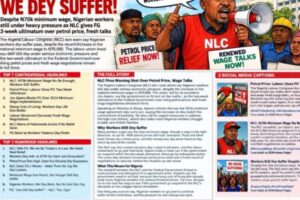




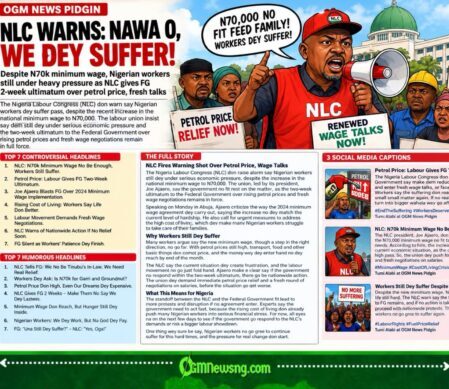
The Nigeria Labour Congress (NLC) don renew its warning say Nigerian workers still dey face serious economic hardship despite the increase in national minimum wage to ₦70,000. The union insist say its two-week ultimatum to Federal Government over petrol prices and fresh salary negotiations still dey stand, raising fresh questions about whether workers’ income still fit carry the weight of everyday expenses.
For workers wey dey struggle to balance food, transport, rent and other essential bills, the matter don pass ordinary salary discussion. NLC president Joe Ajaero don call for urgent action, while the union maintains pressure on government to address the situation. As the deadline approaches, the central question remain: government go respond through negotiation, or labour go consider further action?
NLC Ultimatum: ₦70,000 Minimum Wage No Fit Rescue Workers From Economic Wahala
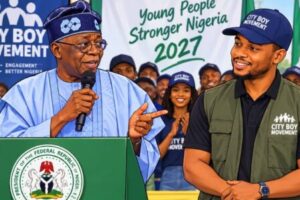
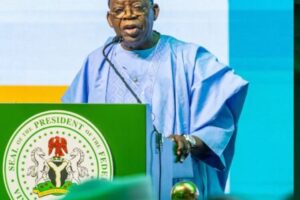
The current national minimum wage of ₦70,000 followed negotiations between the Federal Government, organised labour and employers in 2024. President Bola Tinubu approved the amount in July that year, with the government announcing that the new wage would be reviewed after three years. 
But according to NLC, the increase no longer adequately reflect the economic reality wey workers dey face. Ajaero don criticise the implementation of the 2024 agreement and demand fresh negotiations, arguing that workers’ purchasing power don suffer under the weight of rising living costs. For ordinary workers, salary fit increase on paper while the quantity of food, transport trips and other necessities wey the money fit buy continue to reduce.
The issue no be simply whether government increase salary. The bigger question be whether the money fit cover basic needs. If transport consume a larger share of income and food prices continue to rise, workers fit still struggle despite earning more than before. Na this gap between salary figures and real purchasing power dey fuel the present labour disagreement.
NLC Tell FG: Workers No Be Magicians Wey Fit Turn ₦70,000 to Millions
The NLC’s two-week ultimatum followed a joint meeting of its National Executive Council and Central Working Committee in Abuja. According to the communiqué signed by Ajaero, the deadline began on Friday, October 9, 2026. The union demanded measures to reduce petrol prices to the level prevailing when the current minimum wage was signed into law in 2024, alongside fresh minimum wage negotiations before the end of October.
The union also called for action on outstanding agreements affecting workers. Its position be say petrol prices affect much more than the cost of filling a vehicle: transportation costs fit influence food distribution and the prices of goods and services across the economy. When transport operators pay more to move passengers and goods, ordinary consumers fit eventually feel the impact for their own pockets.
The Federal Government therefore faces a difficult policy challenge. Any attempt to reduce petrol prices must consider the wider effects on public finances, fuel supply and the petroleum market, while wage negotiations must consider the resources available to government and employers. But these challenges no remove the need for clear communication, credible negotiations and practical measures to ease hardship. Workers need to understand what government plans to do, when it plans to do am, and how the measures go affect their daily lives.
As the ultimatum deadline draws closer, the next steps from both sides go matter. NLC has warned that failure to meet its demands could lead to further action, but the specific form of any action would depend on decisions by the union’s relevant organs. For Nigerians, the best outcome would be an agreement wey improve workers’ welfare without creating more disruption for the public. After all, salary no suppose be money wey workers collect today only to discover say the market don already spend am on their behalf tomorrow.
Table of Contents
Discover more from OGM News NG
Subscribe to get the latest posts sent to your email.