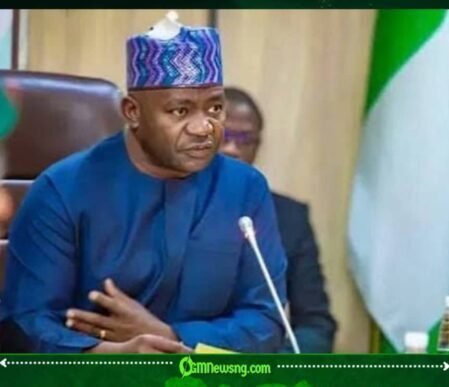

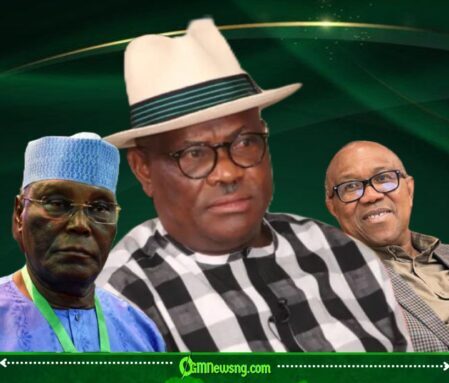
FCT Minister Nyesom Wike has disclosed that the political strategy adopted by the PDP’s G5 governors during the 2023 presidential election was aimed primarily at preventing former Vice President Atiku Abubakar from benefiting from the South-South’s traditional PDP support. Wike said Peter Obi was not regarded as the main political threat by his camp at the time.
According to Wike, the strategy involved encouraging voters in some South-South states to support Obi rather than allowing their votes to go to Atiku. He said the calculation was based on the political strength of the PDP in the region and the potential advantage Atiku could gain if the South-South voted along traditional party lines.
Wike Says Atiku Was the Main Political Threat
Wike said his camp considered Atiku a greater factor in the 2023 contest because the former vice president was the PDP’s presidential candidate and the South-South had historically been a strong base for the party. He said allowing Atiku to dominate the region would have increased his presidential vote total.
He explained that the strategy was therefore to allow Obi to take votes in some areas that might otherwise have gone to Atiku. Wike said the approach was a political calculation rather than an attempt to hand Obi control of the entire region, stressing that Rivers State was treated differently because of its particular political implications.
Wike Says Rivers Was Treated Differently
Nyesom said he specifically opposed an Obi victory in Rivers State because, in his view, such an outcome could send a political signal that his camp did not want. He maintained that the strategy used elsewhere in the South-South was not applied in the same way in Rivers.
The minister has also rejected allegations that the strategy amounted to rigging or manipulation of election results. He questioned how an individual could personally alter results across thousands of polling units and challenged those claiming that Obi won Rivers to produce the relevant polling-unit evidence submitted during the legal challenges to the 2023 election.
Wike Dismisses Social Media as Election Evidence
Nyesom further argued that social-media trends cannot by themselves determine the outcome of an election. He said conclusions about who won must be based on results from polling units and the formal electoral process rather than a limited number of results circulating online.
His comments have reopened discussion about the role of the G5 in the 2023 presidential contest and the political calculations surrounding Atiku and Obi in the South-South. Nyesom’s account describes a deliberate effort to reduce Atiku’s potential vote advantage, while allegations of electoral manipulation remain disputed. OGM News NG will continue to follow the political debate surrounding the 2023 election and its implications for Nigeria’s next electoral cycle.
Table of Contents
Discover more from OGM News NG
Subscribe to get the latest posts sent to your email.