





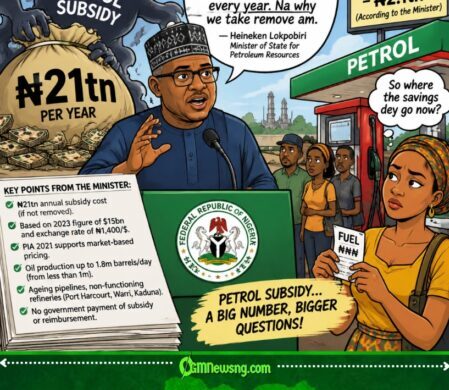
Nigeria petrol subsidy matter don enter another round of national argument after Minister of State for Petroleum Resources (Oil), Heineken Lokpobiri, claim say the country for dey spend about ₦21 trillion every year if the petrol subsidy system remain under the Tinubu administration. The statement don reopen old questions about fuel pricing, government spending and whether Nigerians dey truly see the benefit of subsidy removal. As the numbers fly around like football during derby match, many citizens dey ask whether the ₦21tn petrol subsidy figure na warning, explanation or another chapter inside Nigeria’s economic story.
Petrol Subsidy Calculation: Government Explains The ₦21tn Figure Behind The Debate
Lokpobiri explain during television interview say the calculation come from previous figures released by former Finance Minister Zainab Ahmed, who don state earlier say Nigeria spending billions of naira daily on petrol subsidy. According to the minister, when the estimated $15 billion annual subsidy cost was converted using an exchange rate of about ₦1,400 to one dollar, the figure reach approximately ₦21 trillion.
The minister maintain say keeping the petrol subsidy would have placed huge pressure on government finances. He defend President Bola Tinubu’s decision to remove subsidy in 2023, saying the Petroleum Industry Act of 2021 supports market-based pricing for petroleum products. Lokpobiri also argue say the money wey government no spend on subsidy don contribute to higher monthly FAAC allocations, which he described as one of the major changes after the policy shift.
However, the petrol subsidy conversation still dey attract strong reactions because while government officials highlight financial savings, many Nigerians focus on the increase in transport costs, food prices and household expenses linked to higher fuel prices. The argument remain whether the long-term economic benefits can match the immediate pressure experienced by citizens.
Petrol Subsidy Future: Refinery Hope, Oil Production And Bigger Economic Questions
Beyond the ₦21tn petrol subsidy calculation, Lokpobiri also talk about developments inside Nigeria’s oil sector. He said oil production has increased to about 1.8 million barrels per day from levels below one million barrels when Tinubu entered office. He identify ageing pipelines, many of which have existed for decades, as one major challenge affecting the industry.
The minister also dismissed claims that government still dey pay petrol subsidy or reimburse marketers, saying deregulation has encouraged private investment, including activities around the Dangote Refinery. He explain that crude oil remains a global commodity, meaning international market conditions continue to influence petroleum prices.
Nigeria’s refinery situation remains another major part of the discussion, as Lokpobiri acknowledged that the Port Harcourt, Warri and Kaduna refineries were not currently producing. While private refinery investment has created expectations for increased local supply, questions remain about production capacity, fuel affordability and how quickly Nigerians will feel the impact.
The petrol subsidy debate therefore remains bigger than one figure or one policy decision. Government supporters point to avoided expenses and increased revenue sharing, while critics continue to demand clearer evidence of how savings are improving everyday life. Like a Nigerian family meeting where everybody has receipts to present, the argument is far from finished.
As Nigeria continues to monitor fuel prices, refinery progress and government spending, the ₦21tn petrol subsid claim will likely remain a major talking point. OGM News Pidgin go continue to follow the numbers, the policies and the public reaction as the petrol subsidy story dey write another chapter.
Table of Contents
Discover more from OGM News NG
Subscribe to get the latest posts sent to your email.