










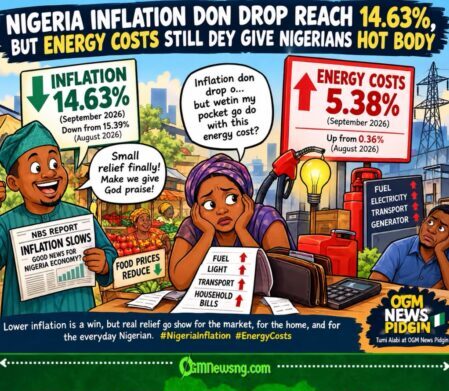
Nigeria Inflation don drop reach 14.63% for September 2026, but rising energy costs show say the battle to make life affordable never finish. As the National Bureau of Statistics (NBS) release im latest Consumer Price Index report on Thursday, October 15, the figures bring small hope for the economy, even as many households and businesses still dey face serious expenses. Inflation fall from 15.39% for August, but fuel, electricity and other running costs still fit make ordinary Nigerians ask whether the relief don reach their side. For economic matter, percentage fit look encouraging for paper, but na wetin remain for pocket dey tell the full story.
Nigeria Inflation Fall Reach 14.63%, But Nigerians Still Dey Battle Cost of Living
According to NBS, Nigeria headline inflation fall by 0.76 percentage point, from 15.39% for August to 14.63% for September. Compared with the 20.98% recorded for September 2025, the latest figure represent a decline of 6.35 percentage points. Monthly headline inflation also slow from 0.71% for August to 0.06% for September, showing say the average price level increase much more slowly during the month. 
One important factor wey help the overall figure na the reduction in food prices during September. NBS data show say food inflation fall by 1.55% on a month-to-month basis, even though the year-on-year food inflation rate remain high at 19.59%. This distinction matter because lower monthly food prices no mean say food don become cheap for everybody. If rice, beans, tomatoes and other food items cost plenty before, even a slowdown in inflation no automatically return those prices to their former levels. The market fit reduce the speed of price increases, but e never promise anybody discount. 
Nigeria Inflation Reach Lowest Level for 2026, But Ordinary Citizens Still Dey Ask Where Relief Dey
While headline inflation dey cool down, energy costs dey move in the opposite direction. The NBS report show say monthly energy inflation rise from 0.36% for August to 5.38% for September. On a year-on-year basis, energy inflation reach 10.85%, compared with 4.69% for August. This sharp movement show the pressure wey energy-related expenses fit place on households and businesses, especially where fuel, electricity and transport costs affect the price of goods and services.
Core inflation, wey excludes some volatile food and energy items to help show underlying price pressures, also rise on a month-to-month basis to 1.11% for September from -0.06% for August. The figures therefore tell a mixed story: headline inflation don slow, but some important expenses still dey rise. For small businesses wey depend on generators, transport operators and traders wey must move goods from one place to another, higher operating costs fit continue to affect the prices wey customers pay. Inflation no be one single price tag; na the combined movement of different goods and services.
The latest figures offer a positive sign for Nigeria economy, but government and economic policymakers still need to focus on whether the slowdown go translate into better purchasing power, lower business costs and more affordable basic needs. For now, Nigeria Inflation don reduce, but the rise in energy costs remains one important warning sign. OGM News Pidgin go continue to monitor the figures and wetin dem mean for ordinary Nigerians as new economic data emerge.
Table of Contents
Discover more from OGM News NG
Subscribe to get the latest posts sent to your email.