







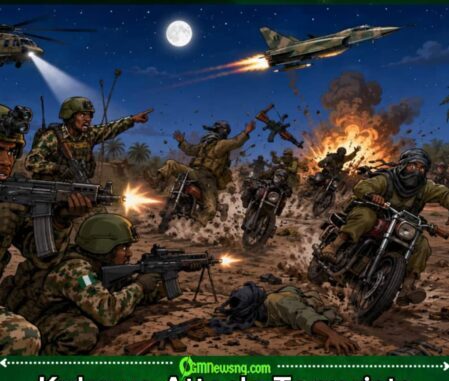
Kukawa Attack don reportedly turn into major setback for Islamic State West Africa Province (ISWAP) after terrorists launched a night assault on troops of the 101 Special Forces Battalion stationed around Kukawa in Borno State. Instead of the attackers getting the kind surprise dem apparently expect, the soldiers respond with direct and indirect fire, forcing the terrorists to withdraw towards Cross Kauwa. According to the latest military account, the combined operation reportedly neutralised 27 terrorists and destroyed 10 motorcycles.
Kukawa Attack And Military Response
The Kukawa Attack happened at about 10:50pm on August 28, according to the Joint Task Force North-East, Operation Hadin Kai. The terrorists reportedly attacked the military position, but troops responded quickly and pushed them away from Kukawa towards the Cross Kauwa direction. Some of the attackers reportedly sustained gunshot wounds while escaping, while subsequent ground operations led to recovery of bodies and other items.
As the fighters reportedly withdrew on motorcycles, the Air Component of Operation Hadin Kai was called in to intercept them. Military authorities said aircraft engaged terrorists taking cover under trees despite difficult weather conditions, while Multi-National Joint Task Force intelligence, surveillance and reconnaissance assets tracked about 20 motorcycles moving towards the Tunbuns/Kangarwa axis. A follow-up precision strike reportedly neutralised another group and destroyed 10 motorcycles. In ordinary language, the terrorists apparently discover say escaping from the battlefield no automatically mean say the matter don finish.
Operation Hadin Kai And Lake Chad Pressure
The Kukawa Attack no happen inside empty security space. Kukawa and surrounding areas remain part of the Lake Chad theatre where ISWAP has maintained operational networks, while Nigerian forces and the Multi-National Joint Task Force continue operations against fighters, logistics and movement routes. Earlier this month, military authorities said forensic exploitation of materials recovered during operations helped identify senior ISWAP leaders operating around the Mangari-Metele-Dogon Chukun axis in Abadam and Kukawa LGAs.
Just days before the latest Kukawa Attack, Nigerian Air Force aircraft reportedly struck ISWAP logistics activity around Kangarwa in Kukawa LGA, with four suspected terrorists neutralised and 12 logistics boats destroyed. The reported operation followed intelligence surveillance that detected a concentration of boats along the riverbank, highlighting why waterways and mobility remain important parts of the insurgency challenge around Lake Chad.
There is also a small but important reporting difference around the casualty figure. Some early reports put the number at 26, while the latest military account reported by several outlets gives 27 after subsequent exploitation operations. So, for accuracy, the figure should be attributed to the military’s latest assessment rather than presented as an independently verified battlefield count.
The military also reported that four of its personnel suffered injuries during the engagement, but said the injuries were not life-threatening and that the wounded soldiers were evacuated for medical attention and remained stable. Troops were subsequently replenished with combat supplies as the operation continued.
The bigger lesson from the Kukawa Attack be say insurgents may still attempt to test military positions, but the response increasingly depends on soldiers on ground working together with aircraft and intelligence systems. For residents around the Lake Chad axis, however, the real victory no be only the number of terrorists neutralised; na whether these operations can continue reducing attacks, protect communities and prevent armed groups from rebuilding their networks.
Table of Contents
Discover more from OGM News NG
Subscribe to get the latest posts sent to your email.