









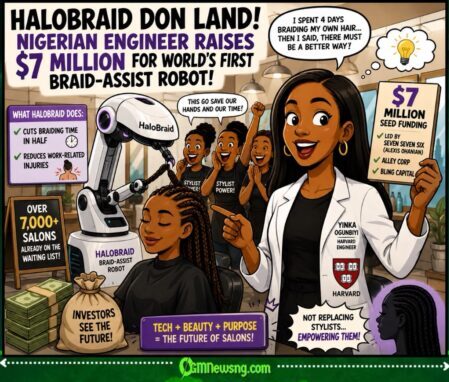
HaloBraid don turn ordinary salon conversation into global technology gist after Nigerian-American biomechanical engineer Yinka Ogunbiyi secure $7 million seed funding to commercialise what she describe as the world’s first patented braid-assist robot. The development don attract attention from beauty professionals, investors and technology observers alike, as many people dey ask whether this invention na breakthrough for hairstyling or the beginning of another machine-assisted revolution.
The excitement no be only because of the money involved. The bigger suspense na whether HaloBraid fit truly reduce braiding time and protect stylists from the physical stress and injuries wey many professionals complain about after years of repetitive work. As thousands of salons reportedly line up to test the technology, curiosity don reach fever pitch.
HaloBraid Boom: Beauty Industry Dey Enter Robot Era Whether Anybody Like Am Or Not
According to information available from the company and industry reports, Yinka Ogunbiyi conceive the idea during the COVID-19 period after spending four days installing her own knotless braids. The experience expose one challenge wey many professional braiders already know well: braiding fit take long hours and place serious strain on fingers, wrists, shoulders and backs.
HaloBraid no be robot wey dey run salon by itself. Instead, e dey function as braid-assist technology designed to support professional stylists and help reduce the time and effort required for certain braiding tasks. Supporters of the invention argue say the technology fit improve productivity while helping workers avoid injuries linked to repetitive movements. The strong investor interest and reported waiting list of more than 7,000 salons suggest say plenty people believe the idea get commercial potential.
HaloBraid Don Reach: Robot Finally Tire To Dey Watch Humans Suffer For Braids
The rise of HaloBraid fit into a wider trend where automation and robotics dey enter industries wey people once consider impossible for machines to assist. From manufacturing to healthcare and logistics, developers dey increasingly focus on tools wey support human workers instead of completely replacing them.
For the beauty industry, workplace strain no be new matter. Professional hairstylists around the world frequently discuss long hours of standing, repetitive hand movements and musculoskeletal stress. Because of this reality, some analysts see HaloBraid less as a replacement for skilled braiders and more as specialised equipment similar to how modern tools transformed other trades. Even so, skeptics dey joke say once robot don learn braid hair, na small step remain before machine begin recommend hair cream and settle customer complaints.
As the beauty-tech sector continues to grow, HaloBraid don become one of the most talked-about examples of how African-inspired innovation fit attract global investment. Whether the robot eventually becomes standard equipment in salons or remains a niche product, the project already don spark important conversations about technology, labour, health and entrepreneurship. OGM News Pidgin go continue to monitor how HaloBraid performs when commercial rollout expands and whether the growing excitement eventually translates into everyday salon reality.
Table of Contents
Discover more from OGM News NG
Subscribe to get the latest posts sent to your email.