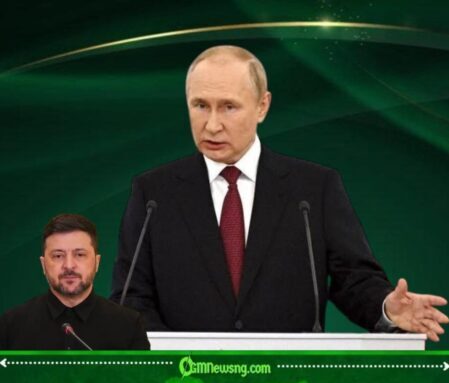
Putin has declared that Russia must continue carrying out large-scale strikes against Ukrainian military targets, sending another powerful signal that Moscow intends to maintain military pressure despite renewed international appeals for restraint. The latest remarks arrive as fighting across Ukraine remains intense, leaving observers questioning whether diplomacy is losing ground to battlefield strategy and whether the conflict is entering another prolonged phase with no immediate end in sight.
Large-Scale Strikes Become Moscow’s Loudest Diplomatic Message
Russian President Vladimir Putin stated that Russia should continue launching large-scale strikes against what the Kremlin describes as Ukrainian military facilities and infrastructure supporting Kyiv’s armed forces. Russian officials argue that such operations are intended to weaken Ukraine’s military capabilities, disrupt logistics, and reduce the country’s ability to conduct attacks inside Russian territory. The comments reinforce Moscow’s long-standing position that sustained military action remains essential to achieving its strategic objectives.
The statement comes amid another period of heavy drone and missile exchanges between both countries. Ukraine has continued conducting long-range strikes against targets inside Russia while defending against repeated Russian aerial assaults. Although each side presents its operations as defensive or necessary responses to the other’s actions, the continuing escalation has further complicated efforts to reduce tensions, with civilians on both sides remaining affected by the broader consequences of the conflict.
Putin’s War Doctrine Raises Fresh Questions About the Road to Peace
The latest declaration has renewed international discussion over whether meaningful peace negotiations can gain momentum while military operations continue at such an intense pace. Several governments have continued encouraging diplomatic engagement, yet both Moscow and Kyiv remain committed to pursuing their respective strategic goals before making significant concessions. As a result, ceasefire proposals continue to face major political and military obstacles.
Beyond the immediate battlefield, the war continues reshaping European security, military planning, and international relations. Nations across Europe have strengthened defence cooperation, while humanitarian organisations remain focused on assisting displaced civilians and communities affected by the prolonged fighting. Military analysts also note that the increasing use of drones, precision-guided weapons, and advanced surveillance technology is transforming the nature of modern warfare, making future conflicts likely to follow similar patterns.
For many watching around the world, the latest comments from Putin illustrate how large-scale strikes remain central to Russia’s current military strategy. Whether this approach eventually creates conditions for negotiations or leads to another cycle of escalation remains uncertain. OGM News Nigeria will continue monitoring developments as world leaders assess both the military situation and the increasingly difficult search for a lasting peace.
Table of Contents
Discover more from OGM News NG
Subscribe to get the latest posts sent to your email.