








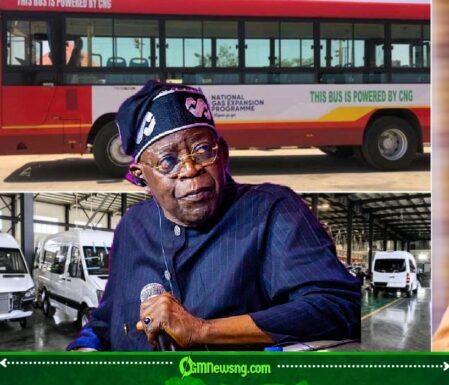
President Bola Ahmed Tinubu has inaugurated four major Compressed Natural Gas (CNG) infrastructure projects across Lagos, Abuja, and Owerri, marking a significant milestone in Nigeria’s effort to expand clean transportation infrastructure and deepen domestic gas utilisation. The projects, delivered under the Midstream and Downstream Gas Infrastructure Fund (MDGIF), are expected to strengthen energy security, reduce transportation costs, and accelerate the nation’s transition to cleaner fuel alternatives.
The inauguration reflects the administration’s broader strategy of leveraging Nigeria’s abundant natural gas resources to support economic growth while reducing dependence on more expensive conventional fuels. Government officials described the projects as critical investments aimed at transforming the transportation and energy sectors.
For President Bola Ahmed Tinubu, the expansion of CNG infrastructure forms a key part of the administration’s energy reform agenda, which seeks to promote cleaner, more affordable, and locally sourced energy solutions.
Infrastructure Strategically Located in Urban Centers
The newly inaugurated facilities are strategically located across major urban centres to improve access to compressed natural gas for commercial transport operators, logistics companies, and private vehicle owners. Officials say the projects will help build a nationwide network capable of supporting increasing demand for alternative fuels.
According to stakeholders in the energy sector, Nigeria possesses one of the largest natural gas reserves in Africa, making CNG a potentially viable option for reducing fuel import dependence and lowering transportation operating costs.
Supporters of the initiative argue that improved gas infrastructure could also encourage industrial development, create jobs, and attract additional investment into the midstream and downstream energy sectors.
Tinubu: Transition from PMS to CNG
The latest projects underscore President Bola Ahmed Tinubu’s commitment to expanding the role of natural gas in Nigeria’s energy mix. Experts note that CNG generally produces fewer emissions than traditional petroleum fuels, making it an important component of efforts to promote cleaner transportation.
Energy analysts believe widespread adoption of CNG could help cushion consumers from fuel price volatility while strengthening domestic energy utilisation. However, they also stress that long-term success will depend on sustained infrastructure development, vehicle conversion programmes, and public awareness campaigns.
While expectations remain high, many Nigerians will ultimately judge the initiative by its impact on transportation costs and fuel accessibility. As implementation continues, the success of these projects could play a major role in shaping the future of Nigeria’s energy transition and transport economy.
Table of Contents
Discover more from OGM News NG
Subscribe to get the latest posts sent to your email.