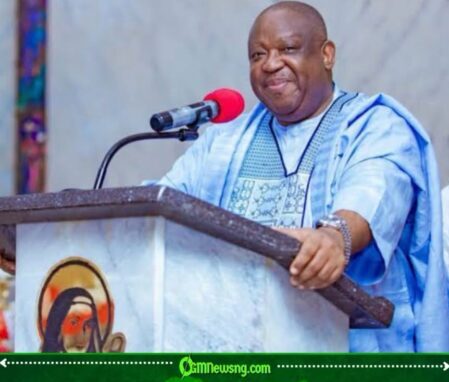


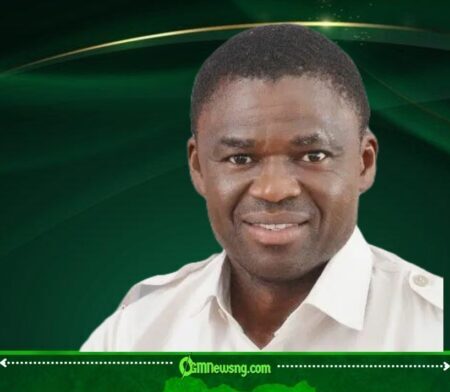
Hardship and reforms dominated political conversations this weekend after former Edo State deputy governor Rt. Hon. Philip Shaibu defended President Bola Tinubu’s economic policies and declared that the Peoples Democratic Party is gradually collapsing under the weight of internal crises and public distrust. In a strongly worded interview, Shaibu argued that Nigeria’s current economic pain is not evidence of failure but proof that deep structural reforms are finally taking place after years of what he described as a “fake economy.”
He insisted that despite public frustration over inflation, fuel costs, and rising living expenses, the ruling APC still stands a strong chance in 2027 because Tinubu’s administration is rebuilding damaged institutions from the ground up. His comments immediately triggered sharp reactions from both critics and supporters, reopening the national debate over whether Nigerians are witnessing necessary reforms or simply enduring prolonged hardship without guarantees of relief.
Tinubu Fixing Nigeria’s “Cracked Foundation,” Says Shaibu
Shaibu repeatedly compared Nigeria’s economy to a cracked building undergoing reconstruction, arguing that genuine reforms are never painless. According to him, subsidy removal and fiscal restructuring have exposed long-hidden weaknesses in the nation’s financial system, forcing governments at federal and state levels to confront realities previous administrations allegedly avoided.
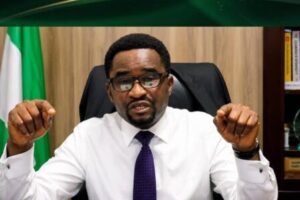
The former deputy governor pointed to developments within the sports sector as evidence of Tinubu’s administrative approach. As Director-General of the National Institute for Sports, Shaibu claimed that reforms under his leadership have expanded the institute beyond Lagos and Abuja into all six geo-political zones while addressing a shortage of over 500,000 coaches nationwide. He credited President Tinubu for prioritizing sports as a tool for national unity, youth engagement, and economic diversification.
Shaibu also defended the administration’s controversial economic choices by insisting that state governments now receive more allocations following subsidy removal. He argued that many Nigerians criticizing the government fail to acknowledge that the country’s previous economic structure was unsustainable and heavily manipulated. According to him, the current hardship reflects the disruption that naturally follows attempts to repair long-standing institutional damage.
Edo Ex-Deputy Governor Declares PDP a “Dying Party”
Beyond the economy, Shaibu’s declaration that the PDP is a “dying party” reflects growing concerns within Nigeria’s opposition landscape ahead of the 2027 elections. In recent months, several political figures across different states have either defected to the APC or openly expressed dissatisfaction with opposition leadership structures, fueling speculation about a possible political realignment before the next presidential race.
Political analysts note that economic reforms remain deeply controversial because the benefits promised by the administration have not yet translated into immediate relief for many households. Inflation, transportation costs, electricity tariffs, and food prices continue to place enormous pressure on ordinary Nigerians, even as government officials argue that macroeconomic indicators are gradually improving. Critics of the administration accuse political elites of framing citizens’ suffering as a patriotic sacrifice while many families struggle to afford basic necessities.
Still, supporters of the Tinubu administration argue that previous governments delayed difficult decisions for political convenience, leaving structural problems unresolved for decades. They point to reforms in foreign exchange management, subsidy removal, and revenue allocation as measures intended to stabilize public finances over the long term. Shaibu’s remarks therefore mirror a broader argument emerging within the ruling party: that temporary hardship is the unavoidable cost of national reforms.
As the political atmosphere slowly shifts toward 2027 calculations, debates surrounding hardship, governance, and accountability are expected to intensify. Whether Nigerians eventually embrace the administration’s promises of “sweetness” after sacrifice may depend less on political speeches and more on visible improvements in living conditions over the coming months. OGM News Nigeria will continue monitoring developments surrounding the economy, opposition politics, and the growing battle for public confidence ahead of the next election cycle.
Table of Contents
Discover more from OGM News NG
Subscribe to get the latest posts sent to your email.