
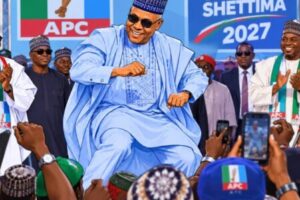









Former Kaduna State governor, Nasir El-Rufai, will remain in custody following a fresh court decision to postpone ruling on his bail application. The adjournment, which came after legal arguments from both prosecution and defense, has intensified public attention on the high-profile case. Observers note that such delays, while not uncommon in complex legal proceedings, often heighten tension and speculation.
The presiding court cited procedural reasons for the postponement, indicating that more time was needed to carefully review submissions and evidence presented by both parties. Legal experts suggest that the delay may also reflect the sensitivity of the case, given the political stature of Nasir El-Rufai and the broader implications of the ruling. As a result, the former governor will continue to remain in custody until the court reconvenes.
Supporters of Nasir El-Rufai have expressed concern over the continued detention, arguing that bail is a fundamental right pending trial. Meanwhile, critics insist that due process must be followed without interference. The situation underscores the delicate balance between judicial independence and public expectation in high-profile legal matters.
Legal and Political Reactions to the Bail Delay
The decision to keep Nasir El-Rufai in custody has triggered widespread reactions across Nigeria’s political and legal landscape. Prominent voices within the legal community have weighed in, with some defending the court’s cautious approach, while others question whether the delay is justified. The case has quickly become a focal point for discussions on the efficiency and fairness of the judicial system.
Within political circles, the development has sparked debate among allies and opponents of Nasir El-Rufai. Some political figures have described the delay as a necessary step to ensure justice is served, while others interpret it as a sign of potential bias or external influence. The ongoing discourse highlights how legal proceedings involving influential figures often transcend the courtroom and enter the arena of public opinion.
Civil society organizations have also joined the conversation, calling for transparency and adherence to the rule of law. They emphasize that the case involving Nasir El-Rufai should be handled with utmost integrity to maintain public confidence in Nigeria’s judicial institutions. The coming days are expected to bring more statements and reactions as stakeholders continue to monitor the situation closely.
Implications for Nigeria’s Judiciary and Public Perception
The continued detention of Nasir El-Rufai carries significant implications for how the Nigerian judiciary is perceived both locally and internationally. High-profile cases such as this often serve as a litmus test for the strength and independence of legal institutions. As such, the court’s eventual ruling on the bail application will likely shape narratives around judicial credibility.
Analysts point out that prolonged adjournments in cases involving prominent individuals can influence public trust. While some view the delay as evidence of thoroughness, others see it as a sign of inefficiency. In the case of Nasir El-Rufai, the attention surrounding his detention has amplified these contrasting viewpoints, making the court’s next move particularly critical.
The outcome of this case could set a precedent for how similar cases are handled in the future. For Nigeria, ensuring that justice is both done and seen to be done remains essential. As the legal process unfolds, all eyes remain on the judiciary to deliver a decision that upholds fairness, transparency, and the rule of law.
Table of Contents
Discover more from OGM News NG
Subscribe to get the latest posts sent to your email.