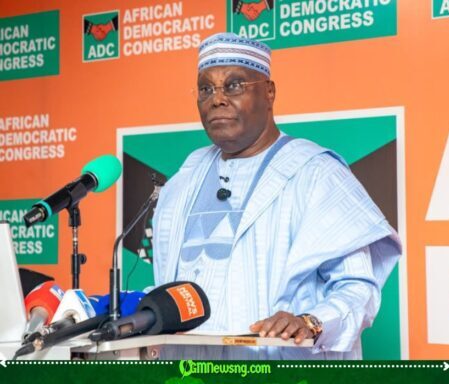








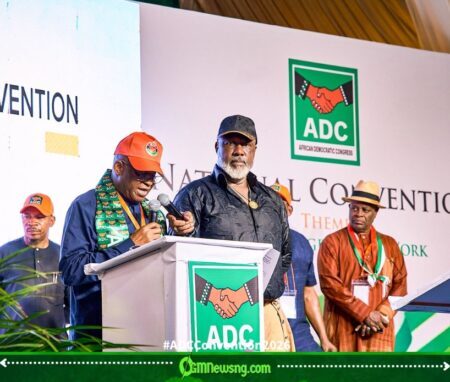
The African Democratic Congress (ADC) has concluded its national convention in Abuja with a decisive vote to amend its constitution and formally ratify a new National Working Committee (NWC) led by former Senate President, David Mark. The convention, described by ADC leadership as a major milestone, signals the party’s renewed ambition ahead of the 2027 general elections.
Held at the Rainbow Event Centre, the gathering brought together delegates from across the country, culminating in significant structural changes within the ADC. Leaders at the event framed the outcomes as the beginning of a strategic journey toward national political relevance and a potential bid for power at the federal level.
Overwhelming Vote Reshapes Party Structure
The convention witnessed a strong endorsement of constitutional amendments, with delegates voting overwhelmingly in favour of proposed changes. According to Emeka Ihedioha, Chairman of the ADC Electoral Sub-Committee, 1,576 delegates were accredited, with 1,471 votes—representing 94 per cent—supporting the amendments, while 11 votes were declared void.
The amendments were preceded by the ratification of key resolutions from the party’s 97th, 98th, and 99th National Executive Committee (NEC) meetings. Led by Olumide Apata, the Legal and Convention Processes Committee facilitated the adoption of reforms aimed at restructuring internal processes and broadening participation.
Notably, the changes include a waiver of membership requirements, the suspension of zoning provisions for executive roles, and the removal of restrictions requiring replacement candidates to emerge from the same geographical zone. ADC officials said these measures are intended to foster inclusiveness and enhance operational flexibility.
Leadership Changes and Expulsions Rock Party Ranks
A major highlight of the convention was the dissolution of the former National Working Committee led by Chief Ralph Nwosu, with the new leadership under David Mark assuming immediate control. The decision, ratified by delegates, effectively marks a shift in the party’s leadership direction.
In addition, the party announced the expulsion of several members over alleged anti-party activities. Among those affected are factional chairman Nafiu Bala and House of Representatives member Leke Abejide. Others expelled include Kingsley Temitope, Noman Obinna, Kennedy Odion, Stella Chukwuma, and four additional members.
The motion for expulsion was moved by Senator Binos Yaroe and seconded by Hon. Abdussamad Dasuki. ADC leadership stated that the action was necessary to maintain discipline and prevent internal instability.
Opposition Figures Criticise Electoral Body and Government Policies
The convention also served as a platform for prominent political figures to voice concerns over national issues. Former Vice President Atiku Abubakar accused the Independent National Electoral Commission (INEC) of undermining democracy, alleging irregularities under its leadership.
Similarly, former Labour Party presidential candidate Peter Obi warned that Nigeria’s rising debt profile could lead to economic instability. He criticised continued borrowing despite the removal of fuel subsidies, noting that the country’s debt had surged significantly in recent years.
Former Rivers State governor Rotimi Amaechi raised alarm over worsening insecurity, describing scenes in parts of the country as reminiscent of civil unrest. Meanwhile, ADC National Secretary Rauf Aregbesola criticised the Federal Government’s “Renewed Hope” agenda, questioning its effectiveness in addressing economic and security challenges.
ADC Charts Course Toward 2027 Elections
In his closing remarks, David Mark praised the organisation of the convention, describing it as superior to others he had attended during his time in the Peoples Democratic Party (PDP). He emphasised that the event marked the beginning of the ADC’s journey toward securing power at the national level.
Despite the absence of official monitoring by the Independent National Electoral Commission due to a court ruling, the party proceeded with its congresses and convention. The successful conduct of the event, according to party officials, underscores its determination to consolidate internal structures and present itself as a credible alternative in Nigeria’s political landscape.
As delegates departed Abuja, the message from the leadership was clear: the ADC is repositioning itself for a more prominent role in the country’s democratic process, with eyes firmly set on the 2027 elections.
Table of Contents
Discover more from OGM News NG
Subscribe to get the latest posts sent to your email.