









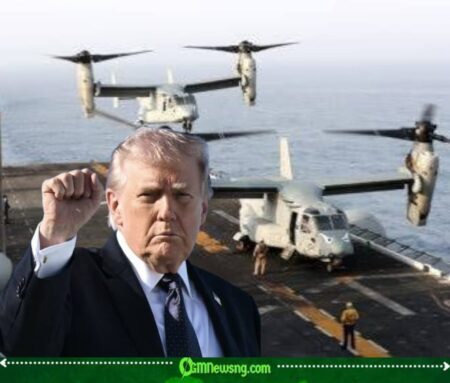
President Donald Trump, declared that the United States has “achieved overwhelming air dominance and superiority over the Iranian skies,” presenting the statement as a major milestone in the ongoing conflict. His remarks underscore confidence in U.S. military capabilities and operational success.
The claim has immediately drawn attention from global observers, as air superiority is often considered a decisive factor in modern warfare. Control of the skies can significantly influence both tactical operations and broader strategic outcomes.
Analysts note that such declarations are not only military assessments but also powerful signals aimed at shaping perception, deterrence, and international response.
Strategic Importance of Air Dominance
President Donald Trump, emphasized that achieving air superiority allows for greater flexibility in executing missions and reduces risks to ground forces. He suggested that this advantage strengthens overall operational effectiveness.
Military experts highlight that air dominance enables precision targeting, improved intelligence gathering, and the ability to disrupt enemy capabilities more efficiently.
However, they also caution that maintaining such dominance requires continuous effort, as adversaries may adapt with new tactics or technologies.
President Donald Trump and Military Messaging
President Donald Trump, framed the announcement as evidence of U.S. strength, reinforcing the narrative of technological and strategic superiority. His statement aligns with broader efforts to project confidence during the conflict.
Public declarations of dominance can serve multiple purposes, including boosting domestic morale and signaling resolve to both allies and adversaries.
Observers note that messaging plays a critical role in shaping the perception of success, even as on-the-ground realities continue to evolve.
Reactions and Global Perspectives
President Donald Trump, comments have sparked a range of reactions from international leaders and defense analysts. Some view the claim as a demonstration of capability, while others urge caution in interpreting such statements.
Allied nations are closely monitoring developments, particularly in terms of how increased U.S. control of airspace might affect regional dynamics and security arrangements.
At the same time, critics argue that assertions of dominance may escalate tensions if perceived as overly aggressive or premature.
Operational Realities and Challenges
President Donald Trump, assertion comes amid ongoing operations that remain complex and unpredictable. Even with advanced technology, achieving and sustaining air superiority is rarely absolute.
Experts point out that factors such as weather, terrain, and enemy countermeasures can all influence the effectiveness of air operations. These variables introduce uncertainty into any claim of dominance.
The situation underscores the importance of adaptability and constant evaluation in military strategy.
What Comes Next
President Donald Trump, indicated that the United States will continue to leverage its air advantage in pursuit of its strategic objectives. His remarks suggest that further operations may build on this claimed momentum.
The coming weeks will be critical in determining whether the asserted dominance translates into tangible outcomes on the ground and in broader conflict resolution efforts.
As developments unfold, attention will remain focused on both the accuracy of the claims and their implications for the future of the conflict and regional stability.
Table of Contents
Discover more from OGM News NG
Subscribe to get the latest posts sent to your email.