






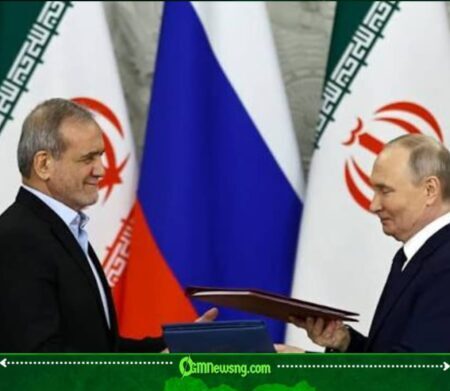
Russia has reiterated its position that Iran retains the sovereign right to pursue uranium enrichment under international agreements, according to remarks attributed to Foreign Minister Sergey Lavrov. The statement comes amid renewed diplomatic conversations over Iran’s nuclear program and broader regional security concerns.
The comments reflect Moscow’s longstanding view that the Nuclear Non-Proliferation Treaty (NPT) permits peaceful nuclear energy development, including uranium enrichment, so long as it remains under international safeguards and inspection regimes.
The remarks are likely to draw varied reactions from Western governments, some of which have raised concerns about enrichment levels and the potential implications for regional stability.
Legal Framework and Treaty Obligations
Russia has frequently argued that the NPT framework grants signatories the right to civilian nuclear development. Officials in Moscow maintain that enrichment for peaceful purposes does not violate treaty obligations when conducted transparently.
International nuclear law specialists note that enrichment itself is not prohibited. Rather, disputes often center on enrichment levels, monitoring transparency, and assurances that materials are not diverted toward weapons development.
The International Atomic Energy Agency (IAEA) remains central to verification efforts. Its inspection authority provides a mechanism for monitoring compliance with international commitments.
Diplomatic Calculations in Russia’s Position
Russia views its diplomatic role as both a permanent member of the UN Security Council and a participant in prior nuclear negotiations. Moscow has historically supported negotiated settlements rather than unilateral pressure.
Some analysts suggest that Moscow’s stance may also reflect broader geopolitical alignments. In a shifting global order, strategic partnerships often intersect with legal interpretations of international frameworks.
At the same time, critics argue that public endorsements of enrichment rights could complicate delicate diplomatic talks aimed at limiting sensitive nuclear activity.
Western Concerns and Regional Reactions
Russia is aware that Western capitals have expressed concern about Iran’s enrichment levels in recent years. The debate often hinges not on the principle of enrichment itself but on thresholds and verification access.
European officials have repeatedly emphasized the need for transparency and compliance with safeguard agreements. They argue that confidence-building measures are essential to prevent escalation.
Regional actors in the Middle East also monitor developments closely. Nuclear capability debates in one state often influence broader security calculations across neighboring countries.
The Broader Non-Proliferation Debate
Russia has maintained that the integrity of the NPT depends on consistent application of its provisions. Selective enforcement, some Russian officials argue, risks undermining trust in multilateral institutions.
Non-proliferation experts counter that enforcement must adapt to evolving technical capabilities and geopolitical realities. Enrichment technology has become more advanced and accessible over time.
The global non-proliferation regime balances two core principles: preventing nuclear weapons proliferation and protecting the right to peaceful nuclear energy development. Maintaining that balance remains an ongoing diplomatic challenge.
Implications for Future Negotiations
Russia may seek to position itself as a mediator in renewed talks concerning Iran’s nuclear program. Diplomatic engagement has historically included multiple global powers working in coordination.
Whether recent statements will facilitate or complicate negotiations depends largely on how other stakeholders interpret Moscow’s intent. Public declarations can either clarify legal perspectives or harden negotiating positions.
Ultimately, the issue underscores a fundamental tension in international relations: how to uphold treaty rights while ensuring that global security concerns are addressed. As discussions continue, the interplay between sovereignty, compliance, and trust will shape the next phase of diplomatic engagement.
Table of Contents
Discover more from OGM News NG
Subscribe to get the latest posts sent to your email.