





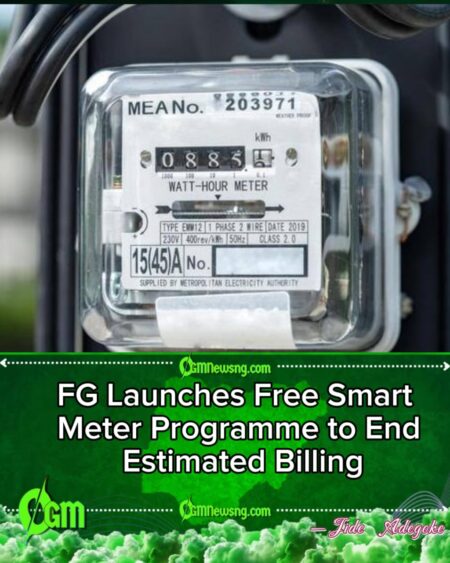
The Federal Government has commenced a nationwide distribution of smart electricity meters at no cost to consumers, marking a major step in ongoing power sector reforms aimed at improving transparency, billing accuracy, and service delivery. The initiative, which officials say is completely free, comes with a strong warning to Nigerians not to pay any individual or group claiming to facilitate access to the meters. According to the Federal Government, the programme is designed to close the long-standing metering gap and restore confidence between electricity consumers and distribution companies.
Authorities emphasize that the rollout is part of a broader effort to modernize Nigeria’s power infrastructure, curb estimated billing, and empower consumers with better control over their electricity usage. The meters are being distributed across states through licensed electricity distribution companies (DisCos) underFederal Government supervision.
Background and Policy Objectives
The free smart meter programme is rooted in the Federal Government’s commitment to end estimated billing, a practice that has generated widespread complaints among electricity consumers for years. By providing prepaid smart meters, the Federal Government aims to ensure that households and businesses are billed strictly based on actual consumption, thereby promoting fairness and accountability in the power sector.
Officials involved in the rollout explained that the initiative aligns with existing power sector reform policies, including efforts to boost revenue assurance for DisCos while protecting consumers from arbitrary charges. The meters are expected to support data-driven planning, help identify technical and commercial losses, and improve overall grid management.
In addition, the programme is part of a larger national energy strategy that prioritizes digital solutions and customer-focused reforms. By deploying smart technology, the government hopes to lay the groundwork for future innovations such as remote meter reading, real-time energy monitoring, and improved fault detection.
Implementation and Distribution Process
Distribution of the free smart meters is being carried out in phases, with priority given to areas with high concentrations of unmetered customers. Electricity distribution companies are coordinating installations, while regulatory agencies are providing oversight to ensure compliance with guidelines and timelines.
Consumers are not required to make any payments or unofficial “processing fees” to receive a meter. The government has warned that any demand for money in connection with the programme is fraudulent and should be reported to the appropriate authorities or customer service units of the relevant DisCo.
To streamline the process, customers are encouraged to verify their eligibility through official DisCo channels and participate in scheduled installation exercises. Officials noted that the rollout may take time due to Nigeria’s large customer base, but assured the public that every registered consumer will eventually be covered under the programme.
Expected Impact and Public Response
Energy experts believe the free smart meter distribution could significantly improve trust in the electricity sector by eliminating billing disputes and giving consumers clearer insight into their energy consumption. The move is also expected to reduce revenue leakages and strengthen the financial sustainability of distribution companies.
Early public reaction has been largely positive, with many Nigerians welcoming the prospect of accurate billing and relief from estimated charges. Consumer advocacy groups, however, have urged the government to maintain transparency throughout the process and to ensure that rural and underserved communities are not left behind.
The Federal Government has reiterated its commitment to sustaining the programme until the national metering gap is fully closed. Officials maintain that the success of the initiative will depend on continuous monitoring, public awareness, and cooperation between regulators, DisCos, and electricity consumers.
Table of Contents
Discover more from OGM News NG
Subscribe to get the latest posts sent to your email.