








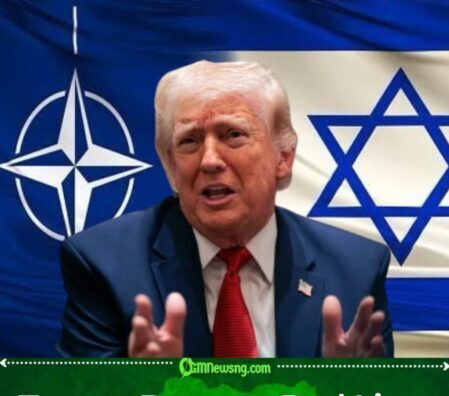
President Donald J. Trump has reportedly delivered a blunt message on the limits of NATO’s involvement in any confrontation involving Israel, insisting that the alliance cannot simply turn against Israel. The reported position comes amid heightened tensions in the Middle East and renewed questions about how far America’s NATO commitments should extend when conflicts involve countries outside the alliance. NATO’s own rules make clear that Israel is not a NATO member, while Article 5 concerns collective defence of NATO members following an armed attack.
The remarks, if interpreted as a warning to NATO allies, place Trump at the centre of another uncomfortable debate over the alliance’s responsibilities and America’s relationship with Israel. Recent events have already exposed differences between Washington and some European allies over the U.S. approach to Iran, with Trump previously questioning whether America should continue defending allies that he believes have failed to support the United States.
Trump Puts Israel at the Centre of Another NATO Debate
Trump has made clear that he does not view NATO as an organisation that can automatically be directed against Israel. That distinction matters because Israel is outside NATO, while Turkey is a NATO member, creating a particularly complicated situation if tensions between the two countries were ever to escalate into a direct confrontation. NATO officials have emphasized that Article 5 applies to the alliance’s collective defence obligations and that each situation must be assessed under the treaty.
In the satirical department, NATO officials may soon need two maps on every meeting table: one showing who is actually in NATO and another showing who Trump does not want NATO fighting. Somewhere, an exhausted diplomat is probably whispering, “Can we please finish one crisis before someone adds another country to the whiteboard?”
Trump’s NATO Position Keeps Allies Guessing
Trump has had a complicated relationship with NATO, alternating between strong criticism of the alliance and declarations of support for collective defence. At the July 2026 NATO summit in Ankara, allied leaders reaffirmed their commitment to Article 5, while reporting from the summit described Trump’s mixed messaging over NATO and the Iran conflict as a major focus of attention.
The latest reported position therefore lands in an already crowded diplomatic conversation. NATO’s secretary general has said Iran is outside NATO territory and that individual allies are handling the conflict with the United States, highlighting the distinction between NATO as an alliance and the independent military decisions of its members. For Trump, however, the message appears straightforward: America’s alliances may have rules, but Washington intends to have a very loud opinion about how those rules are interpreted.
The issue remains politically sensitive, particularly as tensions involving Israel, Iran and NATO member Turkey continue to test the boundaries of America’s commitments to its allies. OGM News NG will continue monitoring Trum’s position and any response from NATO members as the story develops, because in international politics, today’s red line can become tomorrow’s negotiating table.
Table of Contents
Discover more from OGM News NG
Subscribe to get the latest posts sent to your email.