








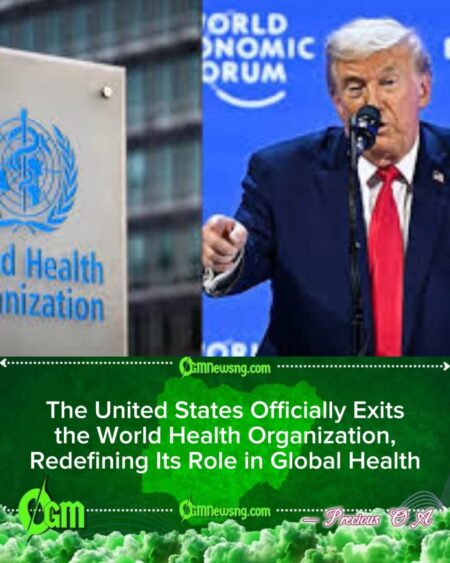
The United States has formally exited the World Health Organization (WHO), marking a significant shift in international public health engagement. The decision, announced after years of criticism of the organization’s handling of global health crises, ends U.S. membership that has lasted since the agency’s founding in 1948.
Officials cited concerns over transparency, decision-making, and pandemic preparedness, arguing that reforms proposed by WHO leadership were insufficient. The move reflects ongoing debates in Washington over the nation’s role in global institutions and its prioritization of domestic health sovereignty.
Political analysts note that the withdrawal has immediate diplomatic and operational implications. Global health experts warn that the U.S. departure could hinder collaborative responses to emerging pandemics and reduce American influence in shaping international health policy.
Background on the WHO and U.S. Involvement
The United States has historically been one of the largest contributors to WHO funding, providing billions of dollars in support over decades. Contributions have supported disease eradication programs, vaccine distribution, and health infrastructure development in low-income countries.
Critics of WHO say the organization has exhibited inefficiencies and slow responses to crises, including the COVID-19 pandemic. They argue that U.S. taxpayer money should not support perceived mismanagement.
The United States had previously threatened withdrawal during past administrations, using it as leverage to push for organizational reforms. However, this formal exit represents the most decisive action in modern history.
Political Implications Domestically
The United States exit from WHO has ignited partisan debates within Congress. Supporters argue it demonstrates accountability, asserting that America should not fund international organizations that fail to operate transparently or align with U.S. interests.
Opponents contend the move is short-sighted, warning that it may isolate the U.S. from critical global health collaborations. They argue that participation in WHO offers unique opportunities for early warning, research, and coordination during epidemics.
The United States’ withdrawal also places pressure on domestic public health agencies to compensate for gaps left by reduced international cooperation. This may require increased funding and staffing to ensure that America can independently respond to global threats.
The United States and Global Health Strategy
The United States has announced plans to pivot toward alternative multilateral and bilateral health initiatives. Officials say these strategies will focus on strengthening regional partnerships and supporting targeted disease-control programs outside the WHO framework.
Critics caution that bypassing WHO may reduce efficiency and coordination in global pandemic responses. They argue that international collaboration is essential for managing cross-border health emergencies, including infectious diseases and vaccine distribution.
The United States insists that the exit is not a retreat from global health but a recalibration of priorities. Officials maintain that new mechanisms will allow the U.S. to direct resources more effectively toward programs that yield measurable results.
International Reactions
Reactions from global partners have been swift. Many countries have expressed disappointment, warning that U.S. withdrawal could undermine ongoing efforts to combat health crises in low- and middle-income nations.
The United States has faced criticism from the United Nations and other international bodies, which emphasize that WHO membership ensures equitable access to critical health information and expertise.
Some allies, however, have signaled understanding of the U.S. position, noting that domestic accountability and reform efforts are legitimate concerns. They hope the withdrawal will prompt broader organizational improvements within WHO.
Future Prospects and Challenges
The United States exit leaves questions about the long-term impact on both domestic and global public health. Analysts predict that the country will face increased responsibility in independently funding research, vaccine distribution, and crisis response.
The decision may also influence other nations’ engagement with WHO, potentially leading to a reevaluation of membership commitments. Observers warn that diminished U.S. involvement could slow progress on disease eradication and emergency preparedness.
The United States has pledged to remain engaged in global health through new partnerships and initiatives. Officials stress that the focus will remain on innovation, accountability, and protecting American interests while continuing to support global health security.
Table of Contents
Discover more from OGM News NG
Subscribe to get the latest posts sent to your email.