









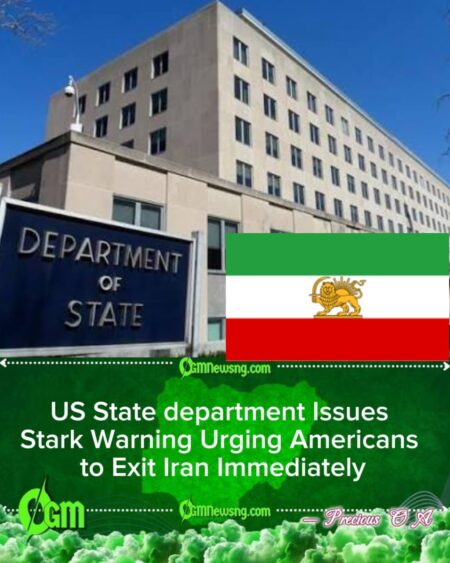
US state department officials on Tuesday released a high-level security alert urging all American citizens currently in Iran to leave the country immediately, citing rapidly evolving security threats, regional instability, and the heightened risk of detention, harassment, or violence against foreign nationals. The alert represents one of the strongest warnings issued in recent years and signals growing concern within Washington about deteriorating safety conditions across major Iranian cities.
The advisory outlines a broad range of threats, including unpredictable law-enforcement actions, limited access to consular assistance, and increasing geopolitical tensions that could trigger sudden border closures or flight suspensions. Travel specialists noted that the warning reflects intelligence assessments indicating rising risk to Americans who remain inside Iranian territory.
Local observers reported that some foreign residents had already begun making arrangements to depart, as commercial flights out of Tehran and other hubs became more difficult to secure. Airlines, meanwhile, began updating travel notices, while embassies across the region advised travelers to monitor developments closely.
Heightened Regional Tensions
US State department analysts believe the alert is closely tied to intensifying confrontations in the Middle East, particularly surrounding military activities, sanctions enforcement, and shifting alliances. Recent developments have increased fears that Iran could become a flashpoint for broader regional escalation, placing foreign nationals at heightened risk.
Diplomatic sources suggested that the current environment has created an unpredictable security landscape, where local authorities may impose travel restrictions without notice. Such conditions make it harder for embassies to provide timely assistance to citizens in distress.
Security firms operating in the region reported that multinational companies have begun reviewing evacuation procedures, while universities and humanitarian organizations reassessed their on-ground operations to minimize staff exposure to potential danger.
US State department Consular Limitations and Access Challenges
US State department representatives emphasized that American consular access in Iran remains extremely limited due to longstanding diplomatic restrictions. This limitation means that in the event of detention or emergency, U.S. citizens may face significant delays in receiving legal, medical, or logistical support.
Legal experts noted that Iran’s judicial system operates under different standards than those familiar to Americans, making even minor disputes potentially risky for foreign visitors. Travelers were advised to avoid public demonstrations, sensitive areas, and any activities that could be misinterpreted by authorities.
Travel insurers also issued cautionary statements, reminding policyholders that certain coverage benefits may be restricted or voided in high-risk regions designated under government advisories.
Economic and Travel Disruptions
Major airlines have adjusted schedules, with several carriers reducing or suspending flights into Iranian airports. Travel agencies reported a surge in last-minute booking requests from foreign nationals seeking exit routes through neighboring countries.
US State department monitoring teams stated that disruptions to international travel corridors could worsen quickly if political conditions continue to deteriorate. They encouraged travelers to secure tickets as soon as possible and maintain multiple contingency plans.
Financial analysts observed that prolonged instability could affect regional trade, tourism flows, and currency stability, potentially compounding economic pressures already facing the country.
International Diplomatic Reactions
US State department officials have reportedly engaged with allied nations to coordinate messaging and share intelligence assessments. Several European and Asian governments have issued similar, though slightly less urgent, travel advisories for their citizens.
Diplomats highlighted the importance of unified international communication to prevent misinformation and ensure that travelers understand the seriousness of the current environment. Joint statements are expected to follow if conditions worsen further.
Humanitarian organizations also voiced concern, noting that operational access could become more difficult, limiting the delivery of aid to vulnerable populations.
What Travelers Are Being Told
US State department guidance advises Americans to depart via any available commercial means and to avoid travel to Iran under all circumstances until further notice. Travelers are urged to maintain communication with family, keep emergency funds accessible, and register with appropriate travel monitoring services.
Security consultants recommend preparing copies of identification documents, arranging safe transport to airports, and monitoring official government channels for real-time updates. In addition, travelers were advised to avoid sharing itineraries publicly and to remain discreet during transit.
Industry experts believe that such strong language reflects genuine concern and should be treated with urgency, especially given the rapidly changing political and security climate across the region.
Table of Contents
Discover more from OGM News NG
Subscribe to get the latest posts sent to your email.