









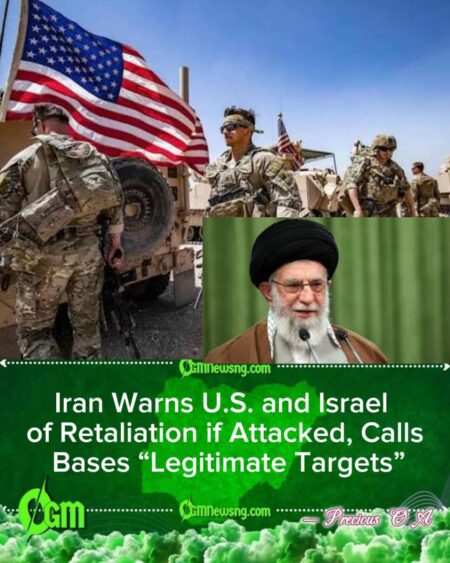
Iran issued a stark warning this week, declaring that any direct military confrontation with Washington would trigger immediate retaliation against U.S. installations across the Middle East and allied targets in Israel. The statement, released through senior security officials, has sharply escalated regional tensions and placed American bases on heightened alert.
Iran also warned that its response would not be limited to a single front, stressing that its military doctrine now emphasizes multi-theater retaliation designed to overwhelm defensive systems. Officials claimed the country’s missile, drone, and naval capabilities had been modernized specifically to respond to what they described as “foreign encirclement.”
Pentagon officials responded by reaffirming their commitment to protecting U.S. service members stationed abroad, while Israeli leaders issued parallel statements pledging readiness to defend their territory. Analysts say the tone of Iran’s language suggests a deliberate attempt to project deterrence rather than an immediate intention to initiate conflict.
Iran Signals a Broader Strategy
Iran has increasingly emphasized what it calls its “forward defense” strategy, which positions allied militias and military assets beyond its borders to create layered deterrence. This framework allows Tehran to threaten responses that extend from the Persian Gulf to the Mediterranean.
Regional observers say the doctrine gives Iranian leaders political leverage during periods of heightened diplomatic pressure. It also enables Iran to shift pressure points without deploying conventional forces directly into a conflict zone.
Western security analysts believe this posture is designed to make any direct strike against Iran appear far more costly, as retaliation could cascade through multiple regional theaters simultaneously.
Impact on U.S. Military Posture
Iran has indirectly influenced how U.S. forces are deployed throughout the region, prompting adjustments in troop placement, air defense systems, and naval patrol routes. Commanders are now reassessing base security and reviewing evacuation contingencies.
American defense officials have increased joint exercises with allied nations, emphasizing missile interception and rapid response readiness. These measures are intended to reduce vulnerabilities and reassure partner governments concerned about potential spillover.
Diplomats warn that even symbolic military movements risk misinterpretation, potentially accelerating a cycle of provocation and counter-provocation.
Israeli Security Calculations
Israel has long regarded Tehran’s regional posture as a primary strategic concern. Defense planners are now revisiting missile defense coordination with allied nations and expanding early-warning surveillance networks.
Iran is often cited in Israeli intelligence assessments as a key driver of regional instability, particularly due to its relationships with armed non-state groups. Officials argue that this network could be activated quickly in response to any escalation.
Civil defense authorities have also updated public preparedness guidelines, including shelter readiness and emergency communication systems, reflecting growing concern about potential long-range threats.
Diplomatic Channels Under Pressure
Diplomats across Europe and the Gulf are urging restraint, emphasizing the need to keep dialogue channels open. They warn that hardened rhetoric risks undermining fragile regional diplomacy.
Iran has reportedly received messages from multiple intermediaries seeking clarification of its intentions. These backchannel communications aim to prevent misunderstandings that could lead to unintended military encounters.
Some negotiators believe the current posture may be intended to strengthen Tehran’s hand in broader geopolitical negotiations rather than signal immediate military action.
Global Energy Market Concerns
Energy markets reacted cautiously, with oil prices experiencing modest fluctuations as traders weighed the risk of potential disruptions in key shipping lanes.
Shipping insurers have already adjusted premium rates for vessels transiting certain areas, reflecting concern over escalating rhetoric. These changes could gradually affect consumer fuel prices worldwide.
Iran remains a pivotal factor in global energy stability, given its geographic position near strategic maritime chokepoints and its influence over regional shipping security.
International Community Watches Closely
The United Nations and several major powers have called for de-escalation, emphasizing the importance of diplomatic engagement over military signaling. Statements from multiple capitals underscored fears that a miscalculation could trigger wider conflict.
Iran has continued to frame its warnings as defensive in nature, arguing that its posture is designed to deter rather than provoke. Officials insist that their statements are meant to prevent aggression, not initiate it.
Global analysts agree that the coming weeks will be critical, as ongoing diplomatic efforts may determine whether tensions stabilize or continue to rise across one of the world’s most strategically sensitive regions.
Table of Contents
Discover more from OGM News NG
Subscribe to get the latest posts sent to your email.