








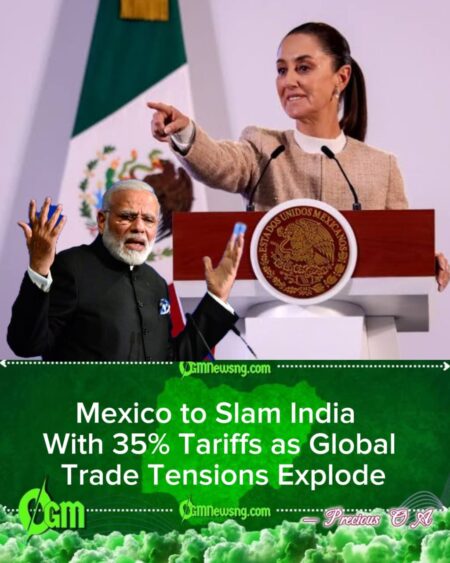
Mexico is preparing to implement a sweeping new tariff regime that will raise import duties on a broad range of Indian goods by up to 35 percent, marking one of the most aggressive trade adjustments the country has made in recent years. The policy is scheduled to take effect this week and is already sending shockwaves through supply chains that connect Latin America and South Asia.
Mexico’s trade ministry has framed the move as a defensive economic strategy aimed at protecting domestic producers who have complained about being undercut by cheaper imported products. Officials argue that certain Indian exports, especially in textiles, auto components, pharmaceuticals, and light manufacturing, have gained significant market share in Mexico at prices that local firms cannot match.
Mexico has also emphasized that the tariff hike is not meant to sever ties with India but to “rebalance” what it views as a growing trade imbalance. While formal trade relations between the two countries remain cordial, the sudden nature of the tariff adjustment has raised concerns among businesses that rely on predictable import rules.
Why India Was Targeted
Mexico has increasingly relied on imported industrial inputs from Asia, with Indian manufacturers playing a rising role in supplying affordable materials and finished goods. Over the past decade, Indian exports to Mexico have grown rapidly, especially in chemicals, generic medicines, and machinery parts.
Mexican industry associations have lobbied heavily for stronger protections, arguing that domestic factories are losing contracts and shedding jobs. They claim that some Indian firms benefit from lower labor and production costs that create an uneven competitive environment in the Mexican market.
Mexico now appears to be responding directly to those domestic pressures. By sharply raising tariffs, the government hopes to slow the inflow of cheaper imports and give local manufacturers breathing room to stabilize operations and invest in expansion.
Immediate Economic Impact
Mexico will likely experience short-term price increases in several sectors that depend on Indian imports, particularly pharmaceuticals, fabrics, and industrial components. Businesses that rely on just-in-time delivery systems may also face delays as they search for alternative suppliers.
Importers are warning that contracts signed under previous tariff assumptions may now become financially unsustainable. Some companies are reportedly renegotiating agreements or delaying shipments until they can assess the full financial impact of the new duties.
Mexico could also see ripple effects in consumer markets, where higher costs for imported materials may translate into higher retail prices. Economists caution that while the tariffs may protect some domestic industries, they could simultaneously place new burdens on consumers.
Reactions From India
Indian trade officials have expressed disappointment over the sudden policy change, stating that they were not given sufficient warning to prepare exporters for the impact. Industry leaders in India say the tariff hike could disrupt billions of dollars in bilateral trade.
Several Indian manufacturers are now exploring alternative markets in Latin America to reduce dependence on Mexico. Some are also considering shifting production facilities closer to North America to maintain access to the Mexican market under more favorable trade terms.
Mexico may soon face diplomatic pressure as India evaluates whether to pursue discussions through trade forums or to consider reciprocal trade measures of its own.
Political and Diplomatic Implications
Mexico is balancing economic nationalism with the need to maintain stable international partnerships. The tariff hike comes at a time when global trade relationships are becoming more strained due to shifting supply chains and geopolitical tensions.
Political analysts note that this decision could influence how Mexico is perceived as a trade partner, particularly among emerging economies that had previously viewed the country as a gateway into North American markets.
Mexico may now need to engage in extensive diplomatic outreach to reassure partners that it remains committed to fair trade while still prioritizing domestic economic stability.
What Comes Next
Mexico has indicated that the tariff structure will be reviewed periodically, leaving open the possibility of adjustments depending on market conditions and diplomatic discussions. This suggests that the current increase may not be permanent if negotiations with India yield new trade agreements.
Businesses on both sides are bracing for a period of uncertainty as they reassess pricing, logistics, and long-term investment strategies. Financial institutions are already factoring the tariff changes into their economic forecasts for regional growth.
Mexico is ultimately testing a bold trade strategy that could reshape its commercial relationship with India and redefine its position in global manufacturing networks, with long-term consequences that will unfold well beyond this week’s implementation.
Table of Contents
Discover more from OGM News NG
Subscribe to get the latest posts sent to your email.