









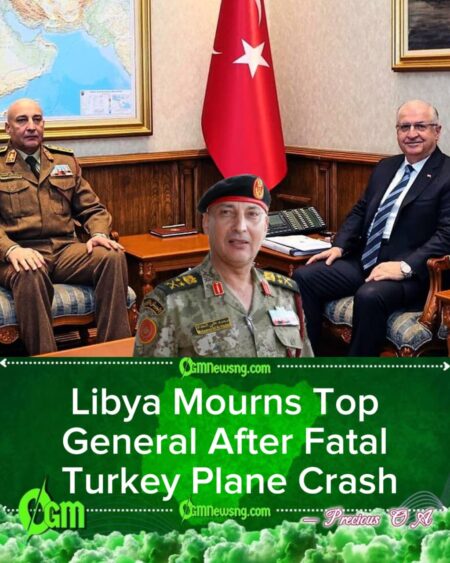
Libya confirmed that the aircraft carrying the senior general went down outside Ankara after experiencing technical difficulties during approach. Turkish emergency services responded swiftly, but the crash resulted in a fire that left no survivors.
Libya’s defense authorities said the general was traveling as part of an official mission involving regional security consultations. Initial statements from Ankara confirmed cooperation with Libyan officials in securing the crash site and preserving flight data recorders for investigation.
Early assessments by aviation authorities have not indicated foul play, though investigators cautioned that determining a definitive cause would require technical analysis of the wreckage and black box data.
Who the General Was
Libya described the deceased officer as one of the most influential military figures in the country’s post-conflict security structure. He played a major role in coordinating national forces and liaising with international partners.
Libya’s interim leadership credited him with overseeing counterterrorism coordination and internal stabilization programs that were central to maintaining fragile security balances in several regions.
The general’s role also included diplomatic outreach to neighboring states, making his presence in Turkey part of broader multinational defense coordination efforts.
Regional and International Reaction
Libya’s government issued an official statement expressing condolences and calling for unity amid what it described as a national loss. Flags were lowered at defense installations and several military ceremonies were postponed.
Libya’s regional partners, including countries in North Africa and the Middle East, offered formal condolences, acknowledging the general’s role in joint security initiatives and regional stability.
The Turkish government confirmed it is conducting a full aviation safety inquiry and pledged transparency in sharing findings with Libyan authorities.
Security Implications
Libya now faces a potential leadership gap within its armed forces, raising concerns about command continuity in sensitive regions. Analysts say the sudden loss could temporarily disrupt coordination between central command and regional units.
Libya’s military leadership has reportedly initiated contingency protocols to ensure that operational chains of command remain intact while formal succession arrangements are finalized.
Security experts caution that such transitions can be delicate in countries with complex political and regional dynamics, even when institutional safeguards exist.
Speculation and Public Discourse
Libya has also seen an increase in public speculation online following the crash, with unverified claims circulating on social media platforms. Officials urged the public to rely on confirmed investigative updates rather than rumor-driven narratives.
Libya’s communications authorities emphasized that no official findings have yet suggested sabotage or external interference, warning that premature conclusions could inflame public anxiety.
Media analysts note that high-profile deaths in unstable regions often attract speculation, particularly before full technical investigations are completed.
What Comes Next
Libya will now work closely with Turkish aviation investigators to analyze flight data, aircraft maintenance records, and weather conditions surrounding the crash.
They defense ministry said the findings will guide any future adjustments to air transport protocols for senior officials and security delegations.
The government has also announced that a national day of remembrance will be observed once repatriation of the remains is completed, marking the loss of one of the country’s most prominent military figures.
Table of Contents
Discover more from OGM News NG
Subscribe to get the latest posts sent to your email.