







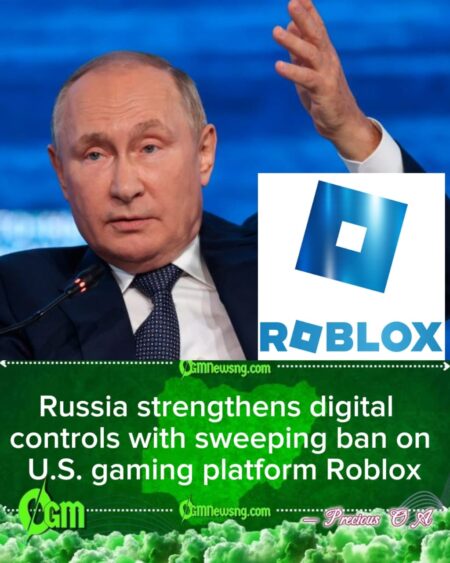
Russia announced a nationwide ban on the U.S.-based children’s gaming platform Roblox, issuing a detailed and highly structured statement that framed the move as a necessary action for the preservation of cultural norms, regulatory consistency, and child-protection principles. Officials emphasized that this step aligned firmly with long-standing commitments to safeguard minors from exposure to content deemed legally or socially inappropriate under the country’s well-defined informational statutes. The announcement, which arrived with little pre-warning, triggered immediate and vigorous debate across digital policy circles, prompting analysts, educators, and online safety advocates to dissect the implications for both domestic users and international technology relations.
Russia emphasized that its decision followed what authorities described as a “multi-layered compliance review,” during which regulatory bodies reportedly examined not only individual user-generated environments but also the platform’s broader structural approach to content filtering and age-appropriate categorization. Officials argued that this extensive assessment revealed substantial inconsistencies with national laws, particularly those governing the dissemination of LGBT-related content and material classified as extremist. Many observers noted that the abrupt nature of the enforcement action suggested that Russian regulators had long harbored concerns, and that these concerns had accumulated over time before culminating in this decisive prohibition.
Russia maintained that the ban was neither impulsive nor solely symbolic, insisting instead that it reflected the government’s comprehensive and evolving strategy to regulate digital ecosystems frequented by young users. Authorities outlined that the platform’s immense popularity among children, coupled with its open-ended interactive functions, demanded a more rigorous level of scrutiny. This framing led to lively public conversations about the appropriate balance between digital freedom, cultural safeguarding, and the responsibility of foreign platforms to adhere to local standards when operating across diverse jurisdictions.
Regulatory Rationale and Legal Framing
Russia referenced several statutes under its protective information laws, frequently citing legislation specifically designed to shield minors from what the government considers psychologically or morally sensitive material. Regulators asserted that the content identified on Roblox did not merely fall short of compliance but crossed into legally restricted zones, thereby obligating authorities to intervene. To many legal experts, the operation appeared consistent with similar restrictions applied in other cases where global platforms were instructed to adjust their content policies or risk sanctions.
Regulators further argued that the enforcement action served as a pointed reminder that digital platforms—particularly those created and operated outside Russia—must reconcile their global policies with jurisdiction-specific legal frameworks. They insisted that companies cannot rely solely on Western content standards or international corporate guidelines but must adapt to the cultural expectations and legal thresholds of each market. Policy analysts noted that this stance underscored the country’s broader shift toward strengthening digital sovereignty and demanding strict alignment between foreign content providers and domestic regulatory systems.
Russia also underscored that the ban followed a detailed multi-agency review that included communications authorities, child protection officials, and cultural oversight institutions. These bodies reportedly cooperated to examine the relationships between user-generated content, the platform’s internal moderation systems, and national definitions of permissible media. Legal commentators pointed out that this high degree of coordination signaled the seriousness with which Russia intends to approach future regulatory interventions, especially in the realm of children’s digital environments.
Reactions From Parents and Youth Organizations
Russia encountered a complex mixture of support, confusion, and skepticism from parents reacting to the platform’s sudden disappearance. Some families expressed firm approval, arguing that they had long been uncomfortable with the unfiltered nature of user-generated worlds within the platform and welcomed more stringent oversight. These supporters maintained that digital entertainment increasingly blurs into social and psychological development for children, and thus requires heightened vigilance.
Youth organizations, however, lamented what they described as the abruptness of the decision, warning that such sweeping bans risk alienating younger audiences who rely on digital platforms not only for entertainment but also for creativity, problem-solving skills, and social connection. Advocates emphasized the need for nuanced regulation—such as age-tiered filters or parent-controlled access—rather than outright prohibitions that remove platforms entirely from the hands of millions of young users. They argued that abrupt shutdowns can result in frustration and isolation, particularly for children living in remote areas with limited offline recreational opportunities.
Russia defended the enforcement by pointing to endorsements from traditional family advocacy groups that praised the government’s commitment to cultural standards and the protection of minors. Officials argued that digital safety must take precedence over convenience, and that long-term societal stability requires safeguarding children from content considered harmful. Cultural analysts noted that these justifications tend to resonate strongly with segments of the population that prioritize adherence to traditional norms.
Response From Technology Experts and Industry Voices
Cybersecurity experts analyzed the ban as part of an expanding trend in Russia to impose stricter boundaries on foreign digital services. They noted that the country’s regulatory machinery has become increasingly proactive, targeting platforms whose content, data-collection practices, or algorithmic mechanisms fail to align with domestic expectations. These specialists described the Roblox decision as a continuation of earlier interventions aimed at refining the country’s digital landscape.
Russia clarified that foreign companies must comply with well-publicized expectations concerning content moderation transparency, data localization, and the protection of minors from restricted materials. Officials argued that many international platforms underestimate the depth of Russia’s regulatory requirements or fail to adopt the localized controls necessary to remain operational within national borders. Industry observers suggested that more global brands may soon face similar confrontations unless they invest more heavily in regional compliance infrastructures.
Technical experts also highlighted the challenge of harmonizing global moderation rules with localized legal standards. Many platforms operate under a single universal content policy crafted for Western markets, causing significant friction when interacting with countries whose cultural and legal frameworks differ substantially. Analysts warned that the Roblox ban may foreshadow a period in which multinational digital companies must choose between developing region-specific moderation systems or forfeiting access to markets with stringent requirements.
International Responses and Diplomatic Undercurrents
Russia’s move attracted quick attention from international commentators who viewed the action not purely as a regulatory decision but as part of a larger geopolitical landscape in which digital communication platforms increasingly play symbolic roles. Some analysts argued that the ban could deepen existing tensions between Russia and Western governments, particularly the United States, where many policymakers view such actions as politically charged.
Digital rights organizations abroad questioned whether the decision stemmed solely from concerns about youth safety or whether political considerations influenced the timing and framing. These groups expressed concern that the ban sets a precedent for restricting global platforms under the broad classifications of “extremism” or “cultural protection,” terms that vary widely across jurisdictions. They warned that escalations of this kind could erode the openness of global digital ecosystems.
Russia dismissed such critiques, reiterating that its decisions are grounded in domestic law, cultural preservation, and national responsibility toward minors. Officials emphasized that geopolitical interpretations should not overshadow the regulatory frameworks that dictate permissible content. Analysts observed that such dismissals align with previous statements asserting that domestic legal standards—not international diplomatic pressure—guide digital oversight decisions.
Possible Future Developments and Policy Considerations
Russia suggested that the Roblox ban could be part of a broader wave of interventions targeting platforms that fail to meet domestic compliance thresholds. Officials indicated that additional reviews of foreign digital services may already be underway, further intensifying speculation about forthcoming restrictions. Policy observers noted that the government appears committed to constructing a tightly controlled digital environment for minors, emphasizing predictability and cultural alignment.
Market specialists predicted that the vacuum left by Roblox’s removal could generate opportunities for domestic developers, who may now seek to occupy the children’s gaming space with locally produced alternatives. They noted, however, that while local companies may benefit, they will also face heightened expectations for moderation, data protection, and child-safety protocols, which could require substantial technological investments.
Russia reiterated its dedication to monitoring digital ecosystems for compliance, arguing that long-term cultural cohesion relies on maintaining strict boundaries around materials accessible to children. Officials insisted that foreign companies wishing to operate within the country must adopt comprehensive, region-specific content moderation strategies that fully adhere to Russian law. Industry leaders responded by calling for clearer, more predictable enforcement guidelines so that international platforms can better assess the risks and requirements of operating in Russia’s evolving digital marketplace.
Table of Contents
Discover more from OGM News NG
Subscribe to get the latest posts sent to your email.