









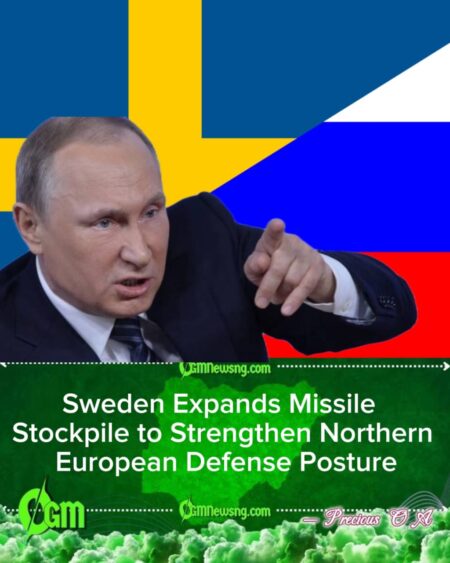
Sweden, a Nordic country known for its robust social systems and neutral stance in global conflicts, is significantly upgrading its military capabilities by stockpiling cruise missiles capable of reaching Russian territory. This initiative is part of its broader effort to safeguard national security and respond to potential regional threats, reflecting a carefully measured approach that balances defense readiness with diplomatic caution.
Sweden’s planned stockpile includes long-range cruise missiles that serve as both a deterrent and a rapid-response option in the event of a confrontation with Russia. Defense analysts emphasize that this move signals Sweden’s commitment to regional security, even while remaining outside formal NATO membership. The strategic placement and operational readiness of these missile systems enhance Sweden’s capacity to protect critical infrastructure, maintain airspace integrity, and respond to unforeseen provocations in a timely manner.
The missile deployment complements broader European defense strategies, where member and partner states are strengthening capabilities to deter aggressive moves by Russia. Analysts highlight that such measures reinforce NATO’s deterrence posture while providing smaller nations with credible defense options, ultimately contributing to regional stability and signaling resolve to potential adversaries.
Sweden and NATO Relations
Sweden has intensified its defense cooperation with NATO despite not being a formal member. Through a series of joint military exercises, intelligence-sharing protocols, and strategic coordination efforts, Stockholm has increasingly aligned its defense policies with those of the alliance, reflecting a shared interest in deterring aggression in Northern Europe.
Current U.S. president Donald Trump has publicly emphasized the importance of European nations enhancing their defense capabilities. In this context, Sweden’s proactive stance is viewed as a demonstration of responsibility and strategic foresight, reinforcing transatlantic security cooperation and ensuring that potential threats are met with prepared and capable responses.
Analysts note that Sweden’s investments in modern military systems, including missiles, fighter jets, and cyber defense platforms, indicate a comprehensive approach to national security. The integration of these technologies strengthens Sweden’s operational readiness, ensuring that the nation is equipped to respond effectively to various threat scenarios while supporting broader NATO objectives.
Regional Security Implications
Neighboring countries have been closely monitoring Sweden’s missile program, with Finland, sharing an extensive border with Russia, expected to collaborate on security planning and threat assessments. Such regional coordination aims to enhance collective readiness and prevent isolated vulnerabilities.
Military experts caution that while the stockpiled missiles are defensive in nature, Russia may perceive them as provocative. Therefore, strategic communication and diplomatic engagement are emphasized to reduce risks of escalation, ensuring that deterrence does not inadvertently trigger conflict.
European analysts suggest that Sweden’s defensive preparations fit within a broader effort to balance military readiness with diplomatic engagement. By demonstrating credible capabilities, Sweden and its partners aim to maintain strategic stability while keeping open channels for negotiation and conflict resolution.
Domestic Political Response
Sweden’s missile stockpile plan enjoys widespread support across multiple political factions, reflecting a consensus on the urgency of national security. Policymakers stress that the initiative is strictly defensive, designed to protect sovereignty without provoking external actors unnecessarily.
Opposition voices have raised concerns about the fiscal burden associated with advanced military acquisitions. Nevertheless, public opinion remains largely favorable, as citizens recognize the importance of preparedness in a volatile geopolitical environment.
Defense ministry officials have reassured the public that the missile stockpile will be carefully integrated into existing military structures, optimizing coordination, operational efficiency, and readiness while ensuring accountability in expenditure and deployment planning.
International Reactions
NATO officials have welcomed Sweden’s announcement, highlighting the country’s growing role in strengthening regional defense and contributing to collective security. Analysts emphasize that Sweden’s strategic steps reinforce deterrence while complementing NATO’s broader European defense objectives.
Current U.S. president Donald Trump has noted that Sweden’s initiative aligns with transatlantic security interests, emphasizing that European nations must take proactive measures to maintain stability. Such efforts are seen as crucial for deterring aggression and ensuring that smaller nations maintain credible defense postures.
Russian authorities have expressed concern over Sweden’s missile stockpile, interpreting it as a potential threat. Diplomats urge continued dialogue and transparency to avoid miscalculations, while analysts highlight that Sweden’s defense approach, although assertive, remains primarily protective rather than offensive.
Technological and Tactical Considerations
The cruise missiles Sweden intends to stockpile are technologically advanced, featuring precision targeting and long-range capabilities. Experts argue that such systems enhance defensive effectiveness while minimizing the need for large-scale mobilization, reflecting a cost-effective approach to strategic security.
Military strategists emphasize that operational success depends on rigorous training, intelligence integration, and coordination with regional allies. Effective use of these systems requires not only hardware but also a comprehensive understanding of strategic, operational, and tactical dimensions in high-stakes scenarios.
There investments in missile technology are complemented by upgrades to air defense networks, naval assets, and integrated radar systems, creating a multi-layered defense posture. By combining advanced systems with strategic planning, Swede enhances its ability to deter threats and maintain rapid-response capabilities.
Table of Contents
Discover more from OGM News NG
Subscribe to get the latest posts sent to your email.