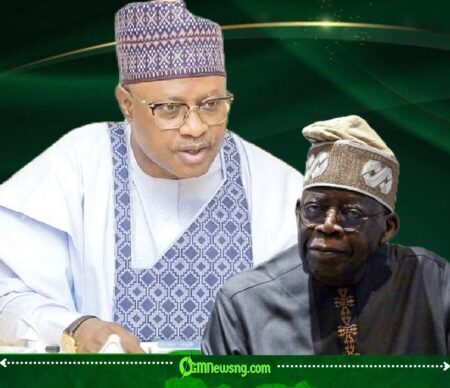





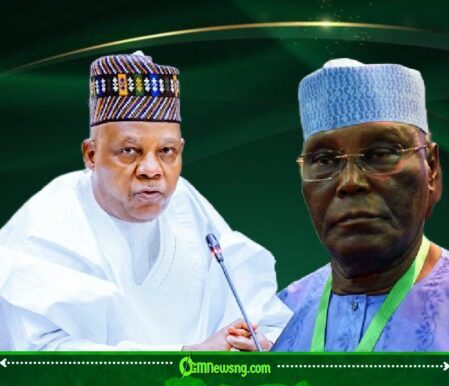
Vice President Kashim Shettima has questioned former Vice President Atiku Abubakar’s ability to manage a modern economy, citing his training at the Kano School of Hygiene. His remarks have triggered a fresh political debate over leadership qualifications, economic policy and the growing rivalry ahead of Nigeria’s 2027 presidential election.
Shettima made the comments on Monday, October 26, 2026, while speaking at the 32nd Nigerian Economic Summit in Abuja. He also criticised Atiku’s proposal to restore petrol subsidy, arguing that the policy could reverse the government’s economic reforms.
Shettima Challenges Atiku’s Economic Competence
During his address, Shettima argued that Atiku’s professional background did not adequately prepare him to manage the complexities of a modern economy.
“I dare to put forward that his skill set… he was trained in sanitation at the Kano School of Hygiene. So he doesn’t have the skill set to govern a modern economy. That’s a painful truth,” Shettima said.
The vice president also challenged Atiku’s proposal to restore petrol subsidy, warning that the country could return to economic difficulties if the policy were reintroduced. He defended President Bola Tinubu’s decision to remove the subsidy in May 2023, maintaining that difficult economic decisions were necessary to address the country’s financial challenges.
However, Shettima’s comments raise a broader question about how political leaders should be assessed. While educational and professional backgrounds can shape a leader’s experience, voters also consider policy proposals, administrative records, economic results and the ability to respond to national challenges.
ADC Responds, Says Political Attacks Will Not Ease Hardship
The African Democratic Congress (ADC) Presidential Campaign Council, associated with Atiku’s candidacy, criticised Shettima’s remarks and accused him of focusing on Atiku’s educational background rather than addressing the economic difficulties facing Nigerians.
The council’s Director of Strategic Communication, Phrank Shaibu, argued that the government should explain how it intends to ease the pressure of rising living costs, including the cost of fuel, transportation and food. The response shifted the debate from Atiku’s qualifications to the performance of the current administration.
The opposition also defended Atiku’s educational journey, arguing that his background should not be used as the sole measure of his capacity to lead. The exchange reflects a familiar feature of Nigerian politics, where personal credentials often become part of wider disputes over economic performance and political credibility.
Petrol Subsidy Debate Takes Centre Stage
At the heart of the disagreement is the future of petrol subsidy. Shettima argued that restoring the scheme would undermine efforts to reform the economy, while Atiku has advocated its return as part of his proposed approach to addressing the cost of living.
The issue remains contentious because subsidy removal has been accompanied by higher petrol prices and increased costs for households and businesses. Supporters of removal argue that it reduces the financial burden on government, while critics question whether the savings have delivered sufficient relief to ordinary Nigerians.
Ultimately, the debate requires more than exchanges over educational backgrounds. Nigerians need clear explanations of how competing policies would affect inflation, employment, public spending, transport costs and household incomes. Both the government and opposition will face scrutiny over the practicality, funding and likely consequences of their economic proposals. Shettima’s criticism of Atiku has added another layer to the political contest ahead of the 2027 elections, with the ADC responding by challenging the government to focus on economic hardship rather than personal attacks. The central issue for voters will be whether the competing political camps can present credible, measurable solutions to Nigeria’s economic challenges.
OGM News NG will continue to monitor the reactions from both camps and the wider debate over economic leadership, petrol subsidy and the policies being proposed ahead of the 2027 presidential election.
Table of Contents
Discover more from OGM News NG
Subscribe to get the latest posts sent to your email.