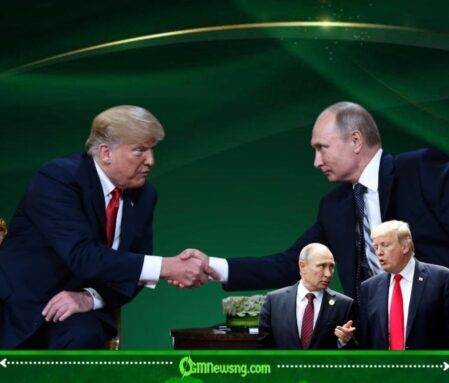









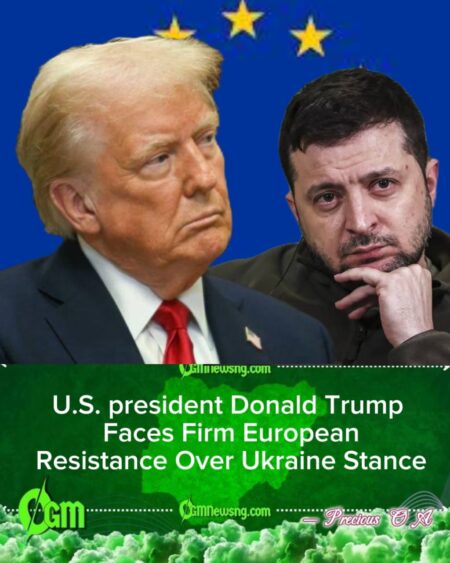
U.S. president Donald Trump has intensified diplomatic pressure on Ukraine by urging President Volodymyr Zelenskyy to entertain what his advisors describe as “pragmatic compromises,” prompting a robust counterresponse from Europe. European leaders argued that such proposals risk legitimizing territorial aggression and fundamentally contradict the principles of democratic sovereignty that have guided transatlantic cooperation for decades. This clash over strategy has widened an already sensitive geopolitical divide.
Donald Trump has repeatedly framed his stance as an attempt to achieve an expedited settlement, suggesting that prolonged warfare strains international markets, global supply chains, and allied defense capabilities. However, EU officials argue that the president’s statements oversimplify the complexities of the conflict and fail to acknowledge the long-term security risks posed by potential concessions. They warn that any perception of retreat could embolden further territorial ambitions in Eastern Europe.
European policymakers stressed that the region cannot afford strategic uncertainty at this stage of the conflict. They maintain that Ukraine’s defense is not merely a regional matter but a defining test of international resolve. This determination, they argue, explains the strong and unified messaging delivered in response to Washington’s recent posture.
Europe Reaffirms Its Commitment to Kyiv
Multiple European leaders underscored that Ukraine’s survival is linked to the stability of the entire European continent. They noted that the war has reshaped defense spending, regional policy coordination, and long-term military planning, making support for Kyiv an unavoidable strategic priority rather than a discretionary choice. Their unified stance reflects months of joint assessments about the risks of geopolitical retreat.
Donald Trump has expressed frustration with Europe’s firm rejection of his proposals, stating that allies must adopt more “flexible thinking” if the conflict is to end soon. However, EU officials counter that flexibility cannot come at the cost of sovereignty, territorial integrity, or democratic legitimacy. For Europe, any externally forced compromise would undermine decades of negotiations, treaties, and security frameworks.
The European Council approved new measures aimed at broadening assistance to Kyiv, including expanded defense financing, humanitarian aid allocations, and energy resilience support. These initiatives reflect a belief that Ukraine’s endurance depends not only on battlefield outcomes but also on economic stability and infrastructural capacity.
Zelenskyy Welcomes European Unity
President Volodymyr Zelenskyy described Europe’s position as a critical foundation for Ukraine’s continued resilience. He emphasized that external pressure to negotiate from a disadvantage undermines the sacrifices made by soldiers and civilians who have endured nearly two years of conflict. Zelenskyy reiterated that Ukraine will not consider territorial concessions as a path to peace.
Donald Trump has maintained that Ukraine must realistically assess its battlefield situation, insisting that “smart negotiations” could prevent needless casualties. However, Kyiv has interpreted such comments as dismissive of the country’s sustained military progress and its refusal to accept changes to internationally recognized borders. Ukrainian officials argue that yielding territory would only invite future aggression.
European foreign ministers reinforced Zelenskyy’s concerns, stressing that the moral and strategic implications of forced concessions would reverberate across the region. They argue that Ukraine, not external powers, must determine its own negotiation terms and end-goals in any potential peace process.
Tensions Emerge Within the Transatlantic Alliance
Diplomats across Europe acknowledge that the divide between Washington and Brussels is widening, with disagreements now affecting both public messaging and private consultations. European leaders fear that inconsistent communication may weaken deterrence at a moment when unity is crucial.
Donald Trump has argued that Europe remains too dependent on U.S. military strength and must take greater responsibility for regional security operations. EU leaders reject the implication that defending Ukraine equates to disproportionate burdens and maintain that the conflict represents a collective test of international solidarity.
Analysts warn that unresolved tension between the U.S. and Europe may complicate future sanctions coordination, military assistance frameworks, and diplomatic engagement. They emphasize the importance of establishing aligned goals to prevent adversaries from exploiting policy fractures.
Russia Monitors Western Divisions Closely
Russian officials have reacted to transatlantic disagreements by amplifying narratives suggesting Western exhaustion and disunity. They argue that such divisions validate Moscow’s long-held belief that sustained pressure will weaken international support for Kyiv.
Donald Trump has suggested that negotiations will eventually become unavoidable, a message Russian state media has heavily emphasized to portray itself as the rational actor in the conflict. European officials warn that such interpretations risk prolonging aggression by encouraging false expectations of Western retreat.
Security analysts across Europe caution that Moscow is likely to test allied resolve through intensified information campaigns, battlefield maneuvers, or diplomatic overtures designed to splinter Western support. Such efforts highlight the high stakes of maintaining unified geopolitical messaging.
NATO Ministers Reassert Their Strategic Priorities
NATO representatives meeting in Brussels reiterated that Ukraine remains central to the alliance’s long-term strategic planning, stating that the conflict’s outcome will shape global security for decades. They stressed the need for predictable, clear, and consistent messaging from all member states.
Donald Trump entering his second term has forced NATO allies to reassess contingency plans amid uncertainty about Washington’s forward commitments. European ministers emphasized that regardless of political differences, alliance cohesion remains paramount for future stability.
NATO reaffirmed that Ukraine’s territorial integrity is a principle that cannot be negotiated away. Ministers pledged ongoing support for as long as necessary, emphasizing that inconsistent approaches could undermine deterrence and long-term peace prospects.
Table of Contents
Discover more from OGM News NG
Subscribe to get the latest posts sent to your email.