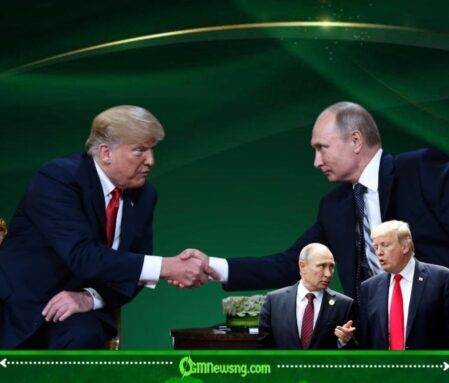








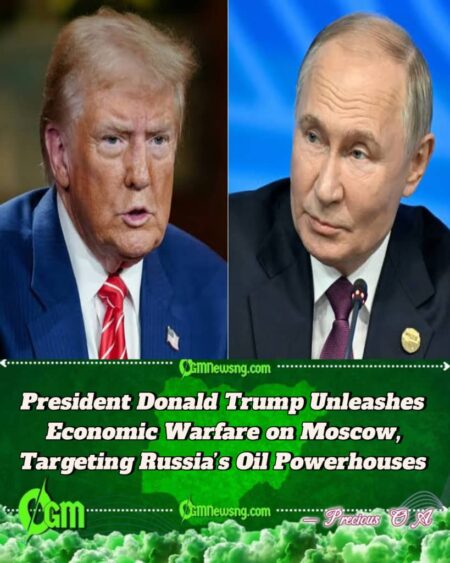
U.S. President Donald Trump, known for his bold and often unpredictable foreign policy decisions, has officially imposed sweeping sanctions on Rosneft and Lukoil—Russia’s two largest oil conglomerates—in a move that marks a dramatic escalation in Washington’s stance toward Moscow. The sanctions, announced from the White House early Wednesday morning, represent Trump’s most aggressive economic strike yet against Russian energy interests fueling the war in Ukraine. The president described the decision as “a message of strength,” emphasizing that America would “no longer tolerate profits being used to finance aggression and bloodshed.”
White House officials explained that the sanctions will target not only the companies themselves but also their subsidiaries and financial networks abroad. This sweeping approach, according to administration insiders, is designed to prevent Russia from using intermediaries or shell companies to bypass restrictions. The penalties freeze any assets these entities hold within U.S. jurisdiction and prohibit American firms from engaging in any business dealings with them, including oil imports, investments, or technology transfers.
Donald Trump said the sanctions would freeze all U.S.-based assets belonging to Rosneft and Lukoil and prohibit American companies from conducting transactions with them or their subsidiaries. The penalties also extend to international firms engaging in Russian oil exports, signaling a sweeping reach intended to choke off the Kremlin’s critical revenue streams. Senior White House aides revealed that the move was finalized after intense consultations between the Departments of State, Treasury, and Energy, with national security advisers urging the president to act swiftly in response to Russia’s escalating offensive in eastern Ukraine.
Donald Trump’s move follows months of internal debate and diplomatic hesitation within his administration. Advisors had warned that such sanctions could disrupt global energy markets, given how deeply Rosneft and Lukoil are woven into international oil trade. Yet, after repeated intelligence briefings linking Russian oil profits to continued military aggression in Ukraine, Donald Trump reportedly decided the moral and strategic costs of inaction were too high. Officials close to the decision described the moment as “the breaking point,” when the White House concluded that symbolic gestures were no longer enough to deter Russia’s growing defiance.
Donald Trump’s decision also marks a shift toward a more assertive economic diplomacy in his second term. Rather than deploying troops or escalating military involvement, the administration has increasingly relied on financial instruments to weaken adversaries—an approach that officials describe as “economic warfare without the bullets.” The sanctions thus signal to allies and adversaries alike that Washington is willing to leverage its financial power to achieve geopolitical goals. It also strengthens Trump’s position domestically, presenting him as a leader capable of confronting global threats while avoiding direct military entanglement—an image he has carefully cultivated since returning to office.
Global Reaction and Economic Ripples
Donald Trump’s announcement immediately sent shockwaves through global markets. Oil prices surged more than 7 percent within hours, with Brent crude climbing above $100 per barrel for the first time in months. Traders scrambled to assess the long-term impact on global supply chains, as Rosneft and Lukoil account for a significant portion of international oil exports. Energy analysts warned of short-term volatility but noted that the move could accelerate the global shift toward diversified and renewable energy sources. Some experts also predicted that energy-hungry nations would soon turn to Africa and the Middle East to offset the shortfall, potentially reshaping global oil alliances.
European governments—many of which depend heavily on Russian oil—responded with cautious approval. The European Commission described the sanctions as “a necessary measure to secure peace and accountability,” though countries like Germany expressed concern over potential shortages during the winter. France and the United Kingdom, however, pledged to coordinate closely with Washington to ensure the sanctions are effectively enforced across the European market. Behind the scenes, diplomats are reportedly working on mechanisms to cushion European economies from the immediate energy shock, including strategic reserves and increased imports from Norway and the United States.
Donald Trump’s sanctions were met with fury in Moscow. The Kremlin called the move “an act of economic hostility” and accused the United States of trying to destabilize Russia’s economy. Foreign Minister Sergey Lavrov promised “reciprocal measures,” while Rosneft and Lukoil executives condemned the sanctions as “illegal” and “politically motivated.” Russian financial markets responded sharply—Lukoil’s shares plunged 15 percent, while Rosneft’s fell by 11 percent before trading was suspended. State-controlled media in Russia denounced the sanctions as “economic sabotage,” while nationalist commentators accused the U.S. of waging a new form of hybrid warfare against Moscow.
Donald Trump’s decision also drew responses from global powers outside the West. China urged restraint, declaring that it “opposes unilateral sanctions that destabilize markets,” while India remained noncommittal, emphasizing its focus on “energy security and strategic autonomy.” These mixed reactions highlight the geopolitical fault lines widening between Washington’s coalition of allies and nations seeking to maintain trade relations with Moscow. Meanwhile, the Middle East, particularly Saudi Arabia and the United Arab Emirates, has shown interest in capitalizing on the disruption by expanding their oil exports to Europe, a move that could reshape global energy influence for years to come.
Donald Trump’s administration has reassured both American consumers and global partners that contingency measures are in place to prevent severe domestic price spikes. The Department of Energy announced plans to release an additional 20 million barrels from the Strategic Petroleum Reserve to stabilize prices. Still, experts believe that consumers worldwide should expect temporary increases in fuel costs and inflationary pressure, especially in developing economies that rely on imported oil. The global energy market, already strained by conflicts and production limits, now faces a new era of uncertainty sparked by Washington’s latest move.
Implications for U.S. Policy and the War in Ukraine
Donald Trump’s move to sanction Rosneft and Lukoil marks a turning point in America’s foreign policy and the broader war in Ukraine. By striking at the core of Russia’s oil industry—the lifeblood of its wartime economy—Donald Trump has effectively raised the financial stakes for the Kremlin. U.S. intelligence reports estimate that oil exports account for nearly half of Russia’s national budget, with much of that revenue funneled directly into sustaining military operations. The sanctions thus aim to drain Moscow’s ability to finance prolonged warfare, a strategy designed to weaken its military without escalating U.S. involvement on the battlefield.
In Washington, the decision has earned both praise and criticism. Many Republican lawmakers hailed it as a show of strength and moral clarity, while Democrats, though supportive, questioned the delay in action, arguing that earlier sanctions could have weakened Moscow’s war efforts sooner. Still, bipartisan consensus suggests that the move enjoys rare cross-party backing in a deeply divided political climate. Within the administration, senior advisers believe the decision will bolster America’s credibility as a leader of the free world and restore trust among NATO allies who had grown impatient with Washington’s previous hesitation.
Donald Trump’s actions have also bolstered Ukraine’s morale. President Volodymyr Zelenskyy publicly thanked the U.S. for its leadership, saying, “Every barrel of Russian oil blocked is a missile not fired at our people.” Ukrainian officials hope the sanctions will gradually erode Russia’s financial stability, limiting its ability to purchase weapons, fuel, and ammunition. On the ground, Ukrainian forces continue to resist with renewed determination, buoyed by the belief that global pressure on Moscow is finally tightening. Experts predict that sustained enforcement of the sanctions could reduce Russia’s war funding significantly by late 2026, potentially forcing Moscow to the negotiating table.
Donald Trump’s challenge now lies in enforcement and global coordination. Russia has a history of evading sanctions through third-party intermediaries and non-Western trade partners. To counter this, the U.S. Treasury has established a special task force dedicated to tracking violations and penalizing entities that facilitate Russian oil exports. The administration also plans to collaborate with financial intelligence units in Europe and Asia to ensure the sanctions’ global reach. Failure to maintain consistent enforcement, analysts warn, could undermine the effectiveness of the move and allow Russia to adapt once again.
Ultimately, Donald Trump’s decision reflects a defining moment in his presidency—one that balances global stability, moral responsibility, and domestic political pressure. Whether it reshapes the course of the war or triggers new geopolitical tensions remains uncertain, but it firmly establishes Washington’s readiness to wield economic power as a weapon of policy in an increasingly divided world. As the sanctions ripple through international markets and diplomatic corridors, the world now watches to see whether Donald Trump’s hardline strategy will achieve its intended goal: weakening the Russian war machine without igniting an economic or political backlash that could test global unity.
Table of Contents
Discover more from OGM News NG
Subscribe to get the latest posts sent to your email.