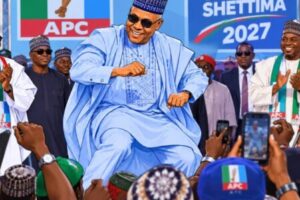
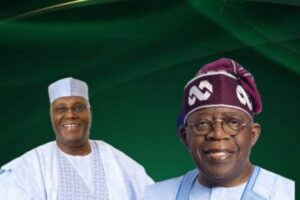

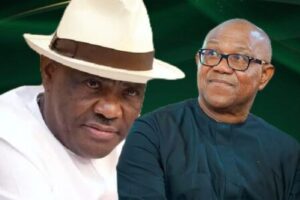




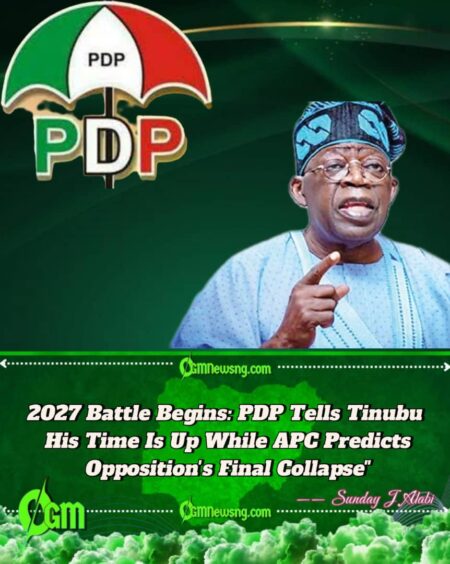
The political landscape in Nigeria has intensified as the opposition Peoples Democratic Party (PDP) boldly declared that President Bola Tinubu should start preparing his handover notes, asserting that Nigerians will not renew his mandate in the 2027 general elections. This declaration has sparked a fresh wave of political discourse between the ruling All Progressives Congress (APC) and the opposition party, setting the stage for what promises to be a contentious electoral battle.
PDP Voices Growing Discontent with Current Administration
Speaking at the PDP state secretariat in Yola on Friday, the Organising Secretary of the Adamawa State chapter of the PDP, Hamza Madagali, delivered a scathing assessment of the current administration’s performance. He argued that Nigerians had exhausted their patience with the present government and were no longer willing to accommodate its continued leadership beyond 2027.
Madagali criticized the APC government for what he described as a fundamental lack of vision and direction in understanding democratic principles. He particularly targeted the administration’s policy framework, characterizing the APC-designed policies as “human and economic unfriendly.” According to the PDP official, these policies have created widespread dissatisfaction among the Nigerian populace, making them eager to end the current government’s tenure.
The Peoples Democratic Party organiser expressed confidence that recent successes recorded during the party’s Ward Congress in Adamawa State were clear indicators of the unity within the party ranks. He suggested that this renewed cohesion could translate into electoral victory in the upcoming general elections, stating that the composition of the National Convention committees demonstrated that “the days of the APC are numbered at the presidency.”
APC Fires Back, Dismisses PDP Claims
The ruling party was quick to respond to the PDP’s assertions through one of its chieftains, Seye Oladejo, who dismissed the opposition’s chances of unseating President Tinubu. Oladejo painted a contrasting picture of the political landscape, arguing that the PDP was experiencing a continuous exodus of members rather than the growth it claimed to be witnessing.
In a direct counter to the PDP’s call for handover preparations, Oladejo suggested that President Tinubu should indeed prepare handover notes, but only to hand over to himself after winning re-election in 2027. The APC chieftain characterized the PDP as merely existing “on paper,” suggesting that the party lacked the substantial grassroots support necessary to mount an effective challenge against the incumbent administration.
Oladejo further criticized the PDP’s internal governance, particularly highlighting what he described as constitutional violations in the party’s ticket zoning process. He pointed to instances where the party allegedly disregarded provisions of the 1999 Constitution during its primary processes, only to later declare the contests open. This inconsistency, according to the APC chieftain, demonstrated why the PDP should not be taken seriously as a political force, concluding that the 2027 elections would mark “the final days of the PDP.”
Political Analysts Weigh Electoral Prospects
As both parties stake their claims for the 2027 electoral cycle, political observers note that the exchange reflects the typical pre-election positioning that characterizes Nigerian politics. The Peoples Democratic Party‘s confidence appears to stem from what it perceives as growing public dissatisfaction with current economic conditions and policy implementations, while the APC maintains that its governance record and organizational strength will secure another term.
The battle for 2027 has evidently begun in earnest, with both parties already engaging in the rhetoric and positioning that will likely intensify as the election approaches. The ultimate test of these competing narratives will come at the ballot box, where Nigerian voters will decide whether to grant the current administration a second term or return power to the opposition.
The political temperature is expected to continue rising as both parties work to consolidate their bases and appeal to undecided voters across the country’s diverse political landscape.
Table of Contents
Discover more from OGM News NG
Subscribe to get the latest posts sent to your email.