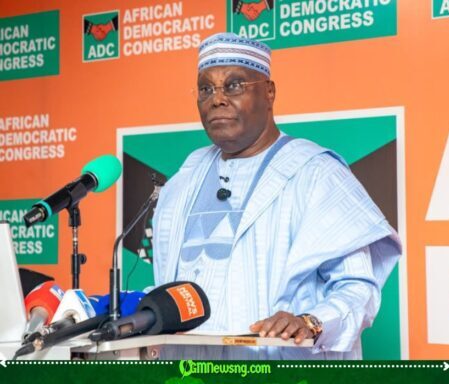









PORT HARCOURT — Nigeria’s long-running argument over who should police the police has taken another dramatic turn, with Chief of Staff to President Bola Ahmed Tinubu, Femi Gbajabiamila, defending the Federal Government’s push for state police and warning that decentralisation without safeguards could simply replace one policing headache with several smaller ones.
Speaking at the Nigerian Bar Association’s 66th Annual General Conference in Port Harcourt, Gbajabiamila reportedly argued that Nigeria’s security challenges can no longer be adequately handled through a single, centrally controlled policing structure. The NBA conference, running from August 21 to 28 in Port Harcourt, has featured discussions on some of the country’s most consequential legal and governance questions.
Gbajabiamila: State Police Must Not Become Governors’ Personal Security Department
Gbajabiamila’s defence of the reform comes as the Tinubu administration moves from years of political debate toward the construction of an actual legal and institutional framework for state policing. The Presidential Working Group chaired by Gbajabiamila has been tasked with developing a National Policing Bill, with the proposed system expected to establish national minimum standards, oversight mechanisms, funding arrangements and rules for an orderly transition to dual federal and state policing.
And here lies the amusingly serious part: the administration wants policing brought closer to the people, but apparently not so close that a governor can pick up the telephone and order the police to arrest his political opponent before breakfast. Gbajabiamila stressed that governors should retain legitimate executive authority, while officers who reject unlawful commands must be protected by institutions rather than encouraged to rely on courage, luck and an understanding of Nigerian office politics.
The warning reflects one of the central arguments surrounding state police. Supporters say locally controlled forces could improve intelligence gathering, emergency response and community policing, while critics fear political interference and uneven standards among states. Nigeria’s lawmakers have already advanced constitutional changes intended to enable states to establish their own police forces, although the process still requires further constitutional approval.
From One Policeman for 650 People to a Bigger Policing Question
Gbajabiamila also pointed to Nigeria’s police-to-population imbalance, citing a ratio of roughly one officer to 650 people against an international benchmark of one to 450. He argued that the problem is aggravated by officers being assigned to administrative and escort duties, leaving fewer personnel available for ordinary citizens who actually need policing. The Federal Government has separately pledged greater investment in training, intelligence gathering and modern law-enforcement infrastructure.
His emphasis on training and professionalism is particularly important because creating more police formations without creating better police officers could amount to giving Nigeria more uniforms without necessarily giving Nigerians more security. The proposed framework is therefore being built around questions of professional standards, accountability, jurisdiction, human rights and sustainable funding—not merely the multiplication of police headquarters.
The administration’s timetable also suggests that this is moving beyond speeches. Gbajabiamila has previously said the proposed bill is expected to reach President Tinubu for consideration on September 3, following consultation and further work on the draft. The Federal Government has also invited public input into the framework, signalling that the final structure is still being shaped.
For now, the big question is not simply whether Nigeria will have state police, but whether it can create a system powerful enough to protect citizens and disciplined enough to resist political abuse. As the reform moves from conference halls and constitutional debates toward legislation, Nigerians may want to keep watching—because if the government gets it right, policing could become more responsive; if it gets it wrong, the country may discover that decentralising a problem does not automatically decentralise the solution. OGM News NG will continue to watch the developing story.
Table of Contents
Discover more from OGM News NG
Subscribe to get the latest posts sent to your email.