






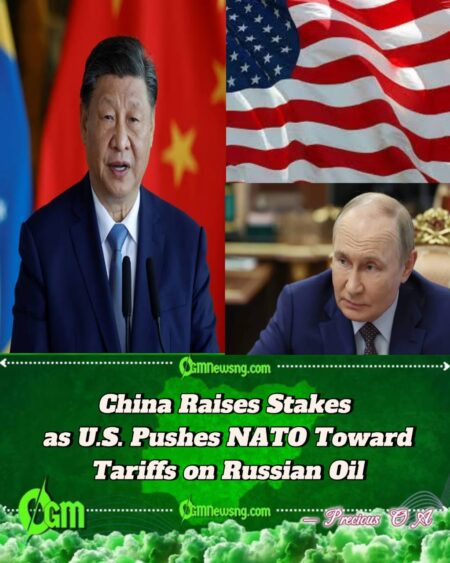
China has issued a stern warning to the European Union, vowing a “decisive reaction” if NATO member states impose tariffs on Russian oil under heavy pressure from the United States. The warning, delivered through Beijing’s Foreign Ministry, underscores the rising stakes in the global struggle over energy and influence.
China framed Washington’s push for stricter economic measures as an act of “coercion” that threatens to undermine European sovereignty. Officials stressed that Brussels must avoid “blind obedience” to American directives, or risk facing swift consequences from Beijing. According to the statement, any move to tax or restrict Russian oil would escalate tensions not just with Moscow but with Beijing itself.
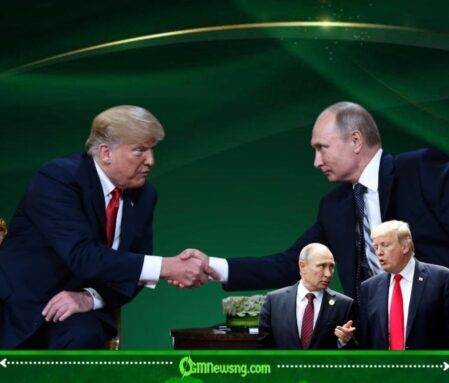
China’s message highlights the challenge facing Europe. The United States, under President Trump’s leadership, has intensified its demands that NATO allies fully align on isolating Moscow. Administration officials argue that cutting Russia’s oil revenues is essential to curbing its capacity to finance military operations. Yet critics point out that the strategy risks creating a wider confrontation involving Beijing, which has long opposed Western sanctions.
China’s warning, therefore, is more than a statement of intent. Energy analysts describe it as a watershed moment in the global economic rivalry. With Russia already leaning heavily on Beijing for trade and political support, any EU move that triggers retaliation could push the world deeper into an era of divided economic blocs.
Europe Caught Between U.S. Demands and Beijing’s Warnings
China’s message arrives at a moment when European policymakers are still struggling to balance security commitments with economic realities. For many EU member states, Russian oil remains a sensitive subject, as industries and households continue to feel the impact of reduced supply and higher prices since the start of the Ukraine war.
China’s warning amplifies the dilemma. Countries such as Germany and Hungary remain cautious about supporting oil tariffs, fearing that higher costs could fuel inflation and weaken industrial competitiveness. By contrast, Poland and the Baltic states favor a tougher line on Moscow, leaving Brussels divided over whether to follow Washington’s lead.
China has consistently portrayed sanctions as destabilizing and counterproductive, arguing that punitive measures fail to resolve conflicts and instead damage global trade. In its latest statement, Beijing positioned itself as the defender of international economic stability, accusing Washington of manipulating allies to serve its own strategic ends.
China’s intervention has left the European Union facing a difficult choice: yield to U.S. pressure and risk sparking a confrontation with Beijing, or resist Washington and face accusations of undermining NATO unity. Each path carries steep consequences, not only for energy policy but for Europe’s role in the shifting balance of world power.
Global Energy Markets Brace for Uncertainty
China’s intervention has already rattled energy markets, with Brent crude prices edging upward as traders brace for potential disruptions. Analysts warn that if tariffs are introduced and retaliation follows, the resulting volatility could destabilize both European and global supply chains.
China has not yet specified what a “decisive reaction” would entail, but experts believe it could involve restrictions on European exports, tariffs on EU goods, or expanded energy partnerships with Russia. Any of these measures would increase pressure on Brussels, which depends heavily on stable access to global markets.
China’s stance also strengthens its image as Moscow’s indispensable partner. By aligning itself so openly against Western sanctions, Beijing signals to Russia—and to the wider world—that it is prepared to use its economic might to counterbalance American power. This dynamic further solidifies the emerging divide between a U.S.-led bloc and a Russia–Beijing axis.
China’s warning highlights the broader stakes beyond Europe’s borders. If Brussels chooses to implement U.S.-backed tariffs, the repercussions could extend across financial markets, international diplomacy, and global energy stability. The European Union now finds itself at the center of a dispute that may reshape global trade and power relations for years to come.
Table of Contents
Discover more from OGM News NG
Subscribe to get the latest posts sent to your email.