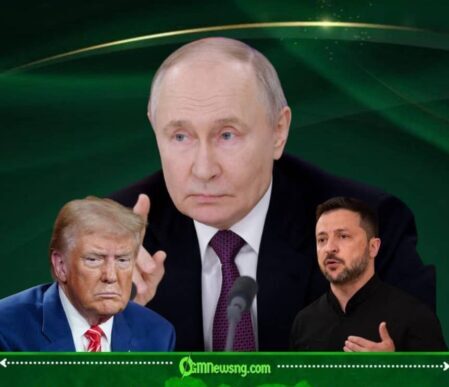









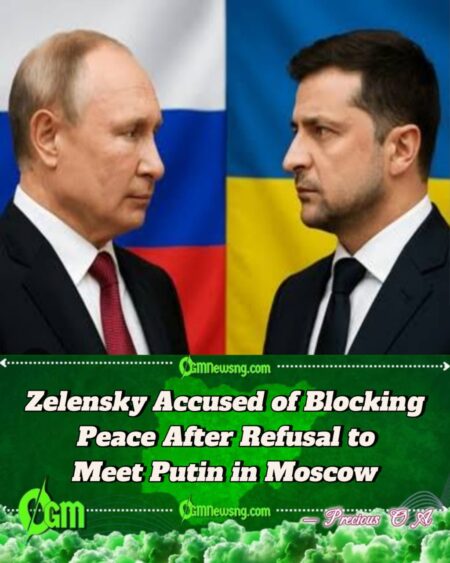
Ukrainian President Zelensky has declined Russian President Vladimir Putin’s invitation to travel to Moscow for peace talks. He described the offer as “unrealistic” and argued that discussions about ending the conflict must not be staged under the dominance of the Kremlin. According to him, the proposal lacked credibility because Russia has continued to launch strikes across Ukrainian territory even while calling for dialogue.
By refusing to attend, Kyiv made it clear that Ukraine will not participate in what it views as performative diplomacy. Accepting the invitation would, in the words of senior officials, amount to legitimizing Russia’s aggressive stance. For many Ukrainians, the refusal is not just about rejecting one meeting but about reinforcing a broader principle: peace cannot be built in an environment of coercion.
Conditions for Dialogue
Zelensky has outlined that meaningful negotiations can only begin if Russia demonstrates good faith by withdrawing its forces from occupied territories. He insists that restoring Ukraine’s internationally recognized borders and providing reliable security guarantees are the non-negotiable pillars of any future settlement. These conditions, Kyiv argues, are rooted not in politics but in international law and basic national survival.
Kyiv also maintains that international mediators such as the United Nations, the European Union, or NATO must be directly involved in the process. Neutral venues, not Moscow, are regarded as the only credible setting for fair dialogue. Ukrainian officials say that anything less than this would place their nation in a vulnerable position, forcing them to negotiate under the very shadow of the country that launched the invasion.
Zelensky :Countering Moscow’s Narrative
Zelensky has accused Russia of trying to manipulate international opinion by extending an invitation to talks while escalating military operations on the battlefield. He argued that the gesture was never about creating space for peace but about optics—an attempt to appear cooperative while continuing to exert pressure on Ukraine through force. His advisers added that such tactics are part of Russia’s long-standing strategy to divide Western support for Kyiv.
The Kremlin, for its part, has tried to portray Ukraine’s refusal as evidence that Kyiv is unwilling to engage. Russian state media has repeated this line, presenting the rejection as proof that Western influence is blocking opportunities for peace. Yet Ukrainian officials counter that the real obstruction comes from Moscow’s refusal to compromise on territorial occupation and its persistent missile strikes on civilian infrastructure, which make trust impossible.
Backing from International Allies
NATO and the European Union quickly aligned with Kyiv’s interpretation of events, affirming that peace cannot be dictated by an aggressor. European leaders stressed that talks can only succeed if they are free of coercion and conducted under neutral supervision. Washington also weighed in, with President Trump’s administration reaffirming its strong support for Ukraine’s sovereignty and territorial integrity, underscoring that “invitations mean little without genuine change on the ground.”
Statements from allied capitals emphasized that invitations mean little while Russian missiles continue to devastate Ukrainian infrastructure and displace civilians. International observers argued that the timing of Putin’s proposal revealed more about Moscow’s desire to shape narratives than about genuine interest in peace. In this context, Kyiv’s decision to decline the offer was described by Western officials as both justified and strategically sound, strengthening rather than weakening Ukraine’s position abroad.
Zelensky : The Battlefield Reality
Zelensky tied his refusal to the conditions on the frontlines, underscoring that no talks are possible while Ukrainian cities are under bombardment. He noted that entering negotiations while rockets rain down on civilian areas would hand Moscow a strategic advantage and undermine public confidence in the government’s resolve. The symbolism of traveling to Moscow while citizens shelter from air raid sirens, he said, would be unacceptable.
Kyiv continues to lobby its partners for advanced air defense systems, long-range strike capabilities, and stronger security assurances. Military resilience, the government believes, is the only safeguard against coercive diplomacy. Officials argue that history shows that peace agreements signed under duress are fragile and short-lived, while agreements built on credible defense capabilities stand a greater chance of holding.
Domestic Approval
Public opinion within Ukraine strongly supports the president’s decision to reject the Moscow invitation. Surveys conducted in recent weeks indicate that a clear majority of Ukrainians oppose any talks held on Russian soil. Many citizens view such proposals as thinly veiled traps designed to humiliate Kyiv rather than provide a pathway to resolution.
Lawmakers across party lines echoed this sentiment, praising the decision as an affirmation of national sovereignty and solidarity with frontline soldiers. Civil society groups and commentators in Kyiv added that accepting Moscow’s invitation would risk fracturing domestic unity at a critical time. Editorials in Ukrainian newspapers have argued that rejecting the invitation was not only wise but necessary to preserve the morale of a nation under siege.
Zelensky: Geopolitical Implications
Zelensky has presented his rejection not only as a defense of national sovereignty but also as a signal to the wider world that Ukraine remains committed to democratic values and international norms. By refusing to participate in talks orchestrated in Moscow, he reinforced Ukraine’s alignment with Western allies and its insistence on fair, rules-based negotiations. This positioning also serves as a reminder to international partners that Ukraine intends to remain steadfast despite the costs of war.
The decision has also underlined the widening gap between Kyiv and Moscow, leaving little sign of compromise on the horizon. With both sides entrenched, analysts suggest that the trajectory of the war may be determined less by symbolic invitations and more by endurance, military outcomes, and sustained Western support. As the conflict grinds on, the battle for diplomatic legitimacy remains as fierce as the struggle on the frontlines, and Ukraine’s refusal signals a determination to shape peace on its own terms.
Table of Contents
Discover more from OGM News NG
Subscribe to get the latest posts sent to your email.