








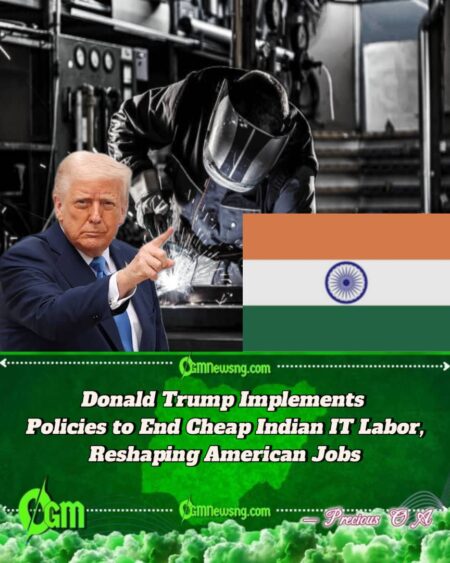
Donald Trump is reportedly considering a proposal aimed at limiting U.S. tech companies from outsourcing their workforce to India, reflecting his commitment to prioritizing domestic employment, addressing concerns over job losses in the American tech sector, and reshaping the global technology landscape. The plan would prevent U.S. tech firms from outsourcing their entire workforce to India, aligning closely with his broader “America First” agenda. Major Indian IT companies, including Tata Consultancy Services, Infosys, Wipro, and HCL Technologies, could face direct implications if the plan is enacted.
Supporters argue that the policy could strengthen national security, boost domestic employment opportunities, and encourage companies to invest in U.S.-based talent. Industry analysts note that the initiative could redefine the relationship between U.S. companies and overseas contractors. The president’s team has highlighted that limiting outsourcing could also foster innovation in domestic technology sectors, as more companies focus on local hiring and skills development programs.
Donald Trump Impact on the Indian IT Sector
Donald Trump’s potential policy could have far-reaching consequences for India’s IT outsourcing industry. U.S. businesses represent a substantial portion of Indian IT revenue, and limiting outsourcing may result in financial losses and decreased business opportunities for Indian firms. Experts warn that companies may need to restructure operations and reallocate resources to mitigate the impact of reduced U.S. contracts.
Indian government officials are reportedly monitoring the situation closely. Previous instances of protectionist policies in the United States have sparked diplomatic discussions, and this new proposal could prompt India to engage in negotiations aimed at minimizing economic impact. Analysts suggest that multinational IT companies may also seek to diversify their client base, investing more heavily in Europe, the Middle East, or Asia to reduce reliance on the U.S. market.
Domestic Debate on Outsourcing
Donald Trump’s proposal has generated a range of reactions within the United States. Advocates argue that restricting outsourcing will create more employment opportunities for American tech workers and strengthen the country’s workforce. Proponents also emphasize the potential for domestic innovation, higher job satisfaction, and stronger retention rates as companies hire locally. Training programs and incentives for STEM education may gain renewed importance as a result.
Critics caution that the policy could increase operational costs for companies, potentially reducing their competitiveness in the global market. They also raise concerns about the availability of skilled domestic labor to replace outsourced roles. Some economists predict that delays in project delivery or higher payroll expenses could affect company profits, which in turn might influence stock market performance in the technology sector.
H-1B Visa Reforms and Oversight
Donald Trump has also focused on reforming the H-1B visa program, which allows U.S. companies to hire foreign workers in specialty occupations. Critics argue that this program has occasionally been exploited to replace American workers with cheaper alternatives. He has advocated for stricter eligibility criteria to ensure that only highly skilled, high-paying roles qualify for foreign employment.
The reforms would prioritize higher-skilled and higher-paid applicants while ensuring that the most critical roles are filled domestically. These adjustments are part of a broader strategy to reduce reliance on foreign labor in the tech sector and encourage companies to invest more heavily in U.S.-based employees. Companies may also face new reporting and compliance requirements to demonstrate that domestic candidates were considered before hiring abroad.
Tariffs and Economic Incentives
Donald Trump’s proposal may include financial measures, such as imposing tariffs on foreign remote workers. This approach would make outsourcing less financially attractive and encourage companies to hire locally. Tariffs could also generate additional revenue for the U.S. government while discouraging over-reliance on foreign labor. Some analysts suggest that tax incentives for companies that hire domestically could complement the tariffs, creating a balanced approach to workforce development.
However, some economists warn that such measures could lead to retaliatory actions from other countries, potentially escalating into trade disputes. Additionally, businesses might pass added costs to consumers, resulting in higher prices for software and technology services across various sectors. There is also a risk that innovation could slow temporarily as companies adjust to new labor restrictions and cost structures.
Global Repercussions for the Tech Industry
Donald Trump’s initiative could reshape the international tech industry. Countries that rely heavily on outsourcing may need to adapt to new economic realities, revising supply chains and labor distribution strategies. Companies that had previously leveraged low-cost labor abroad may now consider regional hubs or nearshoring alternatives.
Experts also predict that other nations might adopt similar protectionist policies, focusing on domestic workforce development. Such trends could fragment the global technology market and alter long-standing collaborative practices. His initiative, therefore, has the potential to set a precedent for labor policies worldwide, influencing how governments balance protectionism with global competitiveness.
Looking Ahead
Donald Trump’s consideration of this proposal underscores his commitment to reshaping the tech sector and prioritizing American workers. Balancing domestic job protection with global economic collaboration remains a complex challenge that will require careful planning and implementation.
Industry stakeholders, policymakers, and international partners are closely monitoring developments. The ultimate impact of his actions will likely influence outsourcing practices, workforce planning, and global technology strategies for years to come, shaping the future of the digital economy. Companies may also reevaluate long-term investment decisions based on how this policy affects costs, talent acquisition, and international partnerships.
Table of Contents
Discover more from OGM News NG
Subscribe to get the latest posts sent to your email.