








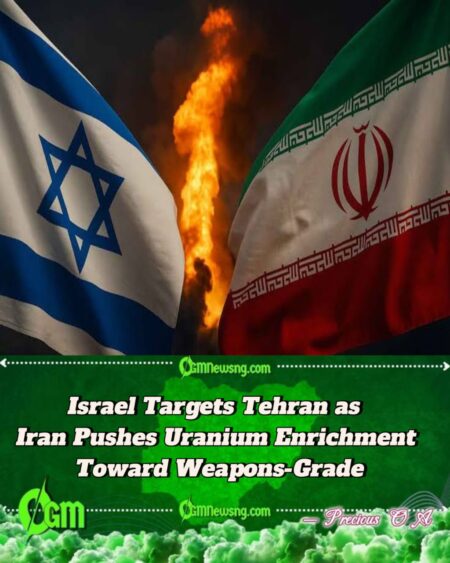
Iran expanded its uranium enrichment program in the weeks before Israeli military strikes in June, according to a confidential United Nations report obtained by the Associated Press. Inspectors confirmed that Tehran accumulated uranium enriched up to 60%, a level just below weapons-grade.
The revelation has heightened international concern over the country’s nuclear direction. The stockpile represents a serious escalation, bringing its program closer to the threshold where civilian energy projects can easily tip toward military applications.
Iran and the IAEA Findings
Iran’s enrichment activity was tracked by the International Atomic Energy Agency, which circulated its report among member states last week. The watchdog noted both an increase in the quantity of enriched uranium and an acceleration in production speed during the spring.
The Islamic Republic continues to defend its nuclear program, citing civilian energy and medical needs. Yet the IAEA warned that the accumulation of near bomb-grade material leaves the international community with fewer safeguards against a rapid shift to weaponization.
Israel’s Strikes and the Timeline
Iran’s enrichment surge occurred mainly in April and May, just before Israeli forces launched military strikes on targets linked to Tehran in June. Analysts believe the timing may reflect strategic positioning by both sides.
Israel has long identified the program as an existential threat. The June attacks marked one of the sharpest escalations in years, tying nuclear developments to wider regional conflicts in Lebanon, Syria, and Gaza.
U.S. Concerns and Diplomatic Pressure
The enrichment drive has drawn sharp warnings from Washington. President Trump’s administration described the development as destabilizing and potentially catastrophic if left unchecked. Officials are weighing additional sanctions as well as the possibility of renewed diplomatic engagement.
European governments have urged restraint, calling for the revival of nuclear talks. However, divisions persist over whether Tehran can be trusted to comply with stricter limits after the collapse of earlier agreements.
Iran’s Defiance and Public Messaging
Iran has rejected international criticism, framing its enrichment as a lawful right under the Nuclear Non-Proliferation Treaty. Officials insist the program is peaceful, intended to strengthen energy independence and support nuclear medicine.
State media outlets dismissed the UN report as politically motivated. The coverage accused Western powers and Israel of exploiting nuclear fears to exert pressure, signaling Tehran’s growing reluctance to cooperate with inspectors.
Regional Fallout and Security Fears
Iran’s nuclear acceleration has unsettled Gulf states already wary of its regional influence. Leaders in Saudi Arabia and the United Arab Emirates fear both the emergence of a nuclear-armed neighbor and the destabilizing ripple effects of repeated Israeli strikes.
Analysts warn that the crisis could spark a broader conflict involving proxy groups across the Middle East. With active clashes overlapping nuclear concerns, the risk of miscalculation remains dangerously high.
Diplomatic Pathways Narrowing
The enrichment surge has complicated efforts to revive earlier nuclear agreements. The breakdown of past deals and entrenched mistrust have left few viable diplomatic channels. Many fear that the window for negotiation is closing.
Some European diplomats still argue that dialogue, possibly hosted in neutral capitals, could ease tensions. Yet deep divisions between Tehran and Jerusalem continue to obstruct progress.
What Lies Ahead
Iran’s nuclear program has placed the Middle East at a critical crossroads. The UN report underscores how technical advances, paired with military confrontation, create a volatile mix with global consequences.
The pressing challenge for world leaders is how to constrain the country’s nuclear ambitions without sparking a wider war. The coming months will test whether diplomacy or confrontation defines the next chapter of this long-running crisis.
Table of Contents
Discover more from OGM News NG
Subscribe to get the latest posts sent to your email.