








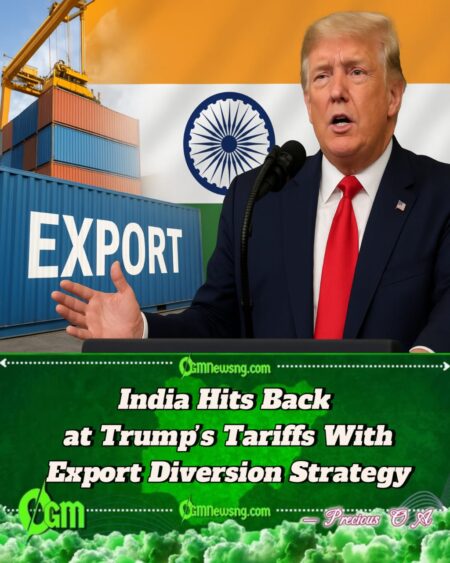
India has launched an export diversion policy for 15 major products in direct response to tariffs imposed by President Donald Trump. The move is designed to protect industries that depend heavily on U.S. markets while opening fresh opportunities in other regions.
Officials in New Delhi emphasized that the decision is not retaliation but a practical adjustment. They explained that safeguarding revenue and jobs is the top priority as global trade becomes increasingly unpredictable.
Tariffs and Their Impact
India faces significant pressure from the recent U.S. tariff measures, which target sectors that contribute heavily to national exports. Pharmaceuticals, textiles, and agricultural goods have been directly affected, forcing policymakers to react quickly.
President Trump’s strategy has been framed as an effort to protect American producers. Yet the result has been a sharp rise in costs for exporters who now struggle to maintain competitiveness abroad.
The Products Targeted
India identified 15 products as especially vulnerable to U.S. tariffs. These include pharmaceuticals, rice, spices, textiles, leather goods, steel components, and auto parts. Together, they account for billions of dollars in annual trade.
The government’s analysis showed that without prompt diversion, the ripple effects could spread across industries, affecting both large corporations and small-scale producers. Protecting these goods is therefore central to the country’s trade plan.
Exploring New Destinations
India is working to expand its trade footprint by turning to Europe, Japan, the United Arab Emirates, and key African markets. These destinations are seen as promising replacements for some of the demand previously satisfied by the U.S.
South America and Southeast Asia are also part of the diversification strategy. Agricultural products such as rice and spices, in particular, are expected to find new buyers across these regions.
Mixed Reactions from Exporters
India’s exporters have expressed both hope and caution. Larger firms in pharmaceuticals and chemicals welcome the strategy, believing it could strengthen global partnerships. They see opportunities to build long-term trust with new importers.
Smaller exporters, however, worry about the costs of entering unfamiliar markets. Many fear that establishing distribution networks, complying with regulations, and competing with established suppliers will take years.
Diplomatic Considerations
India has stressed that its export diversion is not meant to escalate tensions with Washington. Officials insist that the step is purely defensive, aimed at minimizing harm to national industries.
Analysts note that this careful messaging is deliberate. By avoiding the appearance of retaliation, policymakers keep open the door for constructive talks with the Trump administration.
Economic Stakes at Home
India’s economy depends heavily on the categories under diversion. Pharmaceuticals and textiles provide billions in foreign exchange earnings, while rice and spices support millions of farming households.
If the diversion plan succeeds, it will create greater stability and reduce reliance on a single partner. If it fails, however, the nation could face job losses, factory slowdowns, and reduced export revenues.
Global Trade Shifts
India’s strategy illustrates how quickly nations must adapt in today’s trade environment. The tariffs imposed by major economies can cause sudden realignments, forcing exporters to seek new buyers and markets.
Observers believe that this episode could inspire other countries to diversify their exports. The global system may gradually shift toward more fragmented but resilient trade networks.
Looking Ahead: Adaptability Will Decide
India now faces a critical test of adaptability. The next year will determine whether its exporters can build strong foundations in Europe, Asia, and Africa or whether the U.S. market will remain indispensable.
The outcome will not only influence economic stability but also shape the nation’s role in global commerce. Success could create a model for others confronting tariff challenges under Trump’s policies.
Table of Contents
Discover more from OGM News NG
Subscribe to get the latest posts sent to your email.