






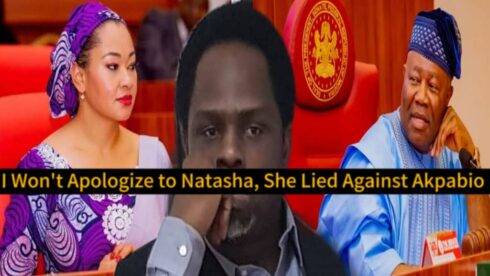
“This is obviously from the pit of hell. How can I ask Senator Natasha to forgive me for a case that I held very strongly that she lied on Senator Godswill Akpabio. This tweet was not from me, and we are investigating it.” This forceful denial came after a tweet surfaced online allegedly showing Okolugbo apologizing to Senator Natasha Akpoti-Uduaghan over a heated corruption claim involving Senate President Godswill Akpabio. The viral tweet, which trended heavily on X (formerly Twitter), stated that Okolugbo had “seen the light” and regretted doubting Natasha’s earlier allegations.
The statement shocked many observers and political insiders, prompting widespread reactions across social media and mainstream political discourse. However, Okolugbo, who serves as Consultant for Communications and Strategy in the Office of the Senate President, swiftly denied authoring the post. He insisted that his stance on the matter remains unchanged — that Senator Natasha fabricated her accusations against Akpabio — and described the purported apology as a “digital forgery” intended to sow discord within the legislature.
Social Media Hoax or Political Sabotage? Forensic Probe Underway
In response to the controversy, Okolugbo disclosed that a full-scale forensic investigation has been launched to trace the origins of the tweet. “Our cyber forensic team has been activated. We are determined to unmask those behind this impersonation and expose their motives,” he said, stressing the gravity of such a calculated digital assault. The incident raises alarms about the growing misuse of social media to influence narratives within Nigeria’s political ecosystem.
Preliminary assessments suggest the tweet may have been designed to undermine both Okolugbo’s credibility and the authority of the Senate President. Analysts point to recent intra-party power struggles and regional tensions within the ruling All Progressives Congress (APC) as possible catalysts. The use of cloned accounts and deepfake text content has become a recurring theme in Nigeria’s digital misinformation landscape — a trend experts fear could erode public trust in democratic institutions.
Natasha Akpoti-Uduaghan Reacts: “The Truth Is Emerging”
While Okolugbo insists he never authored the controversial apology, Senator Natasha has responded with a cryptic yet suggestive statement. “The truth is emerging. Nigerians are watching,” she posted on her verified X account, without confirming whether she accepted the alleged apology. Her supporters have since amplified the tweet, portraying it as vindication and demanding a Senate inquiry into earlier attempts to discredit her corruption claims.
This subtle but strategic reply from Natasha has sparked renewed scrutiny over her original allegations, which accused Senate President Akpabio of misappropriating funds and influencing project contracts in Kogi State. Though the Senate dismissed the claims as unsubstantiated at the time, civil society groups are now calling for an independent review. They argue that the recurrence of this controversy suggests deeper institutional rot and possible suppression of whistleblowers.
Senate Presidency Embattled: Akpabio’s Image in the Crosshairs Again
The re-emergence of Natasha’s accusations — even indirectly — places Senate President Godswill Akpabio under uncomfortable public glare once more. Though not directly accused in this tweet scandal, the implication of Okolugbo’s supposed apology rekindles old debates over Akpabio’s political influence and ethical standing. The Senate President has yet to issue a formal statement, but insiders suggest the matter is being treated with utmost sensitivity in his office.
Political observers note that Akpabio’s tenure has been marred by repeated allegations of favoritism, opaque budgeting, and conflict of interest. While none of these allegations have led to formal indictments, the cumulative effect of persistent scrutiny could weaken his legislative influence. “Whether or not the tweet was fake, the damage is already done,” said Dr. Chuka Ibezim, a governance analyst. “It forces Nigerians to re-examine the credibility of the institution he leads.”
Legal and Ethical Implications of Forged Political Apologies
The legal dimensions of this digital impersonation are gaining traction among public policy lawyers and media watchdogs. “Falsifying a public figure’s statement on a matter of national interest is not just unethical — it’s criminal,” said Barr. Lola Daramola, a cyber law expert. Okolugbo has already hinted that legal action may follow, both against the unnamed perpetrators and any media outlet that circulated the false tweet without verification.
The ethical fallout is also significant. In a country grappling with digital illiteracy and unregulated online platforms, such acts blur the line between fact and fiction, weakening the public’s ability to discern truth from propaganda. The Nigerian Senate, long criticized for its opacity, now finds itself entangled in an information war, one that may force a legislative review of online impersonation laws and political communication frameworks.
Public Trust in the Balance: The Politics of Manufactured Narratives
“This is not just about me — it’s about a growing trend to distort facts and weaponize fake content for political gains,” Okolugbo asserted. The scandal underscores a larger issue in Nigeria’s volatile political landscape: the rising use of digital disinformation to manipulate public perception. From AI-generated audio clips to fake apology tweets, politicians are increasingly being targeted in ways that make truth subjective and narratives dangerously elastic.
Public confidence in the Senate is already fragile, and episodes like this only exacerbate that fragility. Analysts warn that if left unchallenged, such tactics could normalize a new era of “deepfake politics” — where falsified confessions, apologies, or endorsements can disrupt legislative stability and mislead voters. As the dust settles, all eyes remain on the outcome of the forensic investigation, which could either vindicate Okolugbo or unmask a more sinister political agenda.
Table of Contents
Discover more from OGM News NG
Subscribe to get the latest posts sent to your email.