






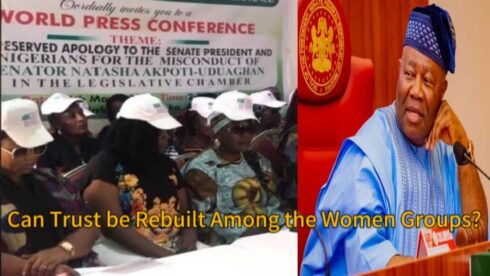
The Nigerian Women Crusade for Good Governance (NWCGG), an umbrella body representing over 100 women’s organizations, has formally apologized to Senate President Godswill Akpabio and the entire Senate. This surprising development follows allegations made by Senator Natasha Akpoti-Uduaghan, which sparked intense public debate.
In a carefully worded statement, NWCGG acknowledged that the accusations leveled against Akpabio were made in haste and without sufficient verification. The organization, known for championing women’s rights and good governance, expressed regret over any harm caused to the Senate’s reputation. Their sudden reversal has raised eyebrows, with political analysts questioning the motivations behind this dramatic shift.
Allegations That Sparked Controversy
At the heart of the controversy were claims by Senator Natasha Akpoti-Uduaghan, who accused Akpabio of undermining democratic processes within the Senate. Her allegations suggested that the Senate President was manipulating proceedings to sideline certain lawmakers, particularly female senators.
The accusations gained traction across social media, prompting widespread debates about gender equity in Nigeria’s legislative landscape. Many women’s groups initially rallied behind Akpoti-Uduaghan, believing her claims reflected deeper systemic biases. However, the recent apology by NWCGG has introduced an unexpected twist, leaving supporters divided.
Why NWCGG Changed Its Position
The reasons behind NWCGG’s sudden change in stance remain a subject of speculation. Some sources suggest that the organization faced pressure from political stakeholders who viewed the allegations as damaging to Senate stability. Others believe NWCGG reassessed the evidence and found Akpoti-Uduaghan’s claims unsubstantiated.
In its official statement, NWCGG emphasized its commitment to truth and good governance, stating that its initial reaction was based on incomplete information. The group further pledged to engage in deeper fact-finding before making future pronouncements, a move seen as an attempt to restore credibility amid skepticism.
Fallout and Reactions from Key Stakeholders
The apology has triggered mixed reactions from political figures and civil society organizations. Some lawmakers within the Senate have welcomed the retraction, describing it as a necessary step toward maintaining institutional integrity. Senator Akpabio himself has not publicly commented on the development, but sources close to him suggest he views the apology as a vindication.
On the other hand, feminist and pro-democracy groups remain divided. While some accept NWCGG’s retraction as a responsible act, others see it as a betrayal of the broader fight against political marginalization of women. Akpoti-Uduaghan’s camp has yet to issue a response, but insiders indicate that she remains firm in her stance.
Political Implications and the Road Ahead
This episode has broader implications for Nigeria’s political landscape, particularly concerning the credibility of advocacy groups. NWCGG’s initial support for Akpoti-Uduaghan positioned it as a vocal defender of female politicians, but its abrupt reversal has raised concerns about external influences shaping civil society discourse.
Moving forward, NWCGG has promised to prioritize due diligence in its advocacy efforts. However, the damage to its reputation may take time to repair, especially among grassroots activists who feel let down by what they perceive as political maneuvering. This incident could redefine how women’s organizations engage with mainstream politics.
Can NWCGG Rebuild Trust Among Women’s Groups?
The biggest challenge now facing NWCGG is restoring trust within the women’s rights movement. Many of its affiliate organizations are reportedly reevaluating their association with the coalition, questioning whether it still represents the interests of women in governance.
To regain credibility, NWCGG will need to demonstrate a commitment to independent advocacy, free from political influence. Whether this apology marks a genuine course correction or a strategic retreat under pressure remains a matter of debate. One thing is clear—Nigeria’s political landscape has once again been shaken by the power of women’s voices, even in the face of internal contradictions.
Table of Contents
Discover more from OGM News NG
Subscribe to get the latest posts sent to your email.