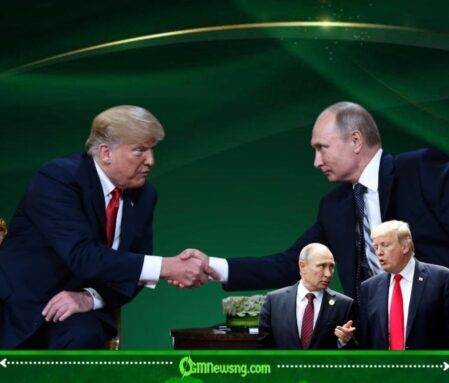








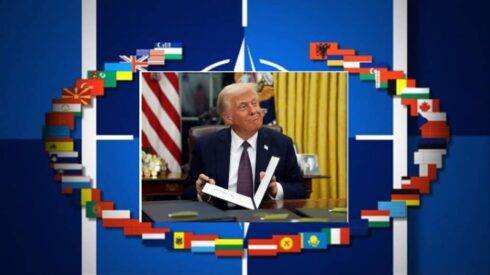
Donald Trump has once again shaken the global security landscape, declaring that NATO members failing to meet defense spending targets should not expect U.S. military protection. At a recent rally, he openly questioned why American troops should defend nations that, in his view, refuse to pay their fair share. His comments mark a direct challenge to NATO’s core principle of collective defense, sparking global alarm.
Donald Trump’s skepticism toward NATO is nothing new, but his latest remarks take his criticism to another level. By suggesting that the U.S. could abandon its treaty obligations, he has fueled fears of a fractured alliance. Many allies now worry that if he returns to the White House, America’s commitment to NATO could become conditional—or disappear entirely.
Donald Trump vs. NATO: Allies React with Alarm
Donald Trump’s comments sent shockwaves through NATO headquarters, prompting an immediate response from European leaders. German Chancellor Olaf Scholz warned that weakening NATO’s unity could embolden Russia, while French President Emmanuel Macron urged Europe to prepare for a future where U.S. support is no longer guaranteed. NATO Secretary-General Jens Stoltenberg attempted to reassure allies, emphasizing that the alliance remains strong despite political rhetoric.
Donald Trump’s words have particularly unsettled Eastern European nations closest to Russia. Countries like Poland and the Baltic states, which rely heavily on NATO for deterrence, now face growing uncertainty. Leaders in these nations have expressed deep concern that Trump’s stance could encourage Russian aggression, further destabilizing an already tense geopolitical landscape.
Donald Trump’s NATO Warpath: America First or America Alone?
Donald Trump has long positioned himself as a disruptor of global alliances, arguing that NATO takes advantage of U.S. military power without offering enough in return. His America First doctrine prioritizes financial contributions over strategic alliances, framing NATO as a burden rather than a benefit. Critics argue that his approach risks isolating the U.S. and weakening its global influence.
Donald Trump’s transactional view of NATO contrasts sharply with decades of bipartisan U.S. policy. Previous presidents, both Republican and Democrat, have upheld NATO as a pillar of global security. His continued attacks on the alliance signal a dramatic shift in America’s foreign policy priorities, one that could reshape the global order if he returns to power.
Donald Trump’s NATO Ultimatum: Pay Up or Lose Protection
Donald Trump’s insistence that NATO members increase defense spending is not without merit—many countries have lagged behind the 2% GDP target. However, his threats to abandon those who fail to meet the benchmark represent an unprecedented shift. By making U.S. military support conditional, he risks undermining NATO’s deterrence strategy, potentially emboldening adversaries like Russia and China.
Donald Trump’s rhetoric has reignited debates over Europe’s military preparedness. Some leaders have argued that his stance could push Europe to develop its own independent defense strategy, reducing reliance on the U.S. Whether this would strengthen or weaken NATO remains a divisive question, with some fearing it could lead to a fragmented and less effective security alliance.
DonyTrump vs. Washington: Congress and Pentagon Push Back
Donald Trump’s NATO skepticism has met resistance from both sides of the U.S. political spectrum. Congressional leaders, including key Republicans, have reaffirmed America’s commitment to NATO, signaling that Trump’s stance is not universally accepted within his own party. Senate Minority Leader Mitch McConnell has publicly stated that NATO remains vital to U.S. security interests.
Donald Trump’s position also conflicts with the Pentagon’s strategic priorities. Military officials continue to emphasize NATO’s role in countering threats from Russia, China, and global terrorism. Even if Donald Trump returns to office, institutional checks within the U.S. government may limit his ability to unilaterally abandon NATO commitments.
Donald Trump’s NATO Gamble: A Global Power Shift?
Trump’s comments have reignited discussions about Europe’s need to prepare for a future with less U.S. military support. French President Macron has repeatedly pushed for “strategic autonomy,” arguing that Europe must be capable of defending itself. However, Europe remains far from achieving full military independence, as defense coordination and funding challenges persist.
Trump’s approach to NATO could mark a turning point in global security. If the U.S. pulls back, Europe may be forced to develop new defense strategies, while adversaries like Russia and China could see an opportunity to expand their influence. As the world watches Trump’s next move, the fate of NATO—and global stability—hangs in the balance.
Table of Contents
Discover more from OGM News NG
Subscribe to get the latest posts sent to your email.