
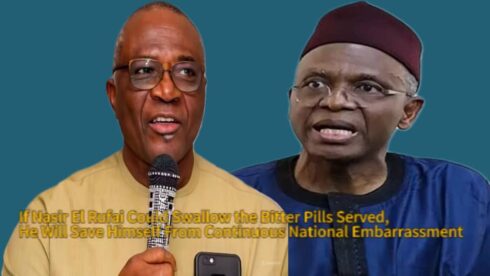
Bayo Onanuga, the Special Adviser on Information and Strategy to President Bola Tinubu, has addressed the ongoing discontent of former Kaduna State Governor, Nasir El-Rufai, regarding his exclusion from the ministerial cabinet. Bayo Onanuga’s remarks come in the wake of El-Rufai’s public criticisms and revelations about the circumstances surrounding his non-appointment.
Bayo Onanuga has publicly expressed empathy towards Nasir El-Rufai‘s feelings of exclusion from President Tinubu’s ministerial appointments. In a statement, Bayo Onanuga acknowledged El-Rufai’s significant contributions to the administration but emphasized the necessity for him to move past the disappointment. He stated, “I will pity former Kaduna State governor Mallam Nasir El-Rufai; he feels hurt that he was not made a minister, but I think it’s time for him to move on.”
Bayo Onanuga further highlighted that the formation of the cabinet occurred in August 2023, suggesting that sufficient time has passed for El-Rufai to come to terms with the decision. He advised the former governor against dwelling on the matter, comparing such behavior to that of a child lamenting over a lost privilege. This candid advice underscores the administration’s stance on the issue and reflects a desire to maintain focus on governance without internal distractions.
El-Rufai’s Perspective: A Narrative of Exclusion
Nasir El-Rufai has not remained silent on the matter. In a recent interview, he disclosed that his exclusion from the ministerial list was a direct decision by President Tinubu, contrary to public belief that the National Assembly was responsible. El-Rufai stated, “Please don’t believe the story that the National Assembly rejected me. The National Assembly had nothing to do with this; the President didn’t want me in his cabinet; he changed his mind.”
This revelation sheds light on the internal dynamics and decision-making processes within the current administration. El-Rufai’s openness about the situation indicates a sense of betrayal, especially after his active involvement in supporting President Tinubu’s election campaign. His comments suggest a deeper rift and raise questions about the criteria and considerations that influenced the final ministerial appointments.
The Senate’s Role: Security Concerns and Confirmation Delays
The Senate’s involvement in the ministerial confirmation process added another layer to the controversy. Initially, El-Rufai was among the nominees presented by President Tinubu. However, the Senate withheld his confirmation, citing security concerns based on reports from the Department of State Services (DSS).
This action by the Senate fueled speculations and debates about the underlying reasons for El-Rufai’s non-confirmation. While some viewed it as a standard procedure based on security protocols, others perceived it as a politically motivated move influenced by internal power struggles. The lack of transparency in the DSS report further exacerbated the situation, leaving room for various interpretations and conspiracy theories.
El-Rufai’s Decision to Withdraw: Focusing on Personal Endeavors
In response to the unfolding events, El-Rufai chose to withdraw his interest in the ministerial position. He communicated this decision to President Tinubu, expressing a desire to focus on his doctoral studies in the Netherlands. Additionally, he recommended Jafaru Ibrahim Sani, a former commissioner in Kaduna State, as a suitable replacement for the ministerial role.
This move indicates El-Rufai‘s intention to distance himself from the current political fray and pursue personal development. By recommending a successor, he also demonstrates a continued commitment to contributing to the administration’s success, albeit from a non-official capacity. This decision might be seen as a strategic retreat, allowing him to preserve his political capital and return to the scene at a more opportune time.
Political Repercussions: A Rift Within the Ruling Party
The public exchange between Bayo Onanuga and El-Rufai has unveiled potential fissures within the ruling party. El-Rufai’s criticisms, coupled with Bayo Onanuga’s admonishments, suggest a discord that could have broader implications for party unity and governance. Such internal disagreements, if not managed effectively, might affect the administration’s public image and its ability to implement policies cohesively.
Political analysts posit that this rift could stem from competing ambitions and differing visions for the country’s direction. El-Rufai’s outspoken nature and his willingness to challenge the status quo may position him as a maverick within the party, appealing to certain factions while alienating others. The administration’s response to this situation will be crucial in determining whether it leads to a lasting division or is resolved through diplomatic engagement.
Looking Ahead: Navigating Political Turbulence
As the situation unfolds, the onus is on both the administration and El-Rufai to navigate the turbulence with tact and foresight. For President Tinubu’s team, addressing the underlying grievances and fostering an environment of inclusivity could mitigate further dissent. On the other hand, El-Rufa’s future political trajectory will depend on how he leverages this experience, whether by adopting a reconciliatory approach or by positioning himself as an alternative voice within the political landscape.
The resolution of this dispute will serve as a litmus test for the administration’s capacity to manage internal conflicts and maintain a united front. It also offers an opportunity for introspection on the part of the ruling party regarding its internal democracy and the mechanisms it employs to address dissenting opinions among its ranks.
Table of Contents
Discover more from OGM News NG
Subscribe to get the latest posts sent to your email.