





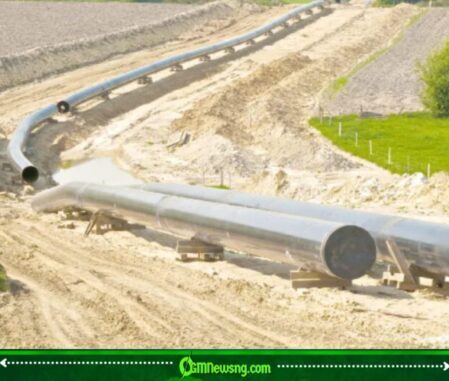
The much-discussed Nigeria-Morocco Gas Pipeline has received another major political push, but the ambitious $25 billion African Atlantic Gas Pipeline project still appears to be waiting for the one ingredient that turns speeches, agreements and ceremonies into steel and pipes: serious financing. Ten years after Nigeria and Morocco first unveiled the project, ECOWAS leaders signed an Intergovernmental Agreement (IGA) in July 2026, creating a fresh legal framework for the cross-border scheme. Yet the project has not reached a Final Investment Decision (FID), meaning the giant pipeline remains closer to the conference table than the construction site.
Another Pipeline Agreement, Another Countdown
The pipeline was first proposed in 2016 and is designed to run along the Atlantic coast from Nigeria through West Africa to Morocco, with the broader project intended to connect regional gas markets and ultimately provide another route towards Europe. Earlier ECOWAS agreements and memoranda have repeatedly pushed the project forward on paper, including a 2022 MoU involving Nigeria, Morocco and ECOWAS and additional agreements with participating countries in 2023.
Now, after years of studies, meetings and diplomatic handshakes, the latest milestone has revived the familiar question: when does the actual digging begin? Reports indicate construction could start in 2028, with first gas targeted for 2031, but those dates depend heavily on financing and the project’s investment decision. In other words, the pipeline has spent considerable time travelling through documents while Nigerians and other West Africans continue waiting to see it travel through the ground.
Gas Ambition Meets Funding Reality
The project is certainly not small. It is expected to stretch roughly 6,000–6,900 kilometres, cross about 13 countries and transport Nigerian gas towards markets in West Africa, Morocco and potentially Europe. Its supporters see it as an infrastructure corridor capable of expanding energy access, integrating regional economies and monetising Africa’s considerable gas resources. ECOWAS has also formally recognised the project as the African Atlantic Gas Pipeline.
But the comedy of the situation is becoming difficult to ignore: Africa has been busy producing agreements about a pipeline that still needs investors willing to produce the money for the pipeline. A project company was established in 2025 to help structure financing and implementation, while the latest IGA represents another important institutional step. Still, until financing is secured and an FID is taken, the $25 billion dream remains vulnerable to the familiar African infrastructure disease—grand plans moving faster on paper than on the ground.
The Nigeria-Morocco Gas Pipeline remains strategically important and its latest ECOWAS endorsement should not be dismissed. However, the next chapter will be judged less by the number of agreements signed and more by whether funding is mobilised, construction begins and the promised gas eventually flows. OGM News NG will continue to watch the project closely, because after a decade of planning, the real suspense is no longer whether another agreement will be signed—but when the pipes will finally start speaking for themselves.
Table of Contents
Discover more from OGM News NG
Subscribe to get the latest posts sent to your email.