






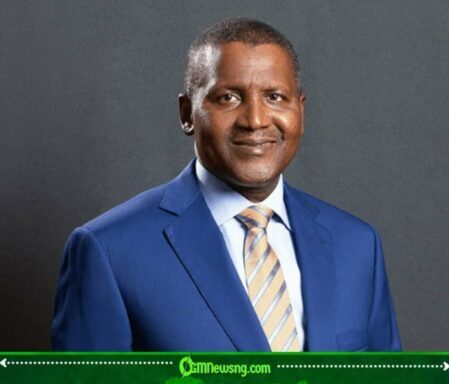
Aliko Dangote has announced plans for an additional $50 billion in investment across Africa, arguing that the continent must increasingly mobilise its own capital, process its own resources and build businesses capable of competing globally. The announcement comes as the Dangote Group pushes deeper into its Vision 2030 expansion strategy, with major interests spanning refining, fertiliser, cement, energy, infrastructure and other industries. Recent reporting indicates that the group plans roughly $50 billion in capital expenditure between 2026 and 2030, after investing about $25 billion during the previous five-year period.
Africa Has Money, But Apparently Keeps Sending It Abroad
Dangote’s message is straightforward: Africa cannot permanently depend on outsiders to provide the money needed to develop Africa. The industrialist has repeatedly argued that African capital should play a much larger role in financing African businesses, while the continent processes more of its raw materials locally instead of exporting them and importing finished products.
The timing is particularly interesting because Dangote’s own refinery is currently being opened to wider African ownership through an initial public offering. The refinery’s IPO is seeking about ₦2.15 trillion, or roughly $1.6 billion, while the business is valued at close to $48 billion. The plan is designed to give investors, including ordinary Nigerians, an opportunity to own part of one of Africa’s biggest industrial projects.
From Lagos to Lamu, Dangote Wants African Industry at Full Volume
The latest expansion is not merely a Lagos story. Dangote is also moving into East Africa, with plans for a proposed $16 billion refinery in Kenya, designed to process up to 700,000 barrels of crude oil daily. The project is expected to create tens of thousands of jobs and reduce the region’s dependence on imported refined petroleum products, although land, environmental and infrastructure concerns remain part of the surrounding debate.
And this is where the satire practically writes itself: Africa has spent decades exporting cocoa beans, crude oil and other raw materials, only to import products made from those same resources at a higher price. Now Dangote is essentially saying the continent should try something different — keep more of the capital at home, build larger companies and compete beyond African borders. Even the International Finance Corporation has highlighted the argument for African-led investment and larger-scale mobilisation of private capital.
With $50 billion now attached to the next phase of the Dangote Group’s expansion, the real question is no longer whether Africa has ambitious industrial plans, but whether African capital markets, governments, businesses and consumers can participate at the scale required. As the group advances projects from Nigeria to East Africa and continues opening parts of its businesses to public ownership, OGM News NG will be watching closely to see whether this massive investment promise translates into factories, jobs, ownership and measurable economic value — or whether another trillion-dollar African dream will once again be left waiting at the airport for its connecting flight.
Table of Contents
Discover more from OGM News NG
Subscribe to get the latest posts sent to your email.