

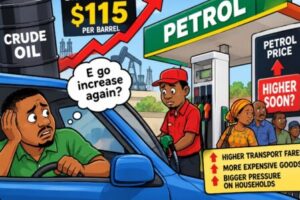








A growing chorus of economists and financial institutions is warning that a sharp rise in oil prices toward $150 per barrel could push the global economy into recession. The concern follows a sustained increase in crude oil prices, driven largely by geopolitical tensions in the Middle East and fears of prolonged supply disruptions.
Benchmark crude prices have already crossed the $100 mark in recent weeks, raising alarm across financial markets. Analysts say the pace of the increase, combined with uncertainty surrounding key oil-producing regions, has heightened the risk of a broader economic shock. Energy costs remain a critical driver of inflation, and any sustained surge tends to ripple across transportation, manufacturing, and consumer goods.
Industry leaders have cautioned that the global economy is particularly vulnerable at this moment, given existing inflationary pressures and uneven post-pandemic recovery trends. A rapid escalation in oil prices could amplify these weaknesses, tightening financial conditions and slowing economic activity across major economies.
$150 Threshold Seen as Critical Tipping Point
Economic analysts widely identify the $130–$150 per barrel range as a danger zone for global growth. At such levels, energy costs can significantly erode consumer purchasing power while increasing operational expenses for businesses, leading to reduced spending and investment.
Historical patterns reinforce these concerns. Previous oil shocks—particularly those in the 1970s and 2008—were followed by significant economic downturns. Financial institutions, including major investment banks, have noted that sustained high oil prices often precede recessions due to their broad impact on inflation and demand.
Recent business surveys across the United States, Europe, and parts of Asia indicate early signs of strain. Companies are reporting higher input costs, weaker demand, and declining output. Economists warn that if oil prices continue their upward trajectory, these trends could deepen, potentially resulting in a period of stagflation characterized by slow growth and persistent inflation.
Oil Prices: Geopolitical Tensions and Supply Risks Drive Volatility
The current oil price surge is closely tied to escalating geopolitical tensions, particularly in the Middle East. Concerns over disruptions to key supply routes, including the Strait of Hormuz, have intensified market volatility. This strategic passage accounts for a significant portion of global oil shipments, making it a critical نقطة of concern for energy security.
Supply-side risks have been compounded by attacks on infrastructure and uncertainties surrounding production levels in major oil-exporting nations. Analysts suggest that even partial disruptions could significantly tighten global supply, pushing prices higher in a short period.
Experts also warn that the economic consequences of rising oil prices are not evenly distributed. Developing economies and lower-income populations are likely to bear the brunt of increased fuel and transportation costs. As energy prices rise, so too do food and commodity prices, creating additional pressure on household budgets and potentially exacerbating inequality.
The prospect of oil prices reaching $150 per barrel represents a significant risk to global economic stability. While such an outcome is not guaranteed, the convergence of geopolitical tensions, supply constraints, and inflationary pressures has created a fragile environment. Policymakers and market participants will be closely monitoring developments, as the trajectory of oil prices in the coming months may play a decisive role in determining whether the global economy can avoid another downturn.
Table of Contents
Discover more from OGM News NG
Subscribe to get the latest posts sent to your email.