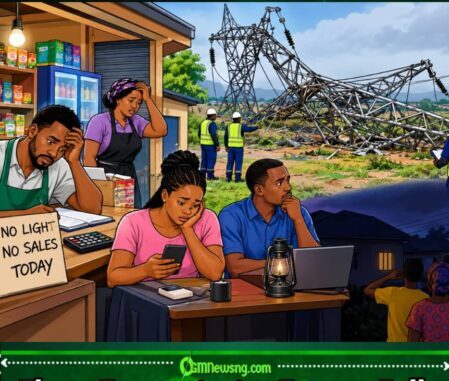









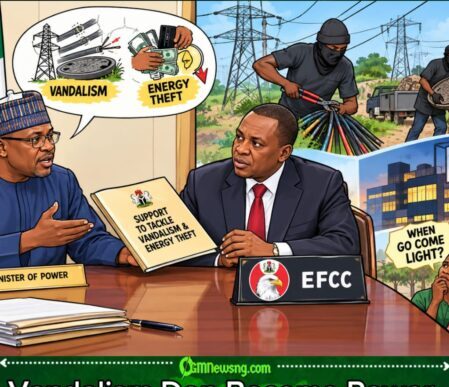
Vandalism and energy theft don attract fresh attention for the power sector as Minister of Power, Joseph Olasunkanmi Tegbe, don ask the Economic and Financial Crimes Commission (EFCC) to join government effort to investigate and prosecute people allegedly involved in activities wey dey damage electricity infrastructure and cause serious financial losses. The minister made the appeal for Abuja on September 15, 2026, during meeting with EFCC Executive Chairman Ola Olukoyede.
The matter get one interesting angle: while Nigerians dey ask when light go stabilise, government dey also fight another battle behind the scenes — people allegedly removing infrastructure, bypassing electricity systems and, according to the minister, some companies getting electricity without paying their bills. In other words, while one person dey complain say light no dey, another person fit allegedly dey find way to make sure the power system itself no fit work properly.
Tegbe Carries Vandalism Matter Go EFCC
Tegbe told the EFCC that vandalism of electricity infrastructure had become a major problem across the country. According to reports of the meeting, he specifically mentioned people stealing manhole covers and other valuable materials, while vandalisation was also affecting electricity towers and other critical infrastructure. He said the Ministry of Power does not have the statutory authority to prosecute offenders, hence the request for stronger cooperation with the EFCC.
The minister also identified energy theft as another major problem. He said some companies with access to electricity were allegedly failing to pay their electricity bills, resulting in billions of naira in annual losses to the sector. The request therefore goes beyond simply catching people physically removing cables or equipment; it also involves investigating alleged financial activities that may be undermining the ability of the electricity industry to collect the money it is owed.
Energy Theft No Be Small Power Sector Wahala
The latest EFCC approach no come completely from nowhere. Back in July 2026, Tegbe also met with the Inspector-General of Police, Olatunji Disu, and asked for stronger security collaboration against vandalism and energy theft. The Police said the discussion focused on protecting critical power installations, increasing surveillance and taking action against people involved in power-sector crimes.
The wider policy picture also shows why energy theft and infrastructure damage matter beyond one electricity bill. The Federal Ministry of Power describes itself as the Federal Government’s policy-making arm for the power sector and says its mandate includes supporting reliable and affordable electricity supply. The ministry operates under the Electricity Act 2023 and other power-sector policies, while electricity-theft and infrastructure-damage offences have already been subject to regulatory and criminal sanctions.
The real test now na whether stronger collaboration between the Power Ministry, EFCC, Police and other relevant agencies go lead to actual investigations, prosecutions, recovery of losses and better protection of infrastructure. Because if vandalism continues while energy theft continues, the country fit find itself fighting the same electricity battle from both ends — one side destroying the system and another side allegedly draining the revenue needed to maintain it.
For now, Tegbe’s EFCC appeal has opened another front in the Federal Government’s effort to protect Nigeria’s electricity infrastructure and finances. Nigerians go dey watch whether this latest collaboration go produce arrests, prosecutions and recoveries, or whether the matter go eventually join the long list of power-sector promises waiting for the next update. OGM News Pidgin go continue to monitor the gbege.
Table of Contents
Discover more from OGM News NG
Subscribe to get the latest posts sent to your email.