








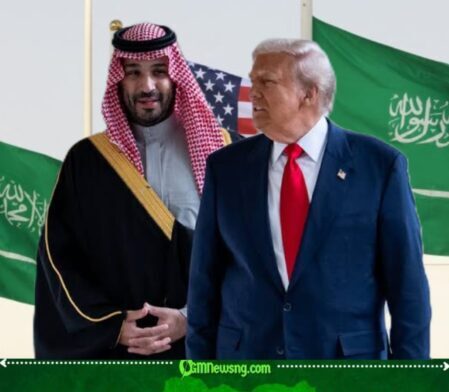
The United States has moved ahead with a major civilian nuclear cooperation agreement with Saudi Arabia, raising fresh concerns over whether Washington is giving Riyadh too much freedom in developing nuclear technology while continuing to benefit from the kingdom’s enormous energy resources. The agreement signed in July 2026 provides a framework for U.S. companies to participate in Saudi Arabia’s nuclear power programme and has been criticized by nonproliferation experts because it may leave room for uranium enrichment.
The supplied material goes a step further by portraying the arrangement as the United States indirectly giving Saudi Arabia both a nuclear weapons pathway and a civilian programme in exchange for effectively unlimited access to Saudi oil. That specific characterization is not established by the available evidence: Saudi Arabia remains a party to the Nuclear Non-Proliferation Treaty, while the agreement is officially described as being for peaceful nuclear cooperation. Nevertheless, the potential enrichment provisions have generated legitimate concerns because enrichment technology can be used for civilian fuel but, at sufficiently high levels, can also produce weapons-grade material.
United States Faces Questions Over Saudi Nuclear Ambitions
The United States has long demanded strong safeguards in nuclear cooperation agreements, making the new Saudi arrangement particularly controversial. Critics point out that the agreement does not appear to require Saudi Arabia to accept the same “gold standard” restrictions previously accepted by the United Arab Emirates, including a commitment to forgo uranium enrichment and spent-fuel reprocessing. The Arms Control Association has warned that the deal could weaken established U.S. nonproliferation standards.
And this is where the satirical paperwork begins to write itself: Washington appears to have discovered that nuclear diplomacy comes with an unusually large stack of footnotes. Saudi Arabia wants nuclear energy, the United States wants strategic influence, American companies want contracts, and the world would very much like everybody to remember that the word “civilian” is supposed to remain the most important word in the room.
Saudi Arabia has also previously signaled that its nuclear ambitions could become more aggressive if Iran develops a nuclear weapon. Crown Prince Mohammed bin Salman said in 2018 that Saudi Arabia would follow suit if Iran acquired one. That history is one reason critics are examining the new agreement so closely, even though the current deal is formally presented as civilian nuclear cooperation.
United States Balances Oil, Nuclear Power and Nonproliferation
The United States and Saudi Arabia have powerful economic and strategic interests tying them together. Saudi Arabia wants nuclear power partly to meet rising electricity demand and reduce the amount of crude oil burned domestically, allowing more oil to be exported. The U.S. government says the nuclear agreement can strengthen American industry and supply chains while supporting Saudi energy needs.
In other words, everyone appears to have brought something to the negotiating table: Saudi Arabia brought energy ambitions, Washington brought nuclear technology and American companies brought invoices. Somewhere in the background, nonproliferation experts brought a very large red warning flag and have been waving it enthusiastically.
The latest development has now moved beyond private negotiations and into congressional scrutiny. President Donald J. Trump submitted the proposed agreement to Congress on August 25, 2026, beginning a 90-session-day review period. The administration has also tied implementation of the agreement to Saudi Arabia normalizing relations with Israel, adding another diplomatic complication to an already controversial arrangement.
The United States therefore finds itself at the center of a debate that extends far beyond nuclear reactors: how much nuclear capability should a major regional power receive, what safeguards should accompany it, and how should Washington balance commercial and strategic interests against proliferation risks? OGM News NG will continue watching the congressional review and the evolving U.S.-Saudi relationship for further developments.
Table of Contents
Discover more from OGM News NG
Subscribe to get the latest posts sent to your email.