




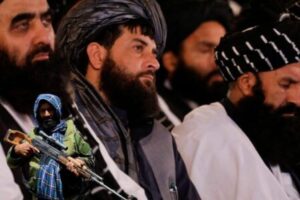


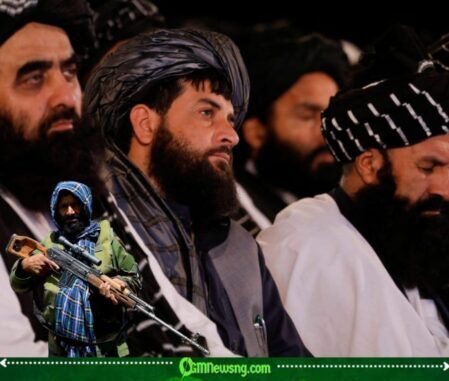
The Taliban authorities in Afghanistan have reportedly taken their campaign against women’s public identity to another disturbing level, with officials in the northern province of Balkh allegedly ordering the removal of women’s actual names from official documents, including hospital records and medical prescriptions. Instead of identifying women by their given names, healthcare workers and other public employees have reportedly been instructed to use the generic designation ‘Bibi’, a term commonly associated with an older woman or grandmother.
Even more troubling, testimonies gathered by journalists and activists indicate that some women have been referred to using degrading animal-related labels such as ‘goat’ and ‘cow’. Apparently, after years of restricting what Afghan women can wear, where they can go, what they can study and whether they can work, the Taliban’s latest reported concern is what women should be called when their names appear on paper.
Taliban Turn Women’s Identity Into Another Target
According to reporting by Afghan media organisation Zan Times and British newspaper The Guardian, the directive in Balkh province instructs healthcare workers and public employees to stop using women’s actual names in official settings. The investigation was further examined by Spanish newspaper El País, which gathered testimonies from Afghan women, medical workers and civil rights activists. The reported restriction extends to medical records and prescriptions, raising serious questions about how female patients will be properly identified within healthcare facilities.
Although ‘Bibi’ is traditionally used as a respectful form of address for women in Afghan society, its compulsory use as a replacement for individual names presents an entirely different concern. Activists have also reported instances in which women were identified using demeaning expressions such as ‘goat’ and ‘cow’. One would imagine that identifying a patient should be among the simplest responsibilities of a hospital, but the Taliban’s reported directive appears to have introduced an unnecessary identity crisis into an already struggling healthcare system.
From Restricting Women’s Freedom to Restricting Their Names
Afghan women’s rights activist Lalah Osmany, who has campaigned for the recognition of women’s names in official documentation, described the development as a systematic process of dehumanisation. Her concerns are particularly significant given the historical struggle to have mothers’ names recognised on their children’s birth certificates. A campaign she launched in 2017 contributed to a change in 2020 that allowed mothers’ names to be included voluntarily. Now, under Taliban rule, the reported directive threatens to reverse the progress represented by that achievement.
The development also fits into a much wider pattern of restrictions imposed since the Taliban returned to power in August 2021. Afghan girls have been barred from education beyond the sixth grade, women have been excluded from numerous employment opportunities, and restrictions on movement, public participation and healthcare have continued to attract international criticism. Femena, an organisation monitoring women’s rights in Afghanistan, has documented more than 144 decrees restricting women’s rights, according to reporting by El País. The latest directive has so far been reported in Balkh province, and activists fear that a measure initially enforced locally could eventually spread elsewhere.
The reported decision in Balkh is more than an argument over names; it raises fundamental questions about human dignity, personal identity, women’s rights and access to essential services. There is also a practical healthcare concern: replacing individual patient names with a generic designation could create confusion in medical records, prescriptions and patient identification. While the reported instruction is currently associated with Balkh province, its possible expansion remains a concern rather than an established nationwide policy. The Taliban may be able to dictate what appears on government paperwork, but that does not make Afghan women any less entitled to their identities, dignity and basic human rights. Keep following OGM News NG for further developments as more information emerges.
Table of Contents
Discover more from OGM News NG
Subscribe to get the latest posts sent to your email.