








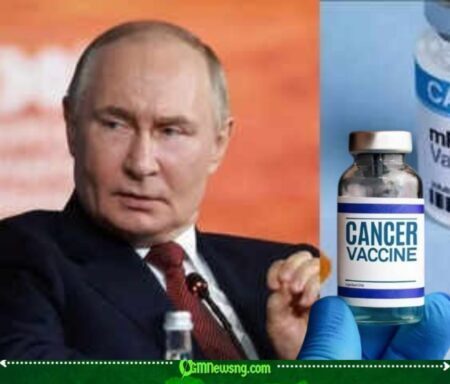
Russia has announced the development of a cancer vaccine that it says is ready to be supplied globally, a claim that has quickly drawn international attention and cautious optimism within the medical and scientific communities. The announcement suggests a significant step forward in the ongoing global effort to combat cancer, though experts stress that details regarding trials, approval processes, and long-term effectiveness will be crucial in evaluating its impact.
The concept of a cancer vaccine is not entirely new, as researchers around the world have been exploring immunotherapy-based approaches designed to help the body recognize and fight cancer cells. However, any claim of readiness for global distribution raises important questions about clinical validation, regulatory approval, and large-scale manufacturing capacity.
Russia’s statement has therefore been met with a mix of excitement and skepticism, as scientists emphasize the importance of peer-reviewed data and transparent reporting.
Scientific Background and Vaccine Approach
Russia has indicated that its cancer vaccine is based on modern immunological techniques aimed at training the immune system to identify and destroy cancerous cells. Such approaches often involve targeting specific proteins or markers associated with tumors.
Globally, similar research efforts have shown promise, particularly in personalized medicine, where treatments are tailored to individual patients.
Understanding how this new vaccine fits into existing scientific frameworks will be key to assessing its potential.
Russia and Global Medical Response
Russia has positioned the vaccine as a potential contribution to global healthcare, stating its readiness to supply it internationally. This has prompted responses from health organizations and researchers, many of whom are calling for detailed data before forming conclusions.
International collaboration is often essential in advancing medical breakthroughs, particularly for complex diseases like cancer.
The response from the global medical community will likely shape how the development is perceived and adopted.
Regulatory and Clinical Considerations
Russia has emphasized readiness for distribution, but regulatory approval processes vary significantly across countries and regions. Any new medical treatment must undergo rigorous testing to ensure safety and efficacy.
Clinical trials, peer review, and independent verification are standard steps in bringing such innovations to market.
These processes are critical in building trust among both healthcare professionals and patients.
Russia and Potential Impact on Healthcare
Russia has suggested that its vaccine could transform cancer treatment if proven effective, potentially offering new hope to millions of patients worldwide. The implications of such a development would be far-reaching, affecting healthcare systems, research priorities, and patient outcomes.
However, experts caution that breakthroughs of this scale require careful validation and time to demonstrate consistent results.
Balancing optimism with scientific rigor remains essential in evaluating such claims.
Russia is expected to provide further information about the vaccine in the coming months, including data from trials and details about production capabilities. These updates will be critical in determining the next steps.
The global community will likely monitor developments closely, with interest from governments, researchers, and healthcare providers.
Ultimately, the announcement highlights both the promise of medical innovation and the importance of thorough evaluation in advancing global health.
Table of Contents
Discover more from OGM News NG
Subscribe to get the latest posts sent to your email.